

I admit I see more movies than I read books. I’d like to change that and posting less on Facebook and getting rid of my Words with Friends app would be a good start. But hey, I enjoy both of those things and certainly, I’m not going to stop watching movies.
There was actually a night in my life that changed the world for me. It was during my freshman year at college. The Dartmouth Film Society screened what would today be called “art house” films and that particular evening they proved to be eye opening ones for me. The double feature was Francois Truffaut’s Jules and Jim and Federico Fellini’s 8½. There was even a short film before those two and in one night I was exposed to the Paris photographs of Eugene Atget and the music of composer Erik Satie for the first time as well.
In the dictionary “mind blowing” is defined as something having a hallucinogenic effect. Its etymology has Timothy Leary’s name stamped all over it but before I ever tried LSD it was Marcello Mastroianni’s portrayal of a movie director on the verge of a nervous breakdown that revealed something to me that I had never known film could do— actually take me inside of somebody’s head and in this case the head of someone’s that was imploding on the screen.
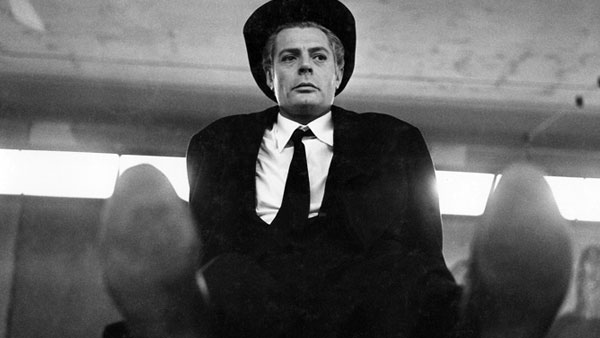
Movies changed for me from that moment on and when I lived in New York City for two years after college I went on an all out movie binge. From Satyajit Ray’s Apu Trilogy to Jean Vigo’s Zero for Conduct I undertook my own sweeping retrospective of cinema history and one time foolishly, even tried to absorb five movies on the same day— I don’t remember which Ingmar Bergman film it was that put me over the edge and left me a zombie.
Three movie theaters in New York were where I spent many evenings because they were repertory movie houses showing old films of all kinds. The Elgin was in Chelsea and a subway ride from the upper Westside where I shared an apartment. It’s credited with being the movie theater that invented the midnight screening which began when it showed Alejandro Jodorowsky’s El Topo in 1970. If you’ve seen this movie, then you probably agree with me that it makes The Rocky Horror Picture Show look like Ding Dong School.
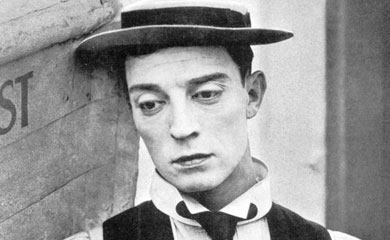
I owe the Elgin for introducing me to Buster Keaton. As big a silent movie star as anyone back in his day, Keaton’s work had been virtually forgotten for decades and tied up in legal battles and even misplaced until his genius was rediscovered and films rereleased. The Elgin held a Buster Keaton festival and at the first movie I saw I was in stitches and awe simultaneously and came back for more night after night.
The New Yorker theater was on Broadway at West 88th St. and it was there I marveled at Toshiro Mifune’s performance in Akira Kurosawa’s The Seven Samuarai. It was the uncut version that included an intermission that was projected on the screen as part of the film. And it also was on the way to the New Yorker one night that I ended up in the hospital. In a hurry to make the beginning of Zoo in Budapest with Loretta Young I ran across the street in front of a bus and got whacked by a Volkswagen that was running the red light. I landed on the hood of the car and fell off and to the driver’s everlasting credit he stopped, picked me up and rushed me to the hospital.
My left lower leg swelled grotesquely and turned as red as a salami as I lay on an emergency room gurney but no doctor came to examine me for about an hour. When one ultimately did he led a group of a half dozen others who I realized were interns. Why? Because the first thing the doctor said even before addressing me after he lifted up the sheet covering my injured leg was, “I want to show you a classic example of a massive hematoma.”
After that classic example of American medical bedside manner the hospital gave me a choice. I could be admitted or I could take copious amounts of codeine at home and stay in bed which I decided to do and believe it was for about a month but have no clear memory of that entire time. I still have never seen Zoo in Budapest by the way.
But the jewel in my crown of beloved movie theaters was the Thalia just off Broadway on 95th St. I think of the three movie houses I surely spent the most time at the Thalia, which was the location for an exterior scene in Woody Allen’s Annie Hall. The Thalia showed two movies a night and rotated one of the two out the next day and added a new one in its place. That gave me two chances to catch any single film. The Thalia showed pretty much everything from Marcel Carne’s Children of Paradise to Chuck Jones’ Bugs Bunny cartoons.
One night waiting outside for a show I saw a beautiful girl also waiting by herself. I wanted to start a conversation but had no idea how. Of course “hello!” would have been a logical place to begin but it failed to register as an option. My opportunity vanished entirely when her date showed up. A few nights later outside the Thalia the identical situation arose. A different beautiful girl by herself. Another painfully shy inability to seize the moment by me. And then THE SAME GUY arrived and escorted her inside!!!
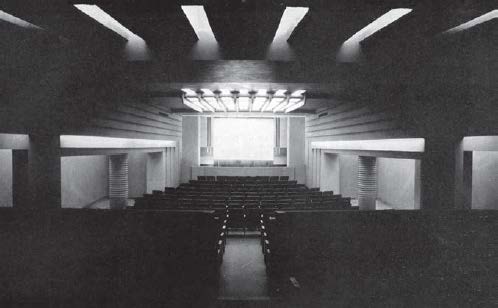
All three of these theaters have been demolished or repurposed. Today, the dream I used to have of being able to see great movies on my own screen at home has become a taken for granted reality. But I’m afraid the excitement of discovering cinema’s past isn’t the same watching a recording I’ve made from the Turner Classic Movie channel. It’s not about popcorn or candy. It’s all about being part of an audience in the dark watching together. Books, which I really do need to read, are a solitary endeavor. Movies can be of course but I prefer when they are not and am sad to think we may be withdrawing into our private cocoons more and more and in danger of losing the movie theater experience. But I’ll always have the Thalia…
 pawnedaccordion