The summer before entering Dartmouth College my class was sent books to read in advance of our matriculation. One was by José Ortega y Gasset, the other I don’t remember. I do remember that I didn’t read either one so the lecture about them upon our arrival in Hanover was wasted on me.
Quickly though, I discovered that Dartmouth was not a place where I could blow through assignments and skate by. My professors were demanding and my classmates smart and during my four years I remember only one student who I felt didn’t have the brains to be there.
Maybe I’m being harsh about him but it was after midnight night in rural Virginia when he bridged a car in which I was a passenger on a railroad track. Missing the turn was forgivable and fortunately, there was a bar adjacent to our predicament and its customers streamed out to help lift our vehicle back on the road we had strayed from.
As we got back in the car the good and drunk samaritans started banging on the hood demanding money.
“What should I do?” asked our driver. “I can’t run over them.”
“No, but you can back the fuck up and get the hell out of here!”
I’m not sure I was the first to shout this but you get the picture.
That close call occurred during the spring of my sophomore year. I was on the golf team and we were on our spring trip having worked our way north from South Carolina. A place called Fripp Island had been our starting point. It was a newly completed golf course and had all the hazards you tried to avoid and an extra one that seemed more like a matter of life and death.
In addition to the usual sand traps and ponds there were alligators and our rounds took longer to complete since when we spotted a gator on the fairway none of us knew how to ask it to let us play through.
The final match of our tour was at the University of Maryland. I was playing as last man on our team but I ended up paired against Maryland’s best golfer who was being punished for showing up late. He was mad about that and in golf, unlike football, anger is not usually going to work to your advantage.
I had a great day. The Maryland number one had a bad one and I beat him. That night my teammates and I celebrated and I vaguely remember at one point making a hazy trip to the men’s room.
When I arrived back in Hanover I was faced with a decision I had to make. In order to enroll in the fall I needed to declare a major. I had considered sociology but a baffling encounter with a department professor who assigned us Jane Jacobs’ The Death and Life of Great American Cities to read squelched that idea.
It was a Tuesday when she announced that we were supposed to have it read by Friday– all 458 pages. I approached her after class.
“Professor, I’m not sure I can read the book that fast.”
“Look, let me tell you something,” she said. “Most people only have one idea they’re trying to get across. If they’re great they might have two and if they have three they get the Nobel Prize.”
She was out the door while finishing her last sentence and I decided that I’d explore a different subject for a major.
And so it was shortly after our return from the golf trip that I walked across the Dartmouth Green to the English Department offices. The afternoon tea at Sanborn House was for prospective English majors and I had put on a jacket and tie for the occasion that I presumed was expected if not required. If I had been holding my tea cup and saucer correctly, I might have avoided what happened next.
As I listened and nodded while circulating around the room in front of the nattily dressed professors of the department I soon became aware that none were making consistent eye contact with me. They were more focused on the center of my chest. As soon as I lowered my head to see why, I understood the attraction. It was my tie– The same tie I had worn into the men’s room the night after my big win on the golf course.
Puke does not exactly enhance a repp tie and in seconds I concluded that English was not going to be the best choice for my concentration of studies either during the next two years.
When we returned to school that fall I still hadn’t made up my mind about a major. History seemed an option and I went to the bookstore to see what courses I would be signing up for but while checking them out I saw a class on Africa that was being taught by a government professor who I had liked… Yep, in that instant I became a government major.
After graduation when I went looking for my first job I was asked by an interviewer what I had studied in college. I told him the story I’ve just related here, vomit stained tie and all… He almost hired me!
I heard a story a while back about a couple who hired a realtor to look for a house in Maine. They were elderly, both in their 80s and wanted to move from Florida to Maine year round. Their realtor was incredulous. “I have to say that it’s mostly the other way around. I’m often […]
I heard a story a while back about a couple who hired a realtor to look for a house in Maine. They were elderly, both in their 80s and wanted to move from Florida to Maine year round. Their realtor was incredulous.
“I have to say that it’s mostly the other way around. I’m often trying to sell a house for an older couple who want to move to Florida,” he confessed.
“No,” said the husband. “Our minds are made up we want to live here.”
“Well, you know the winters in Maine are long and often hard, but if you’re sure, I’m glad to help you find a place…Excuse me if I ask what’s your reason for doing this?”
The wife answered, “We’ve been traveling all over the country and reading the obituaries in the local newspapers wherever we’ve been. In Maine we’ve discovered people live to be the oldest. That’s why we’re here.”
In my career with ABC News I got to travel to some pretty small and remote places and I’d read the obituaries in the local papers where there were still local papers but I wasn’t that interested in the longevity of the deceased. I was looking for stories about interesting lives. More often than not the obits I came across were perfunctory but sometimes I’d find one that hinted at a lot more than a life of convention or quiet desperation– A life I could imagine as accomplished and admired or intrepid and inspiring.
I realized years ago that everybody has a story but most of the time (mea culpa) we’re more interested in telling our own than listening to theirs. I got the chance to tell stories for a living as a television news producer and sometimes that meant crafting someone’s obituary. Almost always it was somebody famous of course. Network News rarely ever did fanfares for the common man or woman.
My first paying job in journalism when I was a teenager was at the Reading Times where I grew up in Pennsylvania. I was a copy boy running teletype wire rolls (gone) to the editors, taking reporters’ articles typed on sheets of carbon paper (also gone) to the linotypists (so gone Spell Check doesn’t even recognize the word). And I had a few other responsibilities. One of them was reconfiguring the obituaries that appeared in the evening paper so that they weren’t identical in the next morning’s edition. It was a mechanical task. I just switched the order of the sentences around and substituted similar words wherever possible. It was actually a lot like doing a lazy term paper, trying to avoid both any original thinking and the suspicion I was plagiarizing.
College newspapers don’t have an obituary section and only now as I’m past 70 do I realize how unlike real life that bubble of time was. Real life includes death and as I began a career in journalism certain deaths that were unexpected as well as those that were inevitable were always going to be news. I went to work at CBS News in New York after graduation and was low man on the totem pole on the Evening News with Walter Cronkite. This also made me the youngest person on the staff. In the summer of 1971 Cronkite’s lead editor asked me for advice.
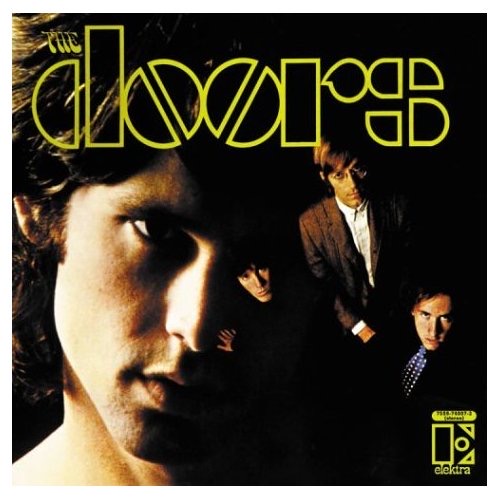
“This singer Jim Morrison who just died in Paris. Have you heard of him? Should we mention him tonight?”
I told him yes and was dispatched to buy a Doors record album that was used as a picture behind the anchorman that evening. As far as I know I was the only one consulted about Morrison’s importance and for a brief moment I felt like I was a spokesman for my generation.
When I got to the ABC News Bureau in LA in 1982 we’d work up selected obituaries in advance for notable Hollywood stars whose health might be failing or were simply getting old. I worked on one for Katharine Hepburn that makes me smile even three decades later.
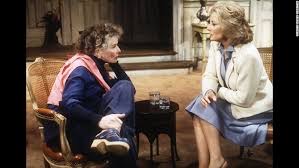
Hepburn did a number of interviews with Barbara Walters through the years and as we watched them I noticed something undeniable. Hepburn aged gracefully. If she was having any plastic surgery, it was not detectable. On the other hand Walters kept getting better looking as time went by. When the final tributes are paid to her and she’s shown doing the weather when she was the “Today Girl” 50 years ago, see if you agree with me.
During my career I learned a few things about when not to die if you’re famous. You don’t want to die on the weekend for instance when hardly anybody’s watching the news and skeleton news staffs don’t have the resources to put together something you’d consider worthy of your status and accomplishments. And you don’t want your demise to be competing for space with some other big event. Take Richard Burton, he had the misfortune of dying during the 1984 Los Angeles Summer Olympics and on a Sunday to boot. He may have played King Arthur in Camelot and been married twice to Elizabeth Taylor but he was upstaged by the athletic heroics of Michael Jordan and Mary Lou Retton. ABC which was the network of the Olympic Games back then barely granted him a last curtain call.
And there’s another situation that you want to avoid if you’re a celebrity and at all able to put off knocking on heaven’s door. On October 10, 1985 Orson Wells and Yul Brynner died on the same day and got equal time on ABC’s World News Tonight with Peter Jennings. This was probably half the amount of recognition they each might have gotten otherwise had they each died on different days.
Actually, despite Welles having starred in and directed Citizen Kane, one of the greatest films of all time, Brynner might have garnered a bit more coverage because there were powerful television public service announcements he made before his death about the dangers of smoking that caused his lung cancer.
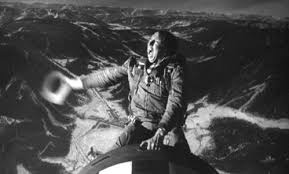
For a posthumous TV tribute sometimes you only needed to be cast in a memorable moment occurring in a movie to make it into millions of homes. Take Slim Pickens. He might not have had the career of an author like say Grahame Greene but Slim rode a nuclear bomb into oblivion at the end of Dr. Strangelove which for TV is a picture worth infinitely more than the 500,000 words Greene produced with his work on the page. Greene’s acclaimed literary trove where the visuals he created could only be imagined inside one’s head was indeed slim pickings for television in comparison and his closing chapter went unread by any TV newsperson.
I got to do Roy Rogers’ obituary the day he died and was faced with a surprising challenge. It was a no brainer that we’d use Roy and Dale Evans singing “Happy Trails to You” in our remembrance. It was heard at the end of every episode of their TV series that my generation watched growing up. And that was the problem. “Happy Trails” was sung over the closing credits but you never saw Rogers and Evans actually singing it on camera.
Fortunately, we found a guest appearance by Rogers on a variety show where he performed his signature tune mounted on his horse Trigger so that we could have Roy ride off into eternity serenading us.
The business of doing an obituary before a person actually dies is certainly prudent journalistically but it occasionally upset those asked to participate in the effort. Case in point— Bob Hope. He warranted extensive preemptive preparation and I was assigned to work up a story on how he had influenced comedy as well as his peers.
I had no problem lining up contemporary comedians like Bill Maher (unpleasant but gave us a good soundbite) and Arsenio Hall (nice guy who gave us an even better soundbite). But I also wanted some of Hope’s contemporaries and was getting no where. In fact at one point I thought I might be heading for big trouble after I had this exchange with Sid Cesar’s agent.
“So, let me get this straight. You want Sid to talk about Hope as if Hope is already dead?” said the agent.
“Well, not exactly. We’re preparing a story about Hope that will be broadcast when he dies but we want to do it ahead of time.”
“So, Hope will be dead when you show this, right?”
“Yes,” I admitted.
“So Sid will talk now but Hope may as well be fucking dead!… I know Roone Arledge and you should be ashamed of yourself.”
A few years later I did a much better job convincing no other than George Lucas to do an interview for me well before the death of another filmmaker Akira Kurosawa. I knew Lucas revered the Japanese director above all others and had credited Kurosawa’s film “The Hidden Fortress” as an inspiration for “Star Wars.”
After making a request for Lucas’s help I received a phone call from his representative.
“As you know George is a great admirer of Kurosawa but he feels uncomfortable speaking about him now and says he would be glad to do so if you ask him upon Kurosawa’s death,” she told me.
“I’m afraid on the day when Kurosawa dies, we won’t have time to get a camera to you. Please tell Mr. Lucas that giving us his thoughts ahead of time would be the surest way for him to have a chance to pay tribute to Kurosawa when that day comes.”
I usually don’t think quite as quickly on my feet but I had this time and got a call back the next day telling me George Lucas would be available for us to interview within a week.
Akira Kurosawa passed away six years later. It was on a Sunday and there was no other earth shattering news breaking on the planet. The obit I had produced, written and edited was in moth balls somewhere in the vaults of ABC News headquarters in New York. I phoned there to make everyone aware of its existence but by thenKurosawa had through no fault of his own committed the ultimate dying gaffe that conspired against my homage and George Lucas’s salute to him ever getting on the air. For our perceived audience he had outlived his success and fame.
I’ve tacked on that obituary here for you to see now. I hope you will watch it. I think he might have liked my opening line…


 pawnedaccordion