
It was a phone call from an ABC World News Tonight senior producer in New York that did it although It began routinely.
“Hey, we want you to do a story about bears.,” he said.
“Great,” I said. “What’s the story?”
That’s often how I got assignments. My bosses in New York had read or seen something somewhere and now they wanted me to turn it into a story for us, but in the next instant everything felt as if it had changed.
“Find one!” he said.
Let me explain. I worked in the Los Angeles Bureau of ABC News from 1983 until 2010 and until that day in the spring of 2001 had produced hundreds of stories for all the ABC News broadcasts
I had been instructed to find them before but invariably they’d been connected to some larger event happening in the country or the world at that moment like “Get an interview with someone who claims to have been sexually abused by a priest,” or “Show us what it takes to purchase an assault weapon.”
I didn’t ever recall being told to find a story on something as unrelated as bears to anything else newsworthy going on in the world that I could think of. So I asked.
“Why bears?”
And was told.
“Because bears are hot. Our research and our focus groups are telling us that people want to see and hear about bears right now.”
So, I took my marching orders and discovered that bears were indeed the flavor of the month on Madison Ave. They were taking a star turn in advertising and especially on television in commercials.
I did the story and at a ranch where wild animals are rented out for the movies even discovered how you get a bear to charge after an actor on the screen— just drag a dead chicken on a rope in front of it and run like hell.
And what I also realized was that in my world of television news journalism it was no longer going to be a bunch of mostly white men with newspaper backgrounds deciding every night what viewers ought to know. From then until I retired what we thought viewers wanted to know became just as, if not more, important.
How did it happen? There are a bunch of reasons. One big one would be the swallowing of the three formerly independent television network companies along with their news divisions by larger corporate entities in the 1980s.
The famous quote by CBS’s William Paley, “You guys cover the news, I’ve got Jack Benny to make money for me,” no longer applied after that. Network news once viewed as a flagship symbol and excused as a financial loss leader was now expected to pay its own way and become a profit maker as well.
When Disney bought ABC in 1996 I became just another “cast member” as Disney employees are addressed in official communications. I thought of myself as a journalist but in Disney’s eyes I believe I might as well have been dressed up as Snow White roaming about Fantasyland.
The fragmentation of television from how we had grown up with it preceded the rise of the internet and with competition from alternative news channels— CNN was the first in 1980 — network television news had begun its decline which has only accelerated.
At the peak of Walter Cronkite’s popularity in the 1970s he averaged nearly 40 million viewers an evening. Today, all three network evening newscasts combined garner only half that number of viewers in an entire week.
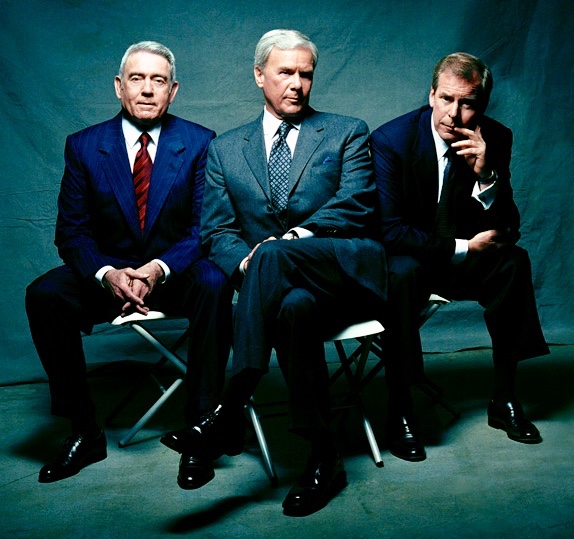
Eyeballs— read that ratings —became everything. Good Morning America and the Today Show, considered parts of their networks’ news divisions, almost stopped doing news but got better ratings than Peter Jennings or Tom Brokaw did in the evening. The morning shows became where the money was made and where it was spent.
When I had started at ABC I never had to do a budget for a story. I even flew on chartered Learjets to breaking news events like school shootings and natural disasters. Increased competition, diminished viewership followed by the impact of the internet with its immediacy and its addictive hold turned us in the TV news kingdom from princes into paupers in what seemed like the blink of an eye.
The jets disappeared. When I produced for Peter Jennings when he came to the West Coast a New York retinue, including his own makeup lady no longer accompanied him. By the end I had to itemize and account for everything I was going to need to spend before I was allowed to spend anything that wasn’t for breaking news.
In the last years of my career I traveled much less even when breaking news happened. There just weren’t enough eyeballs anymore to justify an advertiser paying hundreds of thousands of dollars for a nightly commercial and so we became a little like farmers paid not to grow anything. One of our bureau chiefs even tried to get rid of our coffee machine to save money.
Understand that hard news could be hard. Trying to get people to talk to a camera who had lost loved ones in an airplane crash or all their earthly possessions in a wildfire was not pleasant duty. The pressure to put together a story in just a few hours was enormous and with what we had left at our disposal and also with what became added on to our plate it didn’t just become harder it was also less fulfilling.
We were given new responsibilities that along with the budget cuts further eroded our ability to actually cover the news. We were filing our news for multiple “platforms.” Our correspondents became tethered to satellite trucks so they could be shown live on the scene at any moment. And if the truck wasn’t there they were asked to go live on their cell phones. They didn’t get to report what they saw as much as just what they heard. The technology that provided instant coverage made us hostages to it. Pictures and human emotions are a big part of what TV news provides best and trying to serve all platforms simultaneously— the network, the affiliate stations, radio, the webcast and website —sacrificed our gathering them.
But what’s gone missing most from network news is the depth and the craft we were once empowered to pursue and avail ouselves of to produce it. Are there exceptions? Sure, 60 Minutes is one. It has survived and thrived because it exemplifies the line in the commercial where Orson Wells crooned the words, “We will serve no wine before its time.” 60 Minutes rarely airs a story until it’s the best that it can be. And beyond broadcast media there are many more good independent documentaries being made today that are filling the space that network news has abandoned.
Most television news has continued to deteriorate both quantitatively and qualitatively. Survey after survey now show that people, especially younger people, get their news online. We may still look at a screen but it’s not on a TV we tuned in to watch at 6:30 p.m. It’s in our pockets and purses and available whenever we want it.
I need to confess that the thing I loved most to do during my career wasn’t hard news. Many of my favorite stories often began with the same introduction from the anchorperson— “Finally, tonight…” We called them show closers and they were about things that were more “Gee whiz!” and not “Oh, my God!” There was the guy in Canada who had cornered virtually all the remaining slide rules in the world, and the lightbulb in a firehouse in California that has burned continuously for over a hundred years. I loved finding and sharing these.
I got John Updike to play golf for me as part of an entire show on my beloved sport I produced for Nightline. I had the author Tom Wolfe ask me during an interview if there was anyway I could show the outrageous socks he was wearing on television. I met the surviving Munchkins from the Wizard of Oz. I had a great ride.
My favorite stories were best when I had the best people working with me —video shot by a skilled cameraman, an editor who could cut it together so it turned a great script by a correspondent into something better. My work was collaborative. “The best idea wins” was my philosophy.
In an age of short attention spans, easy access to video from “citizen journalists” as a substitute for being there yourself the opportunity to do the best work possible is rare now. In today’s “spend as little as you can” environment the talent I was able to utilize to do my stories would not likely be available and, even worse, appreciated by those curating the news and counting the beans. The bar isn’t just lower I fear it may be falling to the ground. Our country’s news infrastructure has been hallowed out. It’s more than sad, it’s happening at a time when we need the best journalism to be louder and more pervasive, not silenced and less available.
If I sound bitter, I’m not. Perhaps I’m merely feeling what countless before me have felt about their jobs after they had finished doing them, that their work and workplace had changed almost beyond recognition from what they remembered when they had begun. And it’s hard not to argue that we baby boomers experienced more change in our lifetimes than we could have imagined. But maybe I’ll get one last assignment.
“Hey, we want you to do a story about the future.”
“So, what’s the story?”
“Well, the future seems uncertain.”
“Hmmm, tell me how it turns out.”
 pawnedaccordion