

I know I procrastinate but I made myself a New Year’s resolution that I would write something really special– Which means I have ’til December, right?
–Catherine O’Hara
—————–
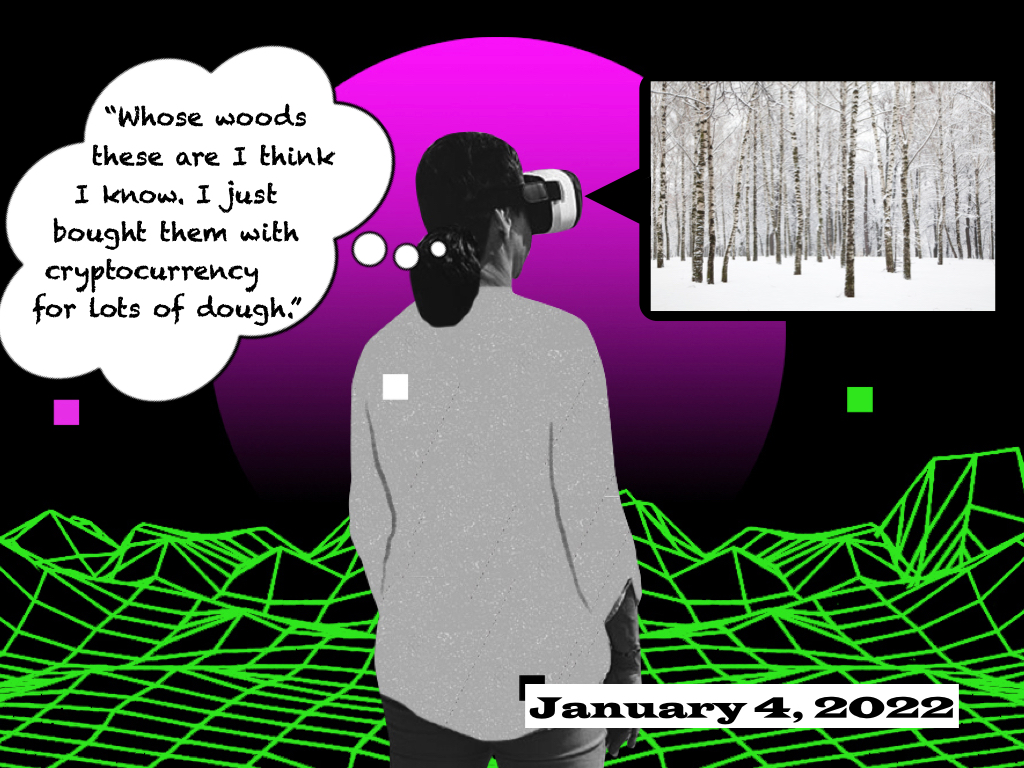
The Meta Verse
This coming June will mark 100 years since Robert Frost wrote “Stopping by the Woods on a Snowy Evening.” Frost had been up all night working on a different poem and stepped outside at dawn. He claimed later that what is one of his most celebrated works came to him then as if he were hallucinating and took him very little time to complete.
So, a couple of things. Frost wrote a poem about looking at snow in June when there was no snow to be seen and although his inspiration happened when he went outside at daybreak, “Stopping by the Woods…” takes place in the evening.
So what? My point is simple. Frost, of course, used his memory and imagination to create the poem and we use ours to enjoy and admire what he composed. When it comes to the four seasons– although in Maine one of them is barely discernible –and a daily morning and evening, we’ve all experienced them so we’re on the same page, at least I still hope so. But what about things you are told exist and find you have trouble trying to imagine and have no frame of reference to help you to do that?
That’s how I’m feeling about what’s called the “metaverse.” I know we’re now living today in an America divided into two different realities that we can easily distinguish. One is where I reside and I’m assuming all of you who get my posts also do. The other, which is often called an “alternate reality” but really should be called out continually from the top of our lungs a poisoned one, scares the hell out of me and makes me feel paralyzed to contemplate its ascendancy.
Can you reason with people living in a different reality than you with “alternate facts” peddled by fear and hate mongers? If you think you know how, please tell me and tell the world!
And now, to my dismay, I’m feeling more and more that a third reality is on the rise and it’s one I increasingly can’t even comprehend. Every definition for the evolving so-called metaverse that I’ve searched for differs from the other– a digital reality, an augmented reality, a virtual reality –so take your pick.
The metaverse claims to be both real and unreal at the same time and I have a lot of trouble trying to understand if you’re supposed to want to invest in or spend money there, how that’s sensible. Can things exist that don’t exist? Oh sure, you can buy a Tesla and other real things with Bitcoin but what about things that may only exist in the metaverse?
What is hot at the moment are places in the metaverse like “Decentraland” where you can buy real estate– or would it be unreal estate? You’ll need a “digital wallet” to make the transaction and I’m not sure you can build on the property you purchase yet. However, “Metaverse Motors” is about to open shop. You’ll need a “metamask” to check out what’s available on the lot. Want to take a virtual Ferrari for a test drive? I’m not sure if there are any roads for that yet either. People are spending money for this. I’m not making any of this up.
I bet if Albert Einstein were alive he might have been able to explain all this to me but there’s no Einstein around and I’m certainly no Einstein, although I once met one of his great grandsons. He was in my kid’s high school class and yes, he was good at math.
My confusion may have started with my awareness of “Bitcoin” as an alternative currency. I’ve seen physical images of Bitcoins and they look like the chocolate coins or what’s called “gelt” that Jewish kids play a game called “dreidel” with at Hanukkah. Playing dreidel on a heated surface is ill advised though– the gelt melts. It appears that getting in on the gold rush for Bitcoin and “mining” for it with your computer uses up so much electricity that we all could be heading for a meltdown.
I’ve learned that Bitcoin is created, distributed, traded and stored– it doesn’t appear to be edible –in a system known as blockchain. I gather that it’s some kind of all purpose mint, bank, trading post and vault but not one with machinery, tellers, branch stores or security guards. Apparently, it does have a virtual safe where all your Bitcoin accumulates and the combination you are given to get into it for a withdrawal is so complex and long that if you lose it, you lose everything you’ve stashed away in there. Hey, I can’t even remember the combination for my locker at the Y.
Then there are “NFT”s which stands for non-fungible tokens and can’t be inserted in a turnstile at a New York City subway station but are being used to buy and sell art– digital art that I’m not clear goes on a wall or an iPhone. Some of these pieces have sold for the equivalent of many millions of real dollars or Bitcoins but I’m not certain which and maybe it’s neither. That’s because most NFTs also rely on blockchain but a different cryptocurrency called “Ethereum.”
Here’s how Ethereum works according to one of its proponents:
“Ethereum is different from Bitcoin in that the network can perform computations as part of the mining process. This basic computational capability turns a store of value and medium of exchange into a decentralized global computing engine and openly verifiable data store.”
Yeah, that’s truly helpful for my understanding. But getting back to Robert Frost, if his time were this time, maybe he would have been among the poets using blockchain and NFTs as the way to publish. There’s now a way in the metaverse for doing just that with your meta verse– what else? –formerly known as poetry. You can have your meta verse purchased as an “original” metaverse manuscript and the buyer will allegedly have the only one in the universe.
NFTS, Ethereum, blockchain… Yes, I guess I’m bewildered as well as skeptical. I find the world is real enough as it is. Two realities are already one too many. I’m going to sit the metaverse out. Why do I need to become a Bitcoin miner? I’m content to occasionally be a devourer of my own supply of chocolate coins. I can always purchase more of them for me and more for Hanukkah gelt for our grandsons with dollar bills or a plastic card in my pocket. As far as I know neither of them are into Bitcoin. The nine year old just opened a bank account– a real one.
—————–

I took this picture on March 18, 2015 which makes it pre-Trump, pre-COVID and an eternity ago. In March of 2015 I never imagined we’d be burdened with the enormity of the challenges our country and the world face in 2022. On the first anniversary of an assault on our nation’s Capitol this day should be one of the most solemn and shared in our country’s history. I doubt it will be.
A professional football coach named John Madden died last week and a moment of silence was observed at all of last weekend’s NFL games. There won’t be a national moment of silence today that I’ve heard about.
A television personality named Betty White died last week and her fans placed flowers on her star on the Hollywood Walk of Fame. Security concerns will likely preclude that there will be flowers placed on the steps of the Capitol today by the public.
President Biden will speak today and I doubt his broadcast will garner an audience even remotely close to the one that annually watches the Super Bowl. And I’ll be shocked if he will be praised or even awarded respect by his political opposition– a group that was equally endangered when the rioters stormed their chambers.
One of Betty White’s celebrity friends paid tribute to her by saying, “The world is different now.” A year ago a mob was stirred up and emboldened by the President of the United States. Although it failed to stop the democratic election of his successor, it delivered a blow to an already wounded nation that has not begun to recover or even been able to address it.
The so-called “insurrection” is still a raging infection that has afflicted our politics, our electoral process, our physical well being and our concern for one another. Our world is different now.
If our history turns further in the dark direction we have been heading, perhaps the photograph I took in 2015 that seemed at the time to be ironic and innocent can be considered prescient.
Today, as I look at the photograph I see it differently. In it the person dressed as the Statue of Liberty is at the ferry terminal where you board to visit the real deal. People’s backs are turned away from her. There’s a guy whose back isn’t but his head is down and he’s looking at his phone.
Nobody in the picture notices the Statue of Liberty and the person in the costume looks weary to me, looks lost behind its mask’s frozen gaze. I know I’m attaching meaning to my photograph that I wouldn’t have seven years ago but I stare at it now and ask myself what future that Statue of Liberty could possibly have been imagining for us?
Give me your tired, your poor,
Your huddled masses yearning to breathe free,The wretched refuse of your teeming shore.Send these, the homeless, tempest-tossed to me,I lift my lamp beside the golden door!
Emma Lazarus wrote the words inscribed on the base of the Statue of Liberty in 1883. Once they were considered our national credo. How many of us, if asked, would agree with that today?We have taken our democracy for granted and now there’s a great risk it may be taken from us. In March of 2015 I would never have imagined this was possible.
—————–
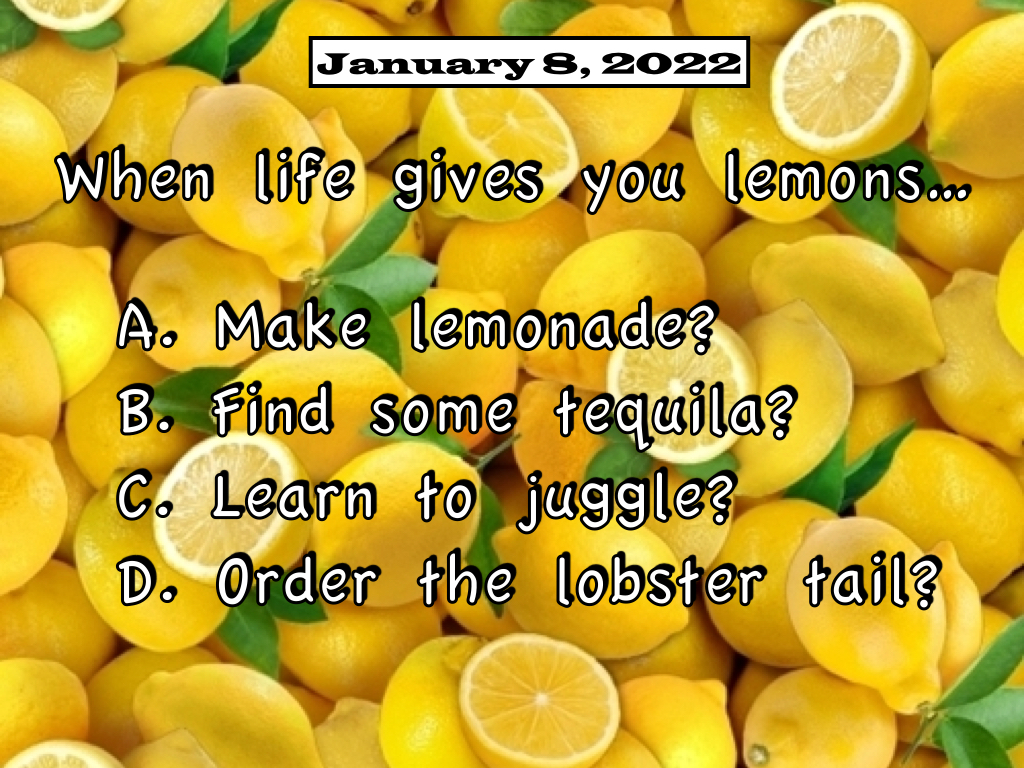
Well, week one of 2022 is done and I’ve finished my annual sort out– learned the term from watching the great British sitcom As Time Goes By –of the room I spend the most time in my house other than the bedroom.
Do you know what the two most important things are in my house? For me it’s a no brainer– one is the mattress I sleep on and the other the chair I sit in in front of my desktop computer.
My office is back together but all my sorting only produced two waste baskets full of stuff to throw out and a five pound pile of papers to be shredded. I have to face it; I don’t really sort. I shift. I move stuff around and as time goes by I won’t know where most of it is anyway and just repeat the process again next year and reacquaint myself with all the things I couldn’t find or didn’t need.
And right now life in general looks a lot like last year and most of the year before. COVID is still hovering in place and many of us are doing the same.
What did Yogi Berra say? “It’s Déjà vu all over again!”
And what did Neil Young say? “Don’t let it bring you down. It’s only castles burning.”
And what do I say? Well, let me steal a little from Irving Berlin…
There may be trouble ahead
But while there’s caffeine and vaccine
And Biden’s agenda may yet advance
Let’s give the country a chance
Before we boomers are dead
Before our kids ask us to pay the bill
And while we still have our manse
Let’s give the country a chance
Soon, we may be eating prunes
Asking someone to lift our spoons and then…
There may be hard knocks ahead
So grab your flashlight and hang tight
Let’s make the best of the circumstance
We’ll give the country a chance
And if you really want to see someone– John Cameron Swayze –turn lemons into lemonade click on the link…
—————–

As I look out my window, the temperature is zero degrees Fahrenheit which is -18 celsius if one prefers to feel colder. This morning I’m about as far away from playing golf here in Maine as I can be. Hey, but in three months and more appropriately dressed for ice fishing, I’ll be golfing again. I know there are only a few of you who share my addiction, but today’s cartoon is as much about the late John Updike and the day I spent on the golf course with him nearly 30 years ago as it is about golf.
A while back a high school classmate asked me to write about my day with Updike at his home course, the Myopia Hunt Club in South Hamilton MA, for a journal he edits devoted to the history of the county in Pennsylvania where I grew up. Updike was born and raised in Shillington and was perhaps the most famous person from Berks County until Taylor Swift started singing songs about how miserable a time she had at her high school in Wyomissing.
I’ve pasted my article below and if you’re interested to learn that John Updike and O.J. Simpson nearly had a head on collision of sorts and how I resorted to playing what I call the “Imber card”, please read on.
A Good Walk Remembered
Golf has spawned as many books on how to play it as any sport I can think of and among the writers who have attempted to explain why so many of us love such a difficult game is John Updike. Updike once described the ups and downs of a round of golf as being like islands of ecstasy in a sea of misery and I won’t disagree. In my opinion he wrote as well as anyone ever has about the mysterious allure of golf and in my office at home here in Maine there’s a frame on the wall with three postcards Updike wrote to me in 1994 that chronicle my getting him to play golf for television.
The initial correspondence represents a courtship on my part and a dance on his. I was a producer for ABC News and wanted to convince Nightline to let me do an entire program about golf. Nightline’s anchor Ted Koppel was not much of a sports fan but ABC broadcast the U.S. Open golf tournament back then in 1994 and at night, after the first two rounds of the event, a highlights package the network aired delayed the time Nightlineregularly began.
Koppel was not pleased about having his show forced to defer to golf for even fifteen minutes and my pitch was, “If you can’t beat ‘em, join ‘em.” I reasoned that since golfers would already be watching the Open highlights, a Nightlinedevoted to their sport might keep them tuned in. Koppel’s staff bought the idea, although I don’t think he was at all enthused. I knew I had better come up with something special. This was Nightlineafter all and it was the class act at ABC News.
So I found three amateur golfers to profile who had unique stories to tell about their passion for the game and had lined up quick commitments to participate from two of them. One was Eli Callaway who had revolutionized the marketing of golf equipment with his best selling Big Bertha driver. The other was a bank president from New Orleans named Pat Browne who was the best totally blind golfer who ever lived.
John Updike was to be my third act. I greatly admired his occasional essays about the game in golf magazines and knew he was a golf fanatic like me. I contacted his publisher and shortly afterward the first of his typed postcards arrived.
“Dear Mr. Imber:” it began, “Your thoughts and mine on golf agree in every regard… If you could come to this area, I’d be happy to talk with a camera.”
That was great news of course but then a couple sentences further on Updike demurred.
“Or we could skip it – there are so many mightier presences in golf than my own.”
Updike and I did share some common opinions on how the game should be best enjoyed. He was a walker like I am, riding in a cart was out of the question for him and so were caddies. Updike carried his own bag, having written once that a caddy handing him a club for every shot would be like someone over his shoulder handing him a different pencil for every sentence he wrote. Certainly, he sounded interested in doing my Nightline project and I was confident I’d get him to sign on. I hadn’t even used the “Imber card.”
I grew up outside of Reading, PA as did Updike. My grandfather and his brother had a store downtown that bore the family name. That John Updike might know who I was if I reminded him wasn’t because of the store, however. It was a bit more intimate than that. My father’s brother Irving was a physician in Reading and just happened to have been Updike’s father’s doctor. My uncle was known to be an outstanding internist but in Updike’s first novel, The Poorhouse Fair, there is a less than flattering description of the fictional interior of a doctor’s office that was detailed enough that it upset its real life decorator who also happened to be my aunt.
At this point communicating with John Updike progressed to using the telephone and it was time to pull out the “Imber card.” As soon as I mentioned my uncle, the doctor, Updike agreed to do an interview. There was just one last obstacle to negotiate. He’d do it but didn’t want to be shown actually playing golf. For me and for television that was a major problem since I needed to enhance at least some of what he had to say with video of him in action. In the end he relented… “How can I turn down Dr. Imber’s nephew.”
As someone once said, “It’s never over until it’s over,” and on the day my crew and I arrived at his golf club north of Boston John Updike announced that he only had an hour to spend on the shoot, admonishing us that…“I’m still a working writer after all.”
Fortunately, once we got started out on the golf course his reserve vanished. Updike turned out to be a total ham and gave us more great material than I could have dreamed of. After lofting a shot into a pond he turned to the camera and asked, “I hope you got all of that.”
Later when looking for a ball in the woods he found instead a piece of broken glass and shuddered theatrically as he examined it before tossing it away. And when at last he hit his best shot of the day he proclaimed with as much irony as exhilaration, “By jingo, there is life after death!”
When I reminded him that we had used up our one hour of his time, he merely asked me if we should continue so I would have what I needed. Any earlier hesitation had turned into total and exuberant cooperation.
I had at first considered doing a straight interview with him but instead asked Updike to read my favorite short essay of his titled The Bliss of Golf.I feel it’s the equivalent of a hymn to the sport and its splendor as well as a lament on the anguish its mere mortal acolytes more often endure. While he was seated comfortably on the lawn in front of the clubhouse and about to begin reading, a gust of wind blew over one of the metal stands and heavy lights we were using, almost striking him in the head. That explained why a few days later Postcard #2 arrived and began…
“Dear Peter Imber: That was fun, especially catching the light pole in an instant of Harry-Angstrom-like reflex.”
Updike’s mention of his most recurring character “Rabbit” Angstrom brought back a memory of my own. I had been an extra in the movie of Rabbit Run that was shot on location in Reading years before. At the time my father and I had played golf with the movie Rabbit, the actor James Caan.
Like any golfer you’ll meet, Updike also filled me in on the state of his game.
“I finally broke 90 yesterday on the Myopia Links and have high hopes for the rest of the season. If I am ever in Berks County with my golf clubs, I will give your father a call.”
That was an offer I’m sure my dad, who played golf well into his 80s, would never have refused.
I traveled to the ABC News offices in Washington to put my golf show together. I would have four days to work there and edit my three golfers’ stories to be ready for broadcast on the Friday night of the U.S. Open. In the television news business that was just enough time to complete a polished version of a half hour show like mine. But there had been an horrific double murder in Los Angeles the previous week and on Wednesday my golf program was moved up a night so that Nightline could use Friday to air its first reporting on what was quickly becoming the most sensational news event in years.
The rescheduling tightened my deadline but would prove to be an exceptionally lucky break. My show aired Thursday night and was well received by my peers. It was to be among my favorite pieces of work I did at ABC News.
Postcard #3 was dated the day after the broadcast and read…
Dear Peter:
I underestimated how late the show runs and my taping ended when I plunked the ball in the water. So could I accept your offer and you send me a tape? My wife and stepson loved it, and the interweave of images and words was very artful. But I did look my age, and moved as if underwater. Good thing it wasn’t on Friday night; Juice’s Last Ride would have ousted it from the airwaves.
Best,
John
I had already returned to my base in Los Angeles on that Friday. The helicopter shots of O.J. Simpson’s white Bronco making its surreal freeway journey filled nearly every television screen in the country that evening. Updike was right, the golf program would have never made it.
For me the O.J. Simpson story was what I would be assigned to work on exclusively for the next year. It was a grueling challenge and as I would think back on what a pleasure it had been to spend a day with John Updike on the links, I’d remember that just like golf the news business had its islands of ecstasy in a sea of misery.
Updike published a collection of his golf stories and essays titled Golf Dreams two years laterin 1996. I don’t know if that was his plan before making his television golfing debut. If I helped prompt him to do it, that afternoon with him on the golf course ranks easily as my greatest contribution to the game.
Here’s a link to the Nightline segment…
—————–

I’ve had this cartoon in the queue for a while and what I thought I should write to accompany it has taken me a while to figure out. Above are two famous quotes that in my view sum up how I see the dividing line between America’s two political parties today.
For a long time I’ve felt that the fight over which side gets to make the rules for America hasn’t been a fair one. Let’s put it this way. As I see it, the Republicans are attacking with flamethrowers while the Democrats are defending themselves with water pistols.
That was the original idea to go with the cartoon but it’s sure led me down a different path from where I thought I’d be going. Perhaps my concept was overly simplistic and historically inaccurate to begin with– both sides try to bend things to their advantage when it’s their opportunity to do so. And anyway, if you’re reading this, it’s likely you’ve had more than enough commentary about overheated partisanship and the resulting dysfunction we’re living with to leave you either bored, frustrated, angry, depressed or numb– pick any combination of the above and your order also includes egg roll and fried rice.
So, the more I looked at the cartoon, the more I became unable to commit myself to writing anything to go with it until yesterday when I decided to research the origin of the quotes in my cartoon themselves and was surprised at what I discovered.
I had always assumed that Grantland Rice’s words were referring to playing by the rules in sports. Rice was of course a sports writer and the most noted and prolific one of the early 20th century. He’s estimated to have written over 20,000 columns which when one does the math, add up to nearly 70,000,000 words.
Rice also published three books of poetry and this most referenced sentence of his– “It’s not whether you win or lose, it’s how you play the game.” –is contained within his poem Alumnus Football. When I read it I realized it wasn’t really about football or sports at all. It’s about displaying tenacity on the field of life. See what you think?
http://runalot.blogspot.com/2007/12/alumnus-football-by-grantland-rice.html
And how about famed football coach Vince Lombardi’s mantra “Winning isn’t everything; it’s the only thing.” Well, right off the bat I learned that Lombardi wasn’t the original author of what’s regarded as his motivational modus operandi. Another football coach named Red Sanders used the phrase first and it appeared in a Los Angeles newspaper article in 1949 after Sanders’ UCLA team lost to arch rival USC.
Lombardi actually claimed to James Michener in a book Michener authored entitled Sports in America that he’d been misquoted and that what he said or meant to say was “Winning isn’t everything. The will to win is the only thing.”
He’s not the only sports figure who has had a quote become forever inseparable from him that is apparently not totally accurate. Baseball manager Leo Durocher acquired his nickname “Leo the lip” for his run ins with umpires and he’s light years behind Yogi Berra in any ranking of the most quoted figures in the history of the sport or any sport.
“Nice guys finish Last” is Durocher’s contribution to the quote Hall of Fame but there’s a bit of a twist. The story goes that his New York Giants were mired in next to last place in the National League in 1946. In conversation with Brooklyn Dodgers announcer Red Barber, Durocher was ridiculing his team’s performance when Barber jokingly teased, “Leo, come on be a nice guy.” To which Durocher replied, “Nice guy? The nice guys over there (pointing at his club) are in seventh place.”
Ok, the National League back then consisted of eight teams so that’s awfully close to “Nice guys finish last.” Durocher’s autobiography uses that as its title and in it he misquotes himself, which may be a swing and a miss but not a called strike three in my book.
Quotes or misquotes and even when there’s mistaken lineage seem to have a tendency to take on a life of their own. Oh sure, they can be taken out of context and sometimes that’s of little importance or consequence but sometimes there are lasting reverberations.
Yeah, I thought I was going to stay clear of politics but when I write it’s like building a road in unsurveyed wilderness sometimes and I guess I just came upon a rock ledge that needs to be dynamited.
At the top of my list of the most damaging quotes by an American about America in American history has for a long time been this one…
“Government is not the solution to our problem, government is the problem.”
— President Ronald Reagan (January 20, 1981)
Yes, that’s right out of Reagan’s first inaugural address– a man assuming the presidency apparently making it clear that he’s disdainful of the government he’s just sworn to administer. At least that’s what I thought until I did a little research about Reagan’s declaration which has become one of his most cited pronouncements.
The quote is arguably taken out of context. Reagan was referring to shrinking government spending and regulations– the cornerstones of what became known as Reaganomics and what I believe were the bedrock of Republican policy until Donald Trump became president and poisoned and disgraced whatever remained of Republican policy. Reagan’s remark in 1960 wasn’t calling for dismantling the entire government but what it came to mean for many Americans over time has been something different and destructive and so, it might as well have.
Ronald Reagan’s “Government is the problem” could be claimed then to have meant something more innocuous but through the years the kindling he lit with it is now a firestorm. And as we now know too well, rhetoric can fan flames that become next to impossible to put out. Trust and respect for Congress, the Presidency and government agencies are at or near all time lows and in a 1986 press conference Reagan threw what, looking back now, was another log on the fire…
“The nine most terrifying words in the English language are: I’m from the government, and I’m here to help.”
According to the quote “experts”– The Yale Book of Quotations and quoteinvestigator.com/ –Reagan was by no means the first person to mock government with this description. Its first use most likely appeared in Reader’s Digest a decade earlier.
Gee, I really have strayed away from my starting line. But let me circle back with one more quote.
Whenever I’m in New York, I try to walk by the Seagram Building on Park Avenue. It was designed by the architect Ludwig Mies van der Rohe and constructed in the 1950s. It’s set back from the street which allows you to take it in more fully. It’s simple, it’s elegant and it speaks to me like a favorite symphony or painting. It also embodies an aphorism that Van der Rohe liked to use– “Less is more.”
Mies Van der Rohe is also connected to an expression that is well known and frequently uttered– “The devil is in the details.” And yes, as you may have guessed by now that’s not what he said if he ever said it at all. I have to wonder how van der Rohe would react if he found out how this most lasting association with him beyond his architecture was, shall we say, remodeled?
What was actually said by whoever said it wasn’t invoking Satan in the basement. No, the original quote got turned upside down. It was “God is in the detail” and thus specified a different stickler for meticulousness– The one who resides in the penthouse.
Ok, that’s enough and I’ll let someone else have the last quote…
“Leave God alone. He has enough problems.”
— Elie Wiesel
—————–
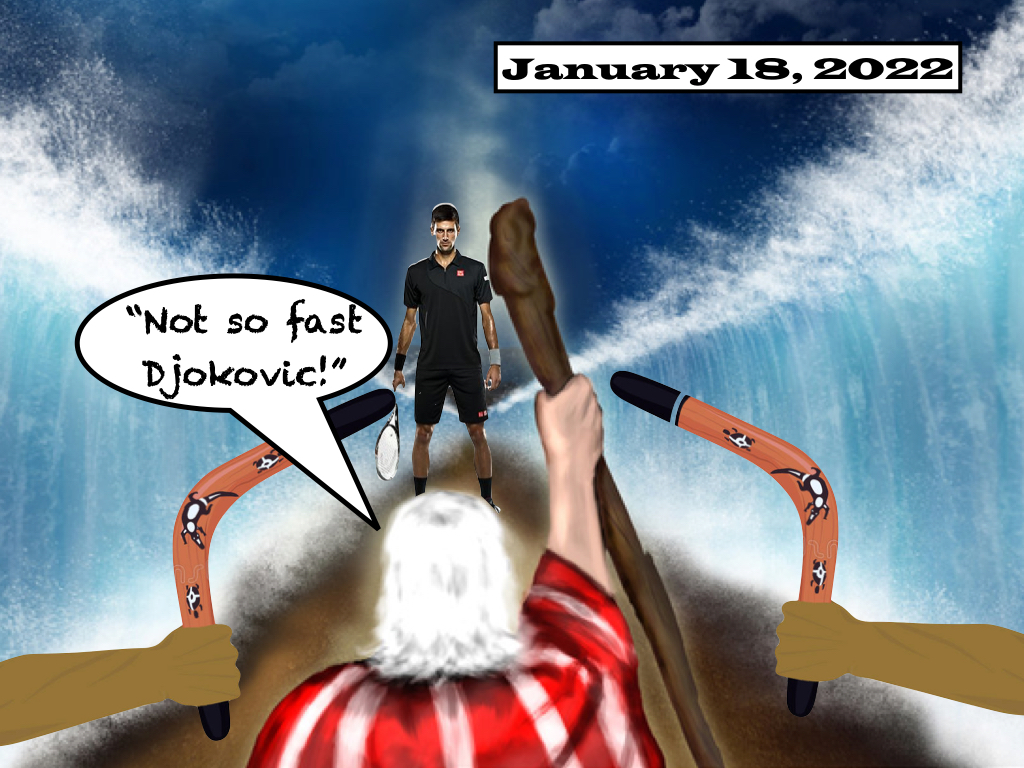
Down under the Novak Djokovic saga appears to be over. The winner of nine Australian Open tennis titles won’t have the opportunity to win this year’s championship. Three quarters of Australians polled believe Djokovic, who refuses to get a COVID vaccination, should have been banned from playing and agree with their Federal Court’s decision that canceled his visa to enter the country for a second time in 11 days.
As of two weeks ago a little less than half of the people in Serbia have been fully vaccinated so in his own home country, although he may be in the majority, it’s still a close call. Serbia is on the list of places our own CDC recommends Americans avoid.
Sports has a way of stoking national passions and Serbia’s president, Aleksandar Vucic spurred his country’s outrage by decrying Australia’s decision disqualifying its premier athlete as harassment and his treatment while in limbo there “Orwellian.”
After my last post I probably shouldn’t be attributing quotes to anybody but the Serbian president set himself up for this one.
“Serious sport has nothing to do with fair play. It is bound up with hatred, jealousy, boastfulness, disregard of all rules and sadistic pleasure in witnessing violence: in other words it is war minus the shooting.”
–George Orwell in The Sporting Spirit (1945)
Those are strong words indeed, but I don’t think war is imminent. Serbia and Australia are 8,500 miles apart and Serbia is landlocked while Australia’s aircraft carrier is only big enough to land a helicopter. However, El Salvador and Honduras, which you can drive between in a little over three hours, did go to war for four days in 1969 after playing a disputed soccer match….
But back to Novak. Djokovic is not your ordinary anti-vaxxer if there is such a category. According to multiple sources, he has held unconventional if not wildly strange views for years when it comes to science, medicine and healing.
For instance he claims he discovered he was gluten intolerant 12 years ago after he held a slice of white bread on his stomach and noticed a weakness in one of his arms. Two years ago he claimed that molecules in water react to human emotions and polluted water can be cleansed by talking to it. Will power is one thing, nonsensical beliefs in mind over matter are another.
That’s not to say many outstanding athletes haven’t been superstitious– Serena Williams would wear the same socks during every match she won in a tennis tournament, Arguably the best basketball player of all time, Michael Jordan had his University of North Carolina college shorts under his team’s in every game he played as a professional. But my own favorite is baseball’s Wade Boggs. Boggs recorded 3,010 hits in his big league career and ate chicken before each and every one of them. He appeared in 2,432 games. I’ll take a wild guess that in the 18 seasons he played he racked up more battered fowl than batted foul balls.
But back to Novak Djokovic and the difference between superstitions and beliefs. I’m neither a theologian nor a philosopher but it seems to me that Wade Boggs’ chicken habit was harmless. He wasn’t pushing his chicken dinner ritual on anyone else, although he did author a cookbook titled Fowl Tips.
Djokovic’s beliefs about detoxifying water, the healing powers of magnetic fields generated by Bosnian pyramids and his well documented mistrust of conventional science and medicine, capped by his refusal to be vaccinated against COVID-19 can be judged– at least by me –as a misguided parallel universe of his own creation. The danger in this is apparent when others who look up to him make his mindset their own.
There are four so-called Grand Slam tournaments in tennis. The Australian Open is the first of the season and is followed by the French Open, then Wimbledon in England and lastly, the United States Open. If COVID is still a clear and present danger to public health at the time they are scheduled, I wonder how each country will deal with Djokovic if he remains unvaccinated?
A few days ago the French parliament voted overwhelmingly to require all who attend sports events to be vaccinated against COVID-19, including the participants. That tournament will be held in May. The U.S. Open is played in New York in early September. If COVID is still rampant and Novak Djokovic still unvaccinated, he could be spending more time in court again than on one.
—————–

“If voting changed anything, they’d make it illegal.”–Emma Goldman
—————–
“Who hears music feels his solitude peopled at once.” — Robert Browning
“Music was invented to confirm human loneliness.”— Lawrence Durrell
“I don’t know anything about music. In my lineyou don’t have to.”— Elvis Presley
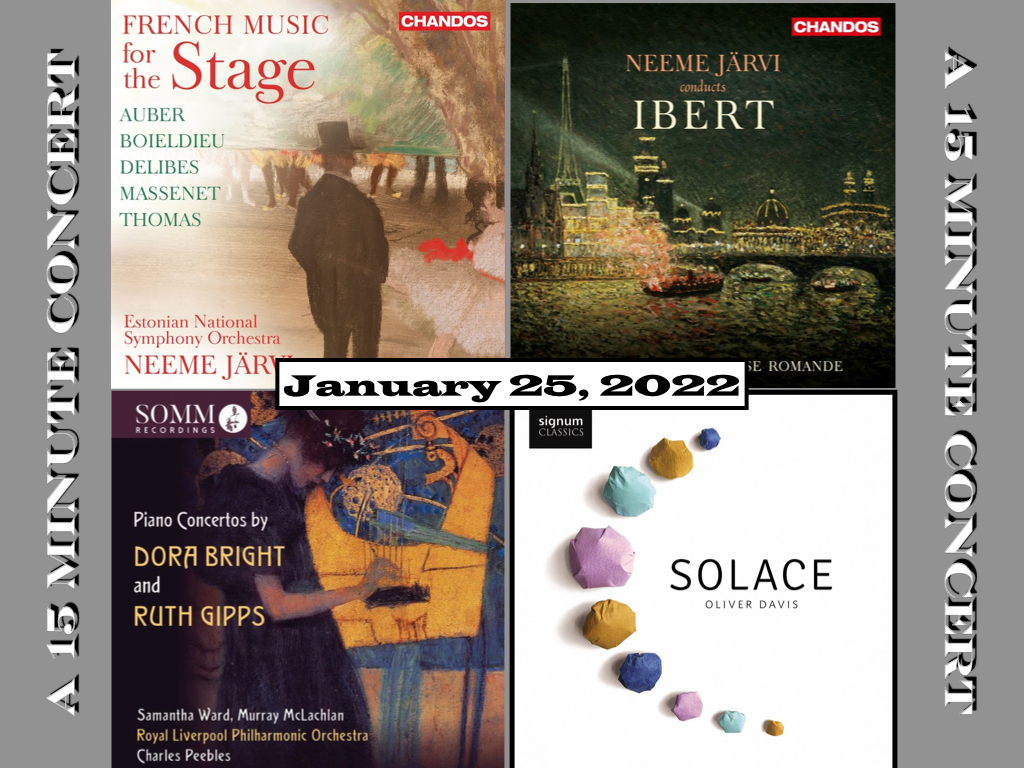
I’ve put together a short playlist of music that I hope you’ll find pleasing. Just click on the link below…
https://www.youtube.com/playlist?list=PLxoRxwG_idkWhWIb4jZ-6b3On_dUZKyue
The pieces in order…
Le Roi s’amuse, Scene du bal: I. Gaillarde. Moderato ben Marcato (2:57)
Composer: Léo Delibes
Sarabande pour Dulcinée — from Don Quichotte (3:38)
Composer: Jacques Ibert
Piano Concerto No. 1 in A Minor: II. Intermezzo – Andante espressivo (4:30) Composer: Dora Bright
Clarity (3:19)Composer: Oliver Davis
Below is a reprise of something I wrote last year about my enthusiasm for classical music and subsequent comeuppance in the 8th grade when I should have been “allegro non troppo” about showing it.
Music Schooled
I can’t carry a tune or even make one out and I have a story to prove it which shouldn’t surprise anyone who has been receiving my cartoons and commentary at this point.
As I write right I’m listening to WQXR– a classical music radio station in New York City. I have listened to it a lot and a lot more since last March. It’s an aural security blanket, a reminder that the world hasn’t yet descended into total darkness.
I love classical music and the credit for that goes to my father and the Food Fair supermarket. In the late 1950s somebody had the idea that the greatest classical music could be widely marketed and I mean marketed literally. A collection called “The Basic Library of the World’s Greatest Music” totaling 24 records was sold at supermarket chains nationwide. The cost was originally less than a dollar an album.
My father purchased the set of all 24 incrementally, which I guess means he made at least two dozen shopping trips to the Food Fair that my mother didn’t. I don’t remember ever being encouraged to listen to the records but when I began to I was hooked, especially by the romantic selections like Rimsky Korsakov’s Scheherazade and Dvorak’s New World Symphony.
Each album came with a booklet that included information about the music and a short biography of the composer. This well of information would eventually provide me with a well deserved lesson in humility.
In my 8th grade music class, part of the state mandated curriculum was an introduction to classical music and our teacher played some of the same pieces that I had already heard at home– remember when phonograph/radio consoles were a piece of furniture?
Anyway, I couldn’t help myself and when the teacher would tell us about a work and its composer that I had already listened to and read about, I chimed in with something I knew that she hadn’t mentioned. I even compounded my smart aleckey-ness by volunteering to do reports on a few composers I particularly liked.
At the end of the school year we took the state mandated final exam. It counted for half our grade and, I believe to this day, was a weird way to evaluate what we had learned. The teacher sat down at the piano and our task was to determine if the scales she played were ascending or descending. I couldn’t hear any difference. I really couldn’t.
At our last class she was about to read out each of our final grades, but there was a pause before she began and I knew what was coming after she said this…“Not everyone this year who did the most work, did well on the listening test which as you know makes up half your final grade.”
She started announcing them. There were a lot of A’s– we were the so-called accelerated group –but then she got to me…“Peter, D on the final, B- for the year.”
I was sitting in the back of the room and at that moment a lot of heads turned toward me with big grins on their faces. I had earned them and I still see them.
Later in life I came to realize what was a huge embarrassment at the time had a silver lining. I figure it this way. Why did I love classical music perhaps more than the other kids? Easy– I hear it differently!
A final note…At college I discovered I had an unusual musical ability that might be my ears compensating for their inability to distinguish when a pianist’s hands are moving to the left or to the right.
The college radio station held a contest and its premise was simple; a popular song was played backwards and the first person who was able to identify it won.
In quick succession I was the prize winner three straight times before I was banned from further participation. My rewards, by the way, were record albums. All three were soundtracks from Elvis Presely movies.
And for those of you who have listened and read this far, here’s a favorite short work from Bruno Bozzetto. It’s a piece of animation set to music from a film titled Allegro non troppo which he created in the 1970s.
I think it sums up the naked cynicism and hypocrisy of those today who have encouraged so many not to get vaccinated against COVID-19 while they themselves are… Bozzetto’s cartoon may have been prescient except for its ending. He was an optimist…
https://www.youtube.com/watch?v=MXm9SyD1Oos
—————–
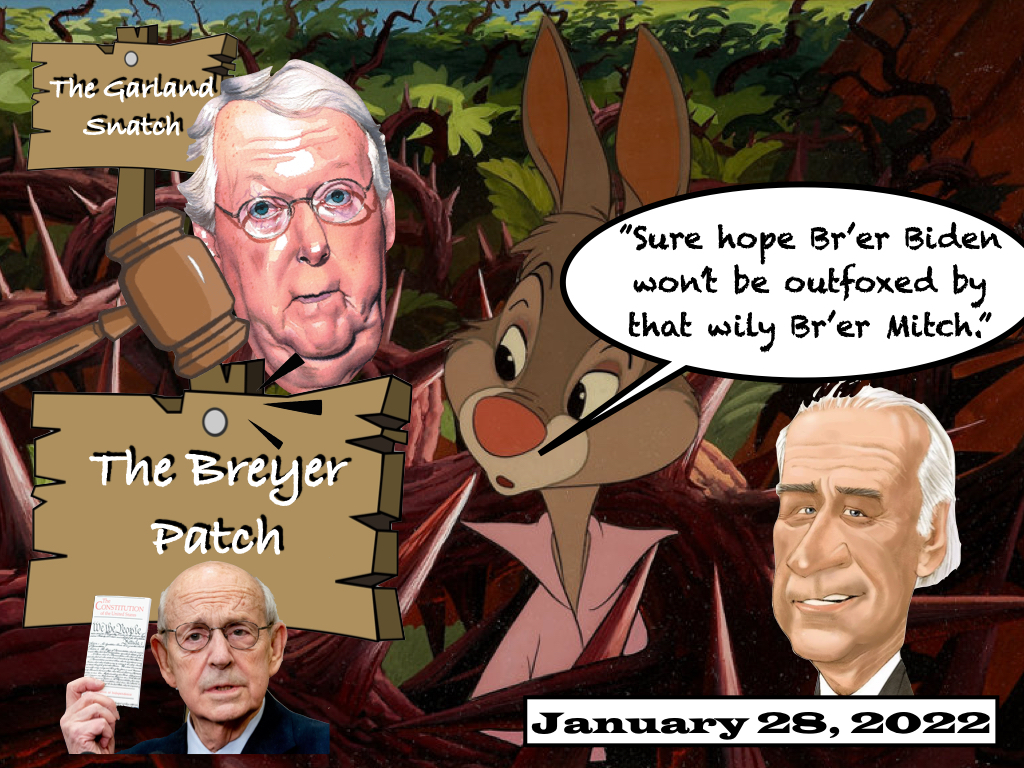
“No matter how cynical you become, it’s never enough to keep up.”— Lily Tomlin
I was going to leave it at that with Lily having the last word but then I read a column by Linda Greenhouse in the New York Times that described Stephen Breyer this way…
“Although the labels often affixed to Justice Breyer are “pragmatist” and “seeker of compromise,” it has always seemed to me that these, while not inaccurate, miss the mark. They discount the passion beneath the man’s cool and urbane persona, passion that I think stems from his early encounter with a court that understood the Constitution as an engine of progress.”
Those last seven words speak volumes to me and made me rethink my cartoon might be something more than just an attempt to be witty by playing on Breyer’s name and Joel Chandler Harris’sfabled briar patch.
The Disney movie Song of the South, based on Harris’s Uncle Remus stories was withdrawn from release two decades ago and the film had even created controversy when it premiered in 1946. The mainstream press reviews were mostly effusive…
“Topnotch Disney—and delightful” — Time Magazine
But the black press was divided…
“Song of the South will prove of inestimable goodwill in the furthering of interracial relations.” — The Pittsburgh Courier
“As vicious a piece of propaganda for white supremacy as Hollywood ever produced.” — The Afro American
I saw Song of the South as a kid and had no idea that it might have been viewed as defamatory. In the 1950s I watched the TV sitcom Amos ‘n Andy and was oblivious to any denigration of black Americans and the offense they might have taken at being portrayed as negative stereotypes on television.
My awareness and sensitivity evolved and so did most of the country’s and we have the Supreme Court to thank for that. Brown v. Board of Education Topeka in 1954reversed the legality of “separate but equal” that had been established by Plessy v. Ferguson in 1896. Later, other decisions by the Court made racial discrimination in commerce and marriage unconstitional as well. The Court and the country evolved.
Stephen Breyer’s retirement in my estimation is worthy of an unqualified “job well done.” I share the belief that the Constitution has been and needs to be an engine of progress. I also share the fear that the Court that Justice Breyer is leaving won’t be seen as abiding by that conviction in the years ahead by a majority of Americans.
—————–

“You know those little snow globes that you shake up? I always thought my brain was sort of like that. You know, where you just give it a shake and watch what comes out and shake it again. It’s like that.”
— Gary Larson
I agree, Gary. And right now here in Maine there’s a whole lot of shakin’ goin’ on!
—————–

 pawnedaccordion