

So It Goes…
Jo and I were in Dresden recently. During three days in February of 1945, Dresden was bombed by over a thousand United States Army Air Force and Royal Air Force planes. The firestorm created by nearly 4,000 tons of high explosive and incendiary bombs turned the city’s center into a blast furnace. It is estimated that over 25,000 people perished.
The author Kurt Vonnegut was a prisoner of war held in Dresden at the time and survived its destruction. His novel Slaughterhouse-Five which was published 20 years afterward is considered his expression of the experience.
The bombing of Dresden was intended to terrorize Germany and force it to surrender. Less than three months later Adolf Hitler committed suicide and the German High Command surrendered unconditionally.
Of course the war continued in the Pacific until August, 1945 when America dropped atomic bombs on the Japanese cities of Hiroshima and Nagasaki killing between 150,000 and 250,000 people.
Jo and I have been to Hiroshima where we saw a group of school children being told about what happened there. Being present at the Hiroshima Peace Memorial Museum and seeing what’s left of the only structure that partially survived the blast was a somber, reflective and unsettling experience.
The memorial commemorating the bombing of Dresden is small and we were unaware of its existence until I got home and found a picture of it. The main square of Dresden was large, attractive and full of life. It felt unlike Hiroshima since there appeared to be no effort to remind us of what that took place there less than a century ago.
Yes, both Dresden and Hiroshima have been rebuilt and may now relate to what befell them differently but I don’t think our species has learned much from the tragedy of either. And so it goes.
Iceland is Melting
But you knew that…

Our driver surprised us.
“We’re not worried about sea level rise here. It’s the opposite.”
Jo and I had just arrived in Iceland a couple weeks ago and Palli had picked us up at the airport and was taking us into Reykjavik. We were both tired and failed to ask him for an explanation of how a country on a path to losing half its name and all its glaciers in the next 200 years and that is currently having a melt down of 11 billion tons of ice annually isn’t going to see its coast line submerged due to a rising sea.
Despite not being an ocean scientist I’ve learned that there’s a geological process that sounds like the name of a psychedelic drug called “isostasy” that explains why. As the weight of the melting glaciers decreases, the land slowly rises back up due to the reduced pressure. Think memory foam pillows. When you remove your head from one, it returns to its original shape (or else your head is a cannonball). This presents a problem for Iceland’s fishing fleet because accompanying tidal changes are making its passages increasingly shallow but explains why Palli isn’t worried that that the road from the airport will eventually be flooded.
And Iceland is still gaining ground in relation to climate change even though it is one of the fastest warming places on the planet. The country generates almost of its electricity from renewable sources and 90% of its homes are heated by geothermal energy.
Iceland imports all its motor vehicles and since it has no domestic oil production, it needs to buy all its gas from elsewhere to fuel them. A gallon at the pump costs about $8 which is why it’s just behind Norway as the country switching to EVS the fastest. An added incentive is that sales of vehicles using fossil fuels will be banned in Iceland after 2030.
And here’s a surprising twist. Turns out the country has the most golf courses per capita of any in the world— 65 of them for a population of under 400,000. And what’s more head scratching to me is that Iceland has just three indoor ice hockey rinks and only 600 players. Call it a preemptive adaptation to their environment of the future.
In a poll last year only 3% of Icelanders denied that humans are contributing to climate change and over two-thirds are significantly worried about it. Contrast that with an analysis this summer done by the Center for American Progress that determined that 123 representatives in our United States Congress are climate change deniers which is 23% of the 535 members of the House.
There are so many things to be anxious and skeptical about these days but deniers are denying the undeniable. The earth is heating up and our world and our country may or may not be addressing the challenge as urgently as seems necessary. My generation thought we were going to change the world and I guess we have, just not in the ways many of us had dreamed and hoped for.

End of the World 5 Miles
Jordan, Montana 10…

I worked for ABC News from 1983 until 2010 and was based in its Los Angeles bureau. Although Walter Cronkite had retired as the anchor of the CBS Evening News in 1981 and CNN had begun sharing the television news space on cable TV a year before that, network news operations were still on their high horse.
Disney didn’t own ABC then and the other two major network news divisions— CBS and NBC —also hadn’t been saddled yet either with having to make a profit for their soon to be landlords GE and the Lowes Corporation.
The Pawned Accordion is a reader-supported publication. To receive new posts and support my work, consider becoming a free or paid subscriber.
To produce a news story in those still flush with cash days at ABC News no budget was required. Of course by the time I retired that had no longer been the case for a long time. Viewership eventually had declined dramatically and so had advertising revenues. Traveling to cover any story on location that wasn’t deemed significant breaking news became increasingly rare.
In 1996 I spent a month in Montana covering a story or perhaps more accurately waiting for one to possibly happen that I doubt would receive much attention and certainly little network news coverage and surely no physical presence of a network news crew on site today. So, here’s what I wrote a few years ago about my time in Jordan— not the country but the place…
Where is the most isolated town in the lower 48? I had no idea but when I found out, I wasn’t surprised. It’s Glasgow, Montana. That’s according to Ken Jennings, who in addition to having won a ton of money on Jeopardy, wrote a book titled Maphead, and as a kid slept with a Hammond atlas next to his pillow.
Jennings has calculated that 98% of us live less than an hour’s drive from an urban area of more than 75,000 other people. (I guess Jo and I are part of the 2%. We don’t. Portland, ME is a nearly two hour drive for us and it’s population isn’t even 75,00.)
Montana’s Glasgow is four and a half hours from a city that size in any direction. I haven’t been there, but I spent a lot of time nearby— well, sort of nearby. Jordan, Montana is only 60 miles from Glasgow as the crow flies, but if you’re not a crow and have to drive, it’s 137 miles and a five hour trip without a bathroom break.
No doubt Jordan is a close runner up in the “Middle of Nowhere” sweepstakes and in 1996 there was a standoff just outside the town between a group known as the “Montana Freemen” and the FBI.
The Freemen were right wing zealots who believed no government had sovereignty over them beyond the county level. They didn’t pay their taxes and had also committed bank fraud, mail fraud and wire fraud— if you’re counting, that’s a fraud trifecta. At one point they had also offered million dollar bounties on local officials and a federal judge who they wanted captured dead or alive.
After a series of confrontations with local law enforcement and federal agents, the Freemen holed up in a farmhouse on a foreclosed property to avoid arrest.
ABC News considered this a big story because three years earlier the FBI had been involved in a siege in Waco, Texas. That standoff had resulted in the deaths of nearly 80 members of a religious sect called the Branch Davidians. So, I was sent with a crew to Montana to be in place and produce stories for broadcast in the event history was going to repeat itself.
Our arrival in Jordan coincided with the sheep shearing season and the town’s two motels were booked full with the shearers. At one of them I noticed a room behind the front desk that was filled with furniture and other junk. We needed it.
Me: “Does the room behind the front desk have a bathroom and a shower?”
Motel Manager: “Yes, but it’s a tub.”
Me: “I’ll pay you $100 if you move that stuff out and give me the room.”
I probably overpaid but the space was emptied in an hour and way too many of us spent several nights in it. Sharing the bathroom with the tub was ugly and when I saw one of the crew was rinsing his mouth with Snapple after brushing his teeth, it was apparent it was time to move out. We upgraded our accommodations after some of the locals accepted our offers to rent their trailer homes.
According to the last census, the population of Jordan, Montana was 343. We were the only network that had shown up for the story and became, I’m sure, a welcome source of income for the town.
There was really only one restaurant in Jordan and it was Ok but with a limited menu. It had a salad bar and once, when there was nothing left on its cart, a woman emerged from the kitchen with an industrial size can of peas. That became the salad offering for the evening.
After a couple of weeks the correspondent who had been with me was rotated out and another from the ABC News bureau in D.C. replaced him. I had never worked with this guy before and as I drove him to his first dinner, it was clear he was not happy about being conscripted for Jordan duty.
His attitude worried me and I feared that he would make life for the rest of us unpleasant. When we got to the restaurant he quickly was taught the lay of the land and humbled in the process.
Our teenage waitress came to the table and our new arrival asked her if he could see a wine list. Here’s how that exchange went and I remember it word for word.
Waitress: “We don’t have a wine list?”
Reporter: “Well, what kind of wines do you have?”
Waitress: ” We have rose and chablis.
She pronounced rose as you would the flower and chablis as if it rhymed with cannabis. Our reporter was undaunted.
Reporter: “So, bring me the bottles.”
Waitress: “I can’t.”
Reporter: “Why not?”
Waitress: “Because they’re in boxes.”
It was like seeing a bucking horse get broken and it was certainly an appropriate howdy do to Jordan for a snobby city dweller. After that I was less worried that our new guy was going to be trouble. In fact I came to admire his chutzpah. At one point he offered someone vetting one of his scripts in New York $100 not to change a word.
It didn’t take long to figure out that if I wanted to know who or where somebody who lived in Jordan was, I could just ask at the post office. It was unlikely you could take a leak in Jordan without everybody knowing about it.
And I gained some useful information by chance one day when I just happened to be using the laundromat at the same time as a couple of FBI agents. I overheard them discussing that the director himself was coming to Jordan the next day for an “unannounced” visit. We were at the airport when his plane arrived.
For the locals Jordan was a place where if you got into a fight at the Hell Creek Bar and were bloodied, you kept drinking because there was no physician residing in town and whoever was going to stitch you up would come from Glasgow for all I know.
After a few months and much negotiation the Freemen surrendered and so, my stint in Montana had been babysitting for a potential disaster that didn’t happen.
I haven’t been back since however, I doubt Jordan has changed a lot in three decades. Unless its kids want to be ranchers, I don’t imagine there’s much to keep them there. But before any wistful reminiscing about the demise of rural life in America, let me relate a conversation of my own with that same high school waitress and local sommelier.
Me: “You must have a pretty small high school.”
Waitress: “Yes, too small.”
Me: “Really, why?”
Waitress: “Because I hardly have anyone I can date.”
Me: “That’s too bad, but I guess it’s to be expected, this is a small place.”
Waitress: “Small is one problem. The other is I’m related to over a third of my class.”
Pour me another glass of rose or chablis please.
—————–
Remember the Maine
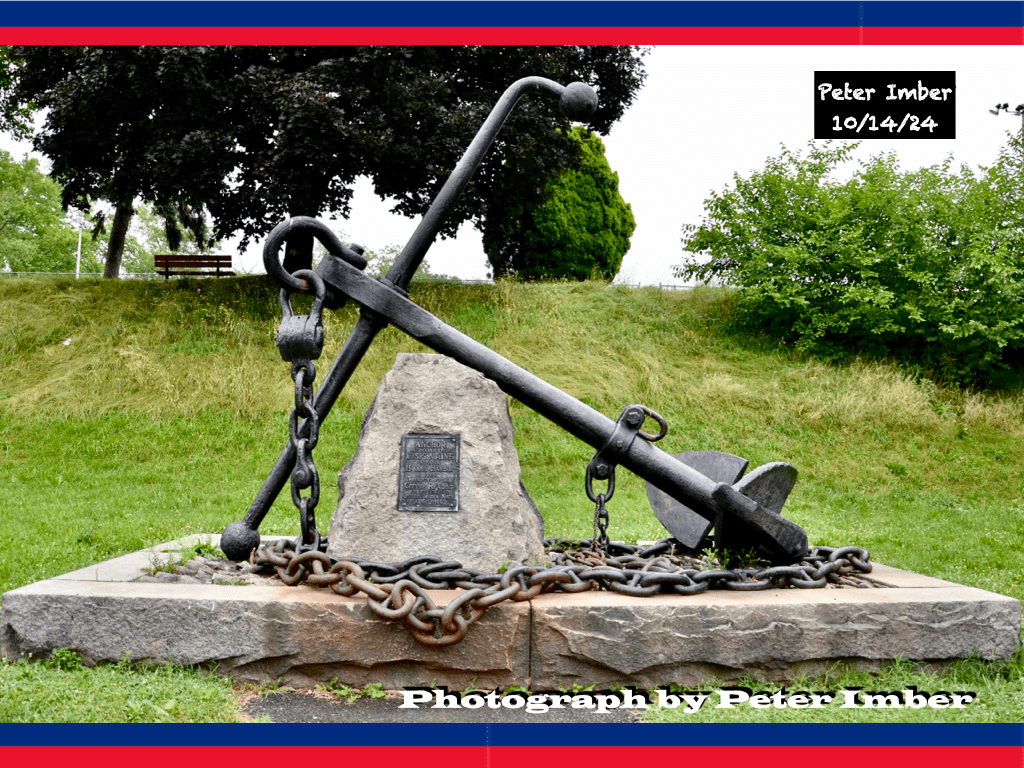
How did its anchor end up across the street from my dentist’s office?

From the 1941 movie Citizen Kane directed by Orson Welles and written by Welles and Herman Mankiewicz…
Charles Foster Kane: “Read the cable.”
The Pawned Accordion is a reader-supported publication. To receive new posts and support my work, consider becoming a free or paid subscriber.
Subscribed
Mr. Bernstein: “‘Girls delightful in Cuba. Stop. Could send you prose poems about scenery, but don’t feel right spending your money. Stop. There is no war in Cuba, signed Wheeler.’ Any answer?”
Kane: “Yes. ‘Dear Wheeler: you provide the prose poems. I’ll provide the war.’” The scene from Citizen Kane I’ve referenced was apparently not a total invention of the film’s screenwriters. The larger than life character of Kane was based on the larger than life young publisher of the New York Journal William Randolph Hearst.
In 1896 Hearst had hired the artist and sculptor Frederic Remington and sent him to Cuba to draw sketches that he intended to print in his newspaper of the insurgency he thought was raging against Spain’s colonial rule.
After only a few days in Havana Remington purportedly sent Hearst a cable… “Everything is quiet. There is no trouble here. There will be no war. I wish to return.”
Hearst, who along with his rival publisher Joseph Pulitzer, were outdoing each other attempting to whip up Americans’ outrage against the Spanish to sell their papers, supposedly cabled Remington back… “Please remain. You furnish the pictures, and I’ll furnish the war.”
On February 15th, 1898 the battleship U.S.S. Maine sunk after it exploded in Havana harbor killing 266 of the 354 American crewmen who were aboard.
At the time the cause of the explosion was unknown but the United States blamed the Spanish military occupying Cuba anyway and when diplomatic efforts failed to resolve the matter the Spanish American War began two months later and was over in ten weeks.
Hearst’s and Pulitzer’s media warmongering may not have brought about the real war but what Welles and Mankiewicz wrote as dialogue for Citizen Kane has become the more memorable version of the exchange where Hearst allegedly claimed he would create one.
But what does any of this have to do with my photograph of an anchor from the U.S.S. Maine in a city park in Reading, Pennsylvania and right across the street from my childhood dentist’s office no less?
Until yesterday I never knew and I never asked why or how this happened but now after some research I think I have the answers.
The remains of the U.S.S. Maine were not moved out of Havana’s harbor until thirteen years later in 1911 and sunk at sea. But some of its parts were preserved to create monuments to “Remember the Maine.”
Three years after that a U.S.S. Maine anchor, rusty and covered with barnacles, arrived via railroad on a Pennsylvania— not a Reading —RR train and the anchor was placed in the city park that same day and subsequently cleaned and repainted.
Reading’s local Democratic congressman was a man named John Rothermel and it was he who had requested from the Navy that the city be the recipient of one of the Maine’s anchors.
1914 was an election year and Rothermel was seeking reelection to his seat in the House of Representatives. His Republican opponent immediately accused him of a political stunt but he wasn’t the only one. Rothermel was so unpopular with many in his own party that they too joined in the criticism. Here’s a headline I found in the local paper from that time…
DEMOCRATS TEAR JOHN ROTHERMEL TO PIECES; RIDICULE ANCHOR SCHEME TO HOLD VOTES
But then it got seriously more ugly. An article in the paper a short time later pointed out that the year inscribed on the anchor was 1846 which was 42 years before the U.S.S. Maine was built.
The idea that the United States Navy would put an antiquated piece of equipment on one of its vessels not only seemed suspect but led many to now believe that Rothermel’s “stunt” was something even worse.
With the anchor’s authenticity in doubt his procurement of it wasn’t just a scheme but now thought to be possibly a hoax and an embarrassment to Reading to boot.
More headlines followed from spring into summer until the day of the official dedication ceremony on August 1, 1914. For that event Washington sent a young assistant secretary of the Navy to clear the air and perhaps Rothermel’s name. Here is some of what he said…
“It has come to my ears that certain persons, who must have had either a strongly perverted sense of humor of a malicious design to circulate falsehood, have suggested that the national government has deliberately attempted to perpetrate a fraud on the city of Reading by sending it an anchor which was not one of the anchors of the Maine. There is of course no question that this anchor was on the Maine at the time she was blown up in Havana harbor…
Its history is complete and absolutely authenticated, but I cannot refrain from suggesting my disappointment that there can exist in any community people so small as to allow personal or political jealousies to influence them so far that they may publicly doubt the honesty of the national government.”
The speech didn’t help John Rothermel keep his seat in Congress. His own unpopularity even before the controversy created by the anchor had deep sixed his candidacy. That assistant secretary of the Navy who spoke in Reading that day? He announced his own run for the United States Senate a few months later. His name was Franklin Delano Roosevelt and he too lost his race that year.
And what about my dentist’s office directly across the street from the U.S.S. Maine’s anchor? Well, it has no relevance whatsoever to the true story I have just told you but my dentist was my father’s second cousin and I think he drilled and filled my many cavities as a favor to the family.
His services may have been free but they certainly were not pain free. He fit me in when he could between other appointments and I was never given novocaine. Yes, I still remember the pain.
—————–

And American Bandstand Played On
The first paying job I had in journalism was at my local newspaper in Pennsylvania. I was reminded more than once that years before John Updike had preceded me as a copy boy there. I left my initial paycheck in my pocket and had to ask for one to be reissued after the pants went through the laundry. I’m willing to bet Updike wasn’t so careless.
I worked during my summers in high school at the Reading Times and aside from delivering copy to the linotypists (How many of us remember that amazing machine?), ripping the wire stories off teletypes for the editors (Another great old machine that literally and figuratively churned out the news.) and getting Antonio and Cleopatra cigars for a sports writer— his name was Ken Tuckey and his column was Ken Tuckey’s Derby– I was soon given other tasks.
The comic strips came in a few weeks in advance, each on a separate page for the entirety of their upcoming run. I was tasked with cutting them up and putting all of those scheduled to be published for each week on Monday in one pile, all of those for Tuesday in another… you get the picture. I thought it was cool to know what was happening with Dick Tracy and Beetle Bailey ahead of time, but discovered nobody else cared.
Reading had two daily papers and since I worked at night for the morning edition I was soon also assigned to re-edit the obituaries that had appeared already in that day’s evening paper. Re-edit? Yes, the two newspapers owned by the same family still had to be as different as possible including the obits. In those days not so long ago it wasn’t unusual to have newspapers thrown on your porch twice a day.
At the Reading Times and the Reading Eagle each paper had a completely separate staff even though they existed side by side in a newsroom on the same floor. Each paper had its own reporters and some even covered the same beats. Re-editing the obituaries meant just changing around the order of the sentences in what had already been published. I wasn’t exactly being asked or expected to dig up anything new.
Which brings me —in my around Robin Hood’s barn way —to Dick Clark. During my career at ABC News I liked doing obits. No, I don’t have a weird fascination with people dying but pulling together an overview of someone’s accomplishments was more interesting and certainly more fun and a welcome diversion from going to wildfires, plane crashes and murder scenes.
Back before network television news had competition from shows and cable channels that were devoted to sports, business and celebrity, if someone were famous enough, we’d prepare his or her obituary ahead of time. I worked on ones for Jimmy Stewart, Katharine Hepburn and Bob Hope as well as Slim Pickens. In his case a moment on the screen riding an atom bomb into oblivion in Dr. Strangelove got him on the evening news in 1983 and I was based in the ABC News Bureau in Hollywood after all.
Out of admiration I put an obituary together for the Japanese film director Akira Kurosawa and even got George Lucas, who considered Kurosawa an important influence— His squabbling robots in Star Wars were inspired by two characters in Kurosawa’s movie The Hidden Fortress. —to do an interview for it.
By the time Kurosawa died he was no longer remembered well enough to even get a mention on ABC News World News Tonight and my tribute to him is possibly stored in a warehouse somewhere never to be unboxed or seen. It’s unfair but you can outlive your fame.
I had hoped to do an obit for Dick Clark but only because I wanted the opportunity to write the opening line. Here it is: Dick Clark died today. He was 16. No, I probably wouldn’t have been able to get that on the air but I think Clark liked and made a point of milking his alias as “America’s oldest teenager.”
Dick Clark was famous for never having grown up but I did only 50 miles from Philadelphia. I watched Bandstand before it was American Bandstand. In fact I had begun watching it on the local station in Philadelphia even before Clark became its host in 1956. That happened when he replaced the original guy who was ousted because of a DUI and accusations of sexual harassment. Within a year ABC picked up Bandstand and added the American prefix and broadcast it nationally.
Clark was squeaky clean, another aspect of his image he diligently cultivated. Somehow he survived the payola scandals of the 1950s when record companies were caught bribing disc jockeys to play their songs on the radio. Despite having had ownership in nearly three dozen record labels, Clark was exonerated.
Back then I had two TV induced crushes. One of them was many boys’ dream girl at the time Annette Funicello, the juvenile femme fatale of the Mickey Mouse Club. I met Annette by the way when I worked at a Radio Shack in Los Angeles while attending film school. I installed a replacement radio antenna on her Cadillac which had a poodle as its hood ornament.
My other crush was on a girl named Justine Carrelli who jitterbugged every weekday afternoon on American Bandstand. She had a boyfriend named Bob. Annette had Frankie Avalon. My odds of getting a date with either girl were a billion to one but I guess to the adolescent me that meant I had a chance.
Dick Clark had a number of acts from Philadelphia launch their careers on his show: Avalon, Fabian, Bobby Rydell, Chubby Checker and Danny and the Juniors. Remember the group’s hit At the Hop? The song’s original title was actually Do the Bop. When Clark heard it the first time, he told the Juniors to change it to At the Hop and they did.
In 1958 it reached number one on the charts after Clark had the Juniors perform it on American Bandstand. For his suggestion and promotion Clark asked for and received half of the publishing rights. Clark’s shrewdness as a businessman was also legendary.
At some point in the early 1980s I was home visiting my parents. It was a Saturday night and with nothing to do I saw an ad in the paper: Danny and the Juniors appearing at Hiester’s Lanes. Hiester’s was a bowling alley with a cocktail lounge and I went. The set was brief with At the Hop as bookends and Rock and Roll Is Here to Stay and Twistin’ USA— Chubby Checker covered that one —in between. Those were the big and I believe the only hits for the group.
Afterward I saw Danny Rapp— the “Danny” —sitting by himself at the end of the bar. I grabbed the stool beside him and we talked. He was the lone original Junior who had performed that evening. The others, Danny told me, had moved on and gotten day jobs, married and were raising families.
They weren’t Juniors anymore. He was the only one hanging on to the past and I felt he knew that it was moving irretrievably further and further away from him. As we sat and talked it seemed clear he wasn’t happy about it and I guess it was worse than that.
On April 3,1983 I heard on the radio Danny had been found dead in a motel in Quartzsite, Arizona. He had shot himself in the head.
—————–

That’s My Song!
I thought I had a great idea. Years ago one of my pitches to Nightline was to produce a broadcast for Valentine’s Day about women who had popular songs written about them when they were young. I wondered how their lives had turned out after they had been immortalized in the annals of rock and roll and thought others would be interested in finding out.
Nightline passed on my idea but I got to accomplish part of what I envisioned anyway and to meet two of those women— Peggy Sue Gerron and Donna Ludwig.
The Pawned Accordion is a reader-supported publication. To receive new posts and support my work, consider becoming a free or paid subscriber.
Subscribed
The songs Peggy Sue and Donna were big hits in the late 1950s and their singer- songwriters, Buddy Holly and Ritchie Valens along with J.P. Richardson— The Big Bopper —died in a plane crash in 1959. Holly was 22. Valens was 17. I was 12 and in the 6th grade. Only JFK’s assassination four years later would surpass the shock I felt at the time.
Both Peggy Sue and Donna agreed to be interviewed for my story and both were delightful to meet but all these years later I have come to realize that their own stories of how they had dealt with loss, remembrance and notoriety were quite different and I did not really grasp how different when I met them in 1996.
Peggy Sue
My first stop in putting the piece for Good Morning America together— GMA green lighted my doing it —was Lubbock, Texas where both Peggy Sue Gerron and Buddy Holly grew up and where she had returned later in life. Peggy Sue was not Holly’s girlfriend in high school. Her boyfriend was Buddy Holly and the Crickets’ drummer who she eventually married and divorced— Yes, Peggy Sue got married and not just in another song but twice actually.
How her name became a song title to begin with was part romance and part happenstance. Buddy Holly wanted the song to be called Cindy Lou for a niece of his Cindy, who had recently been born, and Lou, his sister. The drummer Jerry Allison and Peggy Sue, who had begun dating in high school, had just broken up and Allison, who is credited with co- writing the song, asked Holly to change its title to Peggy Sue in the hope he could patch things up.
Peggy Sue just happened to rhyme with Cindy Lou so the change was easy and might have changed the lives of Buddy’s niece and his sister but it was Gerron’s that it altered forever. The song wasn’t Buddy’s and the Crickets’ first hit— That’ll Be the Day was in 1957 —but in any listing of rock and roll songs with a girl’s name as its title Peggy Sue is near, if not at the top.
Once on the ground in Texas Gerron took us to Lubbock High School to see a trophy case which you’d expect to be full of athletic awards but this one wasn’t. It was devoted entirely to Buddy Holly memorabilia.
We went to his gravesite and a friend of Peggy Sue’s, a Holly enthusiast, bent down and began scratching the ground around the flat stone that revealed that the family name was actually spelled Holley. The fan unearthed a half dozen guitar picks buried around the marker by others who had made pilgrimages to the cemetery before he stopped.
Peggy Sue had us drive a 100 miles to Clovis, New Mexico to the music studio where Buddy Holly and the Crickets recorded most of their hits. It appeared to be a candidate-in- waiting to be placed on the National Register of Historic Places and still looked like it must have nearly a half century before. A 45 record of Peggy Sue sat on a turntable ready to spin and reproduce the pounding rhythm of Allison’s drums and Holly’s guitar that had rocked that same space long before.
Peggy Sue Gerron was an ebullient tour guide and and a great interview. In the throes of visiting her Buddy Holly shrines I never questioned how much her own life was wrapped up in being the Peggy Sue of the song.
Gerron hadn’t had a romantic relationship with Holly but the importance of her sustaining a connection to the song was obvious. She had had a career owning a successful business with her second husband and raised a family but her identity as the Peggy Sue of Peggy Sue later led her to be part of numerous events that paid tribute to Holly’s career and to write a memoir titled Whatever Happened to Peggy Sue? Holly’s widow claimed the book so exaggerated her relationship with her late husband that she filed a lawsuit.
A number of Peggy Sue’s obituaries called her the inspiration for the song that bears her name. She was never the muse but she became a charming cheerleader. Peggy Sue Gerron died in 2018.
Donna
Donna Ludwig was Ritchie Valens’ high school crush. I met her at her office in Sacramento where she lived and was working as a mortgage broker. She had also married and raised a family. I wanted to interview her in front of a jukebox and had arranged with a bar downtown to let me make use of theirs.
Unlike Peggy Sue, Donna was composed for Donna Ludwig and she told me how Valens had sung it to her over the phone right after he had completed the song. They only knew each other for a little over two years and for part of that time Valens had dropped out of high school when his two sided hit record of Donna and La Bamba became a million seller by the fall of 1958 and he had begun touring.
Donna and Ritchie grew up in Los Angeles’s San Fernando Valley. Today, the Valley has a population almost evenly split between whites and Latinos but in the 1950s it was predominately white. Donna’s father never accepted his daughter’s relationship with a Latino boy while Valens was alive but I regret not asking her if he had reconsidered how he felt about him later in life.
Donna had parked her car on the street and fed the meter outside the bar but the interview went longer than we thought and she got a ticket. She was a bit distraught because she told me it was the first ticket she had ever gotten in her life. I took it from her and added it to my expense report.
Back at her house she showed me the debut and only album Valens had recorded before his death that he had given her. As she carefully took the record out from the album’s sleeve she teared up and said, “It’s very sacred to me.” Donna Ludwig was 16 when Ritchie Valens was killed in the plane crash. She remained close to his family but only rarely let it be known to others that he had written a love song for her.
In fact when the the Valens’ biopic La Bamba came out in 1987 most of the people in the office where she worked only found out about her relationship with him when she took the day off to attend the movie’s opening and she reportedly joked, “If I knew I was going to get all this attention, I’d have lost 20 pounds.”
When I met her, Donna’s only hint that revealed she was the Donna turned out to be the vanity license plate O DONNA O on her car. In any other setting I would not have made any connection about who it belonged to. There are a lot of Donnas. For every 100,000 people in America there are roughly 400 Donnas and who knows how many other license plates are imprinted with their names. But Donna Ludwig made it clear as we wrapped up our shoot with her that there’s only one Donna Donna. “Yes, it’s my song,” she said.
Here’s the link to the story that aired in 1996. It’s on YouTube and has amassed 224,000 hits to date. Click on That’s My Song below and then click on the link that will appear…
That’s My Song!
—————–

7. Trump (Countdown to Election Day)
Narcissistic personality disorder (NPD) is a mental health condition that involves an excessive sense of self-importance, a need for admiration, a desire for constant praise and a lack of empathy and remorse. There is no cure.
—————–

6. Vance (Countdown to Election Day)
In August of 2016 speaking to NPR’s Terry Gross, Vance said,“I think that I’m going to vote third party because I can’t stomach Trump. I think that he’s noxious and is leading the white working class to a very dark place.”
On Jul 16, 2024 in a post on X, JD Vance stated, “Just overwhelmed with gratitude. What an honor it is to run alongside President Donald J. Trump.“
Genuine transformation or political calculation? Frankly, if you live long enough, becoming cynical about politics seems to me to be just as normal a part of getting old as one’s declining eyesight and hearing. Still, the sound of blind ambition is deafening
—————–

5. Musk (Countdown to Election Day)
In Greek mythology Daedalus built wings so he and his son Icarus could escape from imprisonment on Crete. When both tried them out, Icarus ignored his father’s warning not to fly too close to the sun and his wings made of feathers held together with wax burned and melted from the heat. The son perished.
Daedalus was right of course about the danger of getting too much sun although George Hamilton, who is alive at 85 and still presumably tanned to the hilt, represented the modern Icarus of our day for me at least superficially. Realistically, maybe I should assign the role to Elon Musk. He certainly knows no bounds but despite his accomplishments someone pegged him as the uncool guy’s idea of being a cool guy and I can’t do any better than that.
Musk may be an innovative genius but he has turned into the social media host for the most evil and toxic among us. What used to be Twitter is now a cesspool that the likes of Alex Jones and other purveyors of hate swim in including the man who might be the American president again. Musk hands them flippers and a mask when they want to dive in and a towel to clean off when they climb out if he’s not doing laps himself.
But I digress. In our lifetime we have begun human exploration of space a safe distance away from it. Although it has been 52 years since a man walked on the moon, in that time our species has landed robots on our nearest planetary neighbor and somewhere speeding through the universe is a spacecraft that was launched in 1977 with a recording of Chuck Berry’s Johnny B.Goode for whoever or whatever intelligent life might be interested and capable of listening to it.
I know that remote control is the sensible way space exploration has to proceed but whose names will be remembered in the future? I don’t think Neil Armstrong ranks up there yet with Christopher Columbus.
Years ago I interviewed the former astronaut Gene Cernan who bemoaned the fact that it is machines and not people exploring and tasked with making discoveries in our stead in space. Cernan was in fact that last person to set foot on the moon in 1972. He had a great soundbite: “You’ve never seen a camera have a ticker tape parade in New York City.”
But recently, there are a couple of present day patrons of space exploration who have gotten their feet wet in the stratosphere.
In 2021 Richard Branson was launched 53 miles into space on his company’s Virgin Galactic Unity 22 rocket. Nine days later Jeff Bezos blasted 66 miles up on his Blue Origin company’s New Shepard rocket.
Since 2020 Elon Musk’s rocket company Space X has launched 15 humanly crewed launches. Musk has yet to be aboard any of them.
“You want to wake up in the morning and think the future is going to be great – and that’s what being a spacefaring civilization is all about. It’s about believing in the future and thinking that the future will be better than the past. And I can’t think of anything more exciting than going out there and being among the stars.” —Elon Musk
But maybe Musk has decided he’ll partake in the excitement only when he’s more confident any feathers and wax that might be taking him to those stars won’t burn and melt.
And here’s a link to the story I did in 2002 with Eugene Cernan’s participation…
—————–

4. Marjorie Taylor Greene (Countdown to Election Day)
“Yes they can control the weather. It’s ridiculous for anyone to lie and say it can’t be done.” —Marjorie Taylor Greene on X 10/3/24
“The trouble ain’t that there is too many fools, but that the lightning ain’t distributed right.” —Mark Twain
What else is there that I can add? I so wish Mark Twain was around today! I think he fully realized and expressed the potential for our species’ gullibility and foolishness, but I wonder if even he wouldn’t be shocked by the extent to which the two have now become so pervasive and malignant.

3. Flunking Out of the Electoral College (Countdown to Election Day)
And why there’s no cure in sight for electoral dysfunction
The American Electoral College has been around since 1787 and the only other college without actual students that I know about is the one that brings all the Roman Catholic cardinals in the world to Vatican City to elect a Pope. It’s been around for nearly a thousand years.
The average reign for a Pope is about seven years which is almost as long as the current maximum two consecutive four year terms a United States president can serve but Popes die more often in office and while only a third have been declared to be saints afterward our presidents on the other hand usually live long enough in retirement to build shrines to themselves.
The signaling that a new Pope has been chosen by the College of cardinals is iconic. The world waits for white smoke to waft in the air from a chimney. Up until that happens there’s really no clear indication who’s ahead or even in the running. In the last quarter century it might have been nice to have had such a clear way of indicating who we in the United States had elected as our president after we had cast our votes.
Our Electoral College is perhaps more like smoke and mirrors and on four* occasions in American history its slate of electors representing each of our states proportionally has decided the outcome of those presidential elections and not the number of votes for the candidate who actually got the most at all our nation’s polls.
Yes, I could list the technicalities and cite the reasoning of our founding fathers who constructed how we elect our president to explain why they left us this inheritance but hopefully all of you reading this already know about it because you had a civics class in high school which your kids likely did not. But here’s the history anyway…
The first instance of the few outnumbering the many was in 1876 when Republican Governor Rutherford B. Hayes of Ohio ended up winning enough votes from the Electoral College despite Democratic Governor Samuel J. Tilden of New York earning a majority of the national popular vote.
And then it happened again in 1888 when Republican Benjamin Harrison defeated Democratic incumbent Grover Cleveland by winning in the Electoral College while again having lost the overall national popular vote.
After those two occurrences the will of the majority of voters in the country conveniently coincided with the Electoral College outcome in presidential elections for the next 112 years. In the 2000 election that honeymoon ended.
Although the Democrat Al Gore had won the popular vote across the country by less than 1%, he lost in the Electoral College by one vote after the United States Supreme Court halted a recount of ballots in Florida where the voting result was terribly close and disputed.
It’s not known if the recount in Florida had been permitted to be completed that the state’s popular vote would have switched the state’s vote totals from Republican George W. Bush to Gore but it might have. Florida’s electoral votes would then have have also switched and made Gore president instead of Bush.
Alas, in 2016 the disparity between the popular vote and the Electoral College result was more glaring. Hillary Clinton, the Democrat, received close to three million more votes nationally than the Republican Donald Trump but by Trump winning the popular votes and thus the electoral votes from six states that had favored Democrat Barack Obama four years earlier, the outcome in the Electoral College— 304 for Trump and 227 for Clinton —looked more like a decisive victory rather than a deceptive one since Clinton had received 2.1% more of the nation’s nearly 129 million total votes.
In a gallup poll last month 58% of Americans said they favored amending the Constitution to have the popular vote determine the president while 39% favored keeping the Electoral College as is. Since two of the last four presidents have been Republicans who were elected despite having lost the popular vote, it is a safe bet that retaining or eliminating the Electoral College is a partisan issue today but the question of what to do about it has been under scrutiny for a long time.
Over the past 200 years more than 700 proposals have been introduced in Congress to reform or eliminate the Electoral College. There have been more proposals for Constitutional amendments on changing the Electoral College than on any other subject.
Why has nothing happened to change things? Well, I suppose I was also taught in high school what it takes to pass an amendment to the United States Constitution but I didn’t remember all the details and now that I’ve refreshed my memory I will only say that it requires an overwhelming consensus which is in short supply concerning just about anything in America these days.
Passing a new amendment faces an arduous bar to clear and the last time one managed to get over it occured in 1992. I think the 27th amendment was actually a good move since it prevents Congress from voting itself golden— well, maybe more like bronze —parachutes (salary increases) on the way out the door.
But what does MAD Magazine’s Alfred E. Newman have to do with the Electoral College or amendments or anything you’ve read so far? I have chosen to put his face on today’s cartoon for a reason. If you guessed that I did because his motto is “What me Worry?” you’d be wrong because unlike MAD’s mascot, I am definitely worried about the election next Tuesday.
No, Alfred E. Newman has a place in America’s presidential election history. It is a small one to be sure but in 1956 Newman made his official debut on the cover of the December issue of MAD and take a look at how he was introduced…

The 1956 presidential election had already taken place a month before when MAD’s appeal for write-in votes for Newman was on the magazine’s cover and I have tried unsuccessfully to find out how many votes he may have actually received in 1960 if anyone remembered MAD promoting his candidacy four years earlier.
But I think I can make a prediction and a connection between Alfred E. Newman’s chances in my lifetime of ever becoming our president as well as the likelihood of a Constitutional amendment to dispense with the Electoral College ever making it successfully though the process created to amend our country’s most important document while I’m still around to applaud it.
The odds for either one happening are nil!
*In 1824 neither the Electoral College nor the popular vote determined the winner of that year’s presidential election. None of the candidates received a majority in the Electoral College and even though Andrew Jackson finished first both in Electoral College votes and the popular vote, the final outcome was decided by a vote in the House of Representatives that elected John Quincy Adams over Jackson. There’s more to the story of course.
—————–

2. Suckers (Countdown to Election Day)
And that’s the way it is
“We’ve got a great percentage of our population that, to our great shame, either cannot or, equally unfortunate, will not read. And that portion of our public is growing. Those people are suckers for the demagogue.” —Walter Cronkite
I recently found the quote above from the May 1994 issue of the American Journalism Review. Walter Cronkite saw his present 30 years ago possibly turning into our future. Let’s hope not.
I am proud to say I worked for Cronkite when I got my first job out of college. I was the low man on the totem pole at the CBS Evening News and he was “The most trusted man in America.” Will we ever have another American with Cronkite’s credibility again?
What is particularly disconcerting today is that along with not reading, if and when they do, so many people can’t or don’t try to differentiate between what is news and what is opinion and this has ripped our country apart. A study by the Media Insight Project revealed that a third of Americans don’t know the difference between a news story and an editorial and half of us don’t know what an op-ed is.
There’s a case to be made that media illiteracy has become the new illiteracy and the reasoning skills people need to be able to discern what’s true and what’s false have been dulled and damaged.
In the 1960s the CBS Evening News averaged 30 million viewers a night and the vast majority of them believed what they saw and heard. Today, our partisan divide is fueled by the partisan media we consume. We don’t trust or respect each other’s “news.”
Yes, when the nation was more united, many more of us believed the news we got to be accurate, objective and fair. We were even sometimes swayed to change our minds because of what we heard on the news on the radio, saw on television or read in the newspaper.
If we disagreed or questioned something, we didn’t call it fake and certainly didn’t consider its purveyors to be “enemies of the people.” Will we ever have a media and a citizenry like that again? Once we did.
Below is a link to that interview with Cronkite. It’s worth your time…
And that’s the way Cronkite saw it…
—————–

1. Swing Time (Countdown to Election Day)
I missed the last pre-election gabfest among the Sabbath gasbags— that’s a term for the talking heads on the Sunday morning news television shows coined years ago by Calvin Trillin and he regrets it never caught on but here I am resurrecting it and paying tribute.
I imagine some of those “bags.” if not all of them, talked about the seven “swing states” and the election’s winner likely hinging on the candidate who carries most of them. My and others’ great fear is that even if Donald Trump loses all the states so designated, he and his supporters will deny those results with lies and rage.
The Pawned Accordion is a reader-supported publication. To receive new posts and support my work, consider becoming a free or paid subscriber.
Subscribed
More than in any election in my lifetime and perhaps in American history this one may test the very strength of the preamble of our Constitution— “We the People.” Four years ago was a dress rehearsal for what we may well face once more when Trump, then a sitting president, refused to accept his loss at the polls. Ever since Trump has been baselessly inciting our fellow countrymen that he was cheated and many of their representatives in government may again be willing accomplices if he tests their allegiance to the rule of rule should he lose.
There’s one person who will have nothing to do with the transfer of power this time but who may well have had something to do with averting a bigger disaster four years ago.
Turns out that former Vice President Dan Quayle made an honorable contribution to recent American history. In Bob Woodward’s and Robert Costa’s book Peril the authors claim Quayle was a crucial voice among those advising Vice President Mike Pence to certify the 2020 United States presidential election. Pence oversaw the electoral vote count in Congress as required by his position as president of the Senate and unlike all but a handful of other Republicans then and since, at Quayle’s urging Mike Pence stood up to Donald Trump and refused to assist in Trump’s attempt to overturn the election and retain the presidency.
Like Gerald Ford, an outstanding college football player who was forever thought to be clumsy after he was seen stumbling and became Chevy Chase’s go to laugh on Saturday Night Live, Dan Quayle never recovered politically nor has ever been able to shed his reputation as an intellectual lightweight due mainly to a single incident. The put down delivered by Lloyd Bentsen in their vice presidential debate in 1988 — “I knew Jack Kennedy. Jack Kennedy was a friend of mind. Senator, you’re no Jack Kennedy.” —has stuck like glue to him.
Maybe I’m giving Quayle too much credit for simply advising someone to do his job and to Pence for merely carrying out his responsibilities. But in what have became increasingly more overtly unprincipled times credit needs to be given to those who do what is right when faced with the more expedient and safer choice of abetting in what is wrong.
Both Pence and Quayle attended President Joe Biden’s inauguration on January 20, 2021 which makes me smile if not hopeful when I think about the person who should have and didn’t.
And speaking of smiling, it was President Ford who got the last laugh when he met Chevy Chase in 1976…
Chevy Chase said to Gerald Ford: “You’re a funny president.”
And Gerald Ford said to Chevy Chase: “You’re a funny suburb.”
—————–

It’s Here! (Countdown to Election Day)
See you on the other side!

Veterans Day 2024
Please read and reflect…
“A hero is someone who has given his or her life to something bigger than oneself.” —Joseph Campbell
Last year John Kelly, a retired four-star Marine general who had served as President Donald Trump’s White House chief of staff from 2017 until 2019 issued a statement about him. Here’s part of it…
“A person that thinks those who defend their country in uniform, or are shot down or seriously wounded in combat, or spend years being tortured as POWs are all ‘suckers’ because ‘there is nothing in it for them.’
“A person that did not want to be seen in the presence of military amputees because ‘it doesn’t look good for me.’ “
“A person who rants that our most precious heroes who gave their lives in America’s defense are ‘losers’ and wouldn’t visit their graves in France.”
“There is nothing more that can be said. God help us.”
General John Kelly’s son Robert was killed in action in Afghanistan in 2010.
I can’t think of a more appropriate way on this day to honor those who have served our country in war but to share the stories of some of them who also have done public service in our government and have made sacrifices that Donald Trump has shown he will never understand…
Senator Tammy Duckworth of Illinois is an Army combat veteran of the Iraq War and in 2004 the Black Hawk helicopter she was piloting was hit by a rocket-propelled grenade fired by Iraqi insurgents. Duckworth lost both legs and mobility in her right arm. She was the first female double amputee from the war. Despite her injuries, she was awarded a medical waiver to continue serving in the Illinois Army National Guard for another ten years until she retired as a lieutenant colonel in 2014.
Former Senator Max Cleland of Georgia was an officer serving in Vietnam during the Battle of Khe Sanh. In 1968, with a month left in his tour, he was helicoptered to set up a radio relay station on a hill. When it landed, Cleland jumped out, followed by two other soldiers. They ducked because of the rotor wash and turned to watch the liftoff. Cleland reached down to pick up a grenade that had dropped off the flak jacket of one of them. It then exploded, the blast shredding both his legs and one arm.
Former Senator Daniel Inouye of Hawaii was wounded during World War II in 1945 while leading an assault on German fortifications in Italy. During a maneuver against German machine gun nests, Inouye was shot in the stomach and ignoring his wound, he proceeded with the attack and together with the unit, destroyed the first two machine gun nests.
As his squad distracted the third machine gunner, the injured Inouye crawled toward the remaining bunker and as he prepared to toss a grenade at it, a German soldier fired a rifle grenade, striking him in the right elbow. Although it failed to detonate, the force from the grenade amputated most of his right arm. The injury caused Inouye’s muscles to involuntarily squeeze the grenade, preventing his arm from going limp and dropping a live grenade at his feet.
His platoon moved to his aid, but Inouye shouted for them to keep back out of fear his nearly severed fist would involuntarily relax and drop the grenade. As the German inside the bunker began reloading, Inouye pried the live grenade from his useless right hand with his left, and tossed it into the bunker, killing the German. Inouye continued forward, killing at least one more German before sustaining an additional wound in his leg.
For his “conspicuous gallantry and intrepidity at the risk of life above and beyond the call of duty” Daniel Inouye was awarded the Congressional Medal of Honor.
Former Senator Bob Kerrey of Nebraska served in the United States Navy as an officer during the Vietnam War. In 1969 Lieutenant Kerrey led his SEAL team on a mission to capture members of the Viet Cong and when enemy fire was directed at them, Kerrey received injuries from a grenade which exploded at his feet. Despite suffering shrapnel wounds and blood loss and immobilized by his wounds, Kerrey continued to lead his men in a counterattack that suppressed the enemy’s fire and completed their mission. Kerrey lost his right leg below the knee.
In 1970 Kerrey was awarded the Medal of Honor but 32 years later he confessed to being haunted by the killings of Vietnamese villagers including women and children on another mission by a team under his command.
“I thought dying for your country was the worst thing that could happen to you, and I don’t think it is. I think killing for your country can be a lot worse.”
Former Senator Robert Dole of Kansas joined the United States Army in 1942 to fight in World War II. In 1945 Second Lieutenant Dole was seriously wounded in Italy by a German shell that struck his upper back and right arm, shattering his collarbone and part of his spine. When fellow soldiers saw the extent of Dole’s injuries, they believed all they could do was give him morphine and wrote an ‘M’ for ‘morphine’ on his forehead in his own blood, so that nobody else would give him a second, fatal dose.
Dole was paralyzed from the neck down and transported back to a military hospital in the United States. Having blood clots, a life-threatening infection, and a high fever, he was expected to die. He survived and became despondent, “not ready to accept the fact that my life would be changed forever.”
A doctor told Dole that he would never be able to recover fully but the encounter inspired him to focus on what he could do rather than refuse to accept what he had lost. Dole was operated on seven times over the course of three years. Although his injuries left him with limited use of his right arm and numbness in his left, he minimized the effect in public by keeping a pen in his immobilized right hand, and learned to write with his left hand.
Former President John F. Kennedy’s back problems began when he was in college at Harvard as the result of a sports injury. When he was drafted in 1940 he failed physical exams for both the Army and the Navy and it took the political influence of his father, Joseph Kennedy, the United States ambassador to Great Britain at the time, for his son to be accepted into the Navy to serve in World War II.
After the boat he commanded in the South Pacific— PT-109 —was rammed in 1943 by a Japanese destroyer and then sank, Kennedy towed a badly wounded crewman with the strap of his life jacket clenched between his teeth and swam for five hours to a nearby island further injuring his back. To the public, he appeared confident, erect and smiling but Kennedy often used crutches, wore a back brace, and underwent painful daily physical therapy.
Former Senator John McCain of Arizona was flying his 23rd bombing mission over North Vietnam in 1967 when his plane was shot down by a missile over Hanoi. Captain McCain fractured both arms and a leg when he ejected from the aircraft, and nearly drowned after he parachuted into a lake. One North Vietnamese pulled him ashore, while another crushed his shoulder with a rifle butt and bayoneted him.
Although McCain was seriously wounded, after he was imprisoned as a prisoner of war, his captors refused to treat him. Beaten and interrogated, he was given medical care only when the North Vietnamese discovered that his father was an admiral.
By that time McCain had lost 50 pounds and was put in a cell with two other Americans, who did not expect him to live more than a week. When he survived he was placed in solitary confinement, where he remained for two years.
In 1968 when his father John McCain Jr. was named commander of all U.S. forces in the Vietnam theater, the North Vietnamese offered his son early release. The younger McCain refused repatriation unless every man taken in before him was also released. As a result of his stance, he was subjected to additional severe torture.
Further injuries brought him to the point of suicide and eventually, McCain made a propaganda “confession.” He had always felt that his statement was dishonorable, and he later wrote: “I had learned what we all learned over there: every man has his breaking point. I had reached mine.”
McCain was a POW in North Vietnam for five and a half years, until his release in 1973. His wartime injuries left him permanently incapable of raising his arms above his head.
In 2015 then candidate for president Donald Trump said this about John McCain: “He’s not a war hero. He was a war hero because he was captured. I like people who weren’t captured.”
In 2019 Army General Mark Milley was chosen to be chairman of the Joint Chiefs of Staff. Milley chose a severely wounded Army captain named Luis Avila to sing “God Bless America” at his welcome ceremony. After Captain Avila’s performance President Trump walked over to Milley to congratulate him and said, “Why do you bring people like that here. No one wants to see the wounded.”

—————–
A City with Many Names
Jerusalem doesn’t belong only to Israelis and Palestinians, Muslims and Jews, but to the world.
-A.B. Yehoshua
As a Jew who grew up in America and lived in Israel for seven years in the 1970s and became a citizen, I support Israel’s right to exist which is my definition of what it means to be a Zionist. I served to defend the nation in both Israel’s regular army and as a reservist. I am heartbroken at what has befallen the region and when I’ve been asked what might possibly be a solution to the conflict, I have no answer.
Truly great men don’t appear all that often in history. When they might, they inspire hope and even affect change. The assassinations of Anwar Sadat and Yitzhak Rabin were not committed by their external enemies but by their own countrymen’s opponents to change— change, I believe that was then possible and peace that was potentially within their grasp. Peace in the Middle East appears remote today and hope has withered. I hope these two men were not the last hope.
Several years ago I wrote about a visit to Jerusalem seven years ago and I am reprising it now.
If you want to dig into the history of Jerusalem shovels are just as useful as books. The Old City has been where it is for over 5,000 years which makes it one of the oldest cities in the world. It is enclosed by walls and exists on 225 acres and 25 layers of ruins.
Jerusalem’s timeline includes the Bronze and Iron Ages, the latter being when King Solomon built the First Temple. The Temple was then destroyed by the Babylonians, who were defeated by the Persians, who were conquered by the Greeks, who were routed by the Romans who then went on to raze the Second Temple as well as the entire city. I could continue but I’ll just skip to the Kurt Vonnegut mantra “And so it goes.”
When Jo and I were in Jerusalem I got my own succinct history lesson from two cab drivers who I asked the same question. The first was a Jewish resident of the city.
Me: “So, were you born here?”
Jewish cab driver: “Yes, of course.”
Me: “And how long has your family lived in Jerusalem?”
Jewish cab driver: “My family has been here since the beginning of the Spanish Inquisition. That’s 600 years.”
He was taking us to Yad Vashem, Israel’s memorial to the millions of victims of the Holocaust who were murdered less than a 100 years ago.
When we left Yad Vashem a Palestinian driver picked us up.
Me: “So, were you born here?”
Palestinian cab driver: “Yes.”
Me: “And how long has your family lived in Jerusalem?”
Palestinian cab driver: “Forever.”
I am not making this up. Jo is my witness although both conversations with the cabbies were in Hebrew, a language I speak and she doesn’t. But if this isn’t the very heart of the Israeli-Palestinian conflict, then what is?
When I lived in Israel I visited the Old City on occasion but could make no claim of real knowledge about it except for where to get the best hummus. That was on the Via Dolorosa which is believed to be the path on which Jesus carried the cross to his own crucifixion. The catchy name of the hummus stand was the Sixth Station of the Cross Snackbar or at least that’s how I remembered it being called. Either I had the name wrong or it had changed and was now known as Abu Shukri and none other than a man I worked for at ABC News corrected me about this.
It turned out that Peter Jennings and I liked the same hummus from the same place. Only Jennings, as he was wont to do, topped me. The owner of the Abu Shukri, he told me, was his friend and anytime he was in Jerusalem he came home loaded with his hummus. The take down was sort of deserved. I had produced a story on a restaurant in Oregon that incorporated wild mushrooms into every dish they made including dessert. Not a groundbreaking bit of journalism for sure but the piece had been sitting on the World News Tonight shelf in New York for weeks and I must have thought that Jennings’ and my mutual love of the same hummus would help me get it aired on the broadcast. It didn’t.
Jennings: “Just because we like the same hummus, don’t think you can hustle the mushroom piece.”
I know I’ve taken my time getting to our day in the Old City but let’s go. And let’s thank Jo for finding the best guide to see it who I could ever imagine. His name was Dvir and I looked up his rating on the website Trip Advisor and out of 834 reviews all but one was four stars which is as high as is attainable… I wonder who the “one” was?
The Old City is divided into four quarters— Jewish, Christian, Muslim and Armenian. Dvir, an Israeli in his 30s, not only knew what we could discover and enjoy in each of them but he also seemed to be on great terms with everyone in all of them.

It was Sunday morning so we started our day outside the Church of the Holy Sepulcher. That’s its ceiling pictured above. No fewer than six Christian denominations worship there— Greek Orthodox, Armenian Apostolic, Roman Catholic, Coptic, Ethiopian, and Syriac Orthodox.
We stood by the entrance and watched the parade as the different sects took their turns entering the church for their Sabbath rites. Inside there were separate chapels for worship for some of them while others were shared. The church is recognized as being on the spot where Jesus died, was buried and rose from the dead and I assume on any Sunday it’s as busy as Grand Central Station. The trains of priests and worshipers appeared to move with precision and run on time.
Next, Dvir managed to get us onto the Temple Mount— the site of the Second Temple— which gets my vote for being the most contested piece of real estate on earth although I haven’t yet been to the Korean DMZ. Jews consider this to be the place where God’s presence can be most closely felt. Muslims worship here in mosques that are among the holiest in Islam. And for good measure in Christian art Jesus is depicted as having been circumcised on the Temple Mount.
We had only fifteen minutes to be there and Dvir warned us that Jo and I should not touch each other. Muslims in police uniforms were all about to enforce that requirement and make sure we didn’t overstay our allotted visitation time. Israel has controlled the Old City since the 1967 Six Day War but ceded custodianship of the Temple Mount right afterward to Jordan and an Islamic religious trust called the Waqf (pronounced wahhk). Israel is responsible for security on the Temple Mount so although the Waqfs made it clear they were less than happy to have us there, they had no weapons.

Only Muslims can enter the Dome of the Rock (pictured above) and the Al-Aqsa mosque from where Muhammad ascended to heaven, met God and then returned to the temporal world. For a moment things got tense when our time was up and we headed toward an exit that we were told we couldn’t use. Dvir explained calmly he had always been permitted to leave through it in the past and after a few minutes of discussion we were able to go the way we wanted to.
If devout Muslims and Jews have one thing in common, it’s their shared neurosis concerning a separation of the sexes and immediately below the Temple Mount at what what remains of the Second Temple— The Western Wall —nobody has to remind you that it’s men to the left and women to the right. In Orthodox synagogues men and women sit apart. Since 1948 only Judaism as practiced by the Orthodox— not to be confused with the Ultra Orthodox —is officially recognized in Israel and their rabbis and judges in religious courts are also the only authority on matters of birth, marriage, divorce and death. Muslims, Druze and Christians also have their own separate religious courts in Israel.
After the United Nations and the United States recognized the modern State of Israel in 1948 Arab armies immediately attacked it. By the end of that war there was population displacement on both sides. Jordan had control of the Old City and expelled all Jews who lived there. When Israel retook the Old City in 1967, Jewish access to the Western Wall was restored and Jews could pray there again.
It was a big deal then and remains so now. If there is ever to be a peace agreement between Israelis and Palestinians, what to do about Jerusalem will likely be as weighty a stumbling block as any in the negotiations.
I am not religiously observant but my Jewish identity is not prescribed by prayer or ritual. It’s all about the people I am descended from and the connection I feel toward them and our history. At the Western Wall there is a tradition of Jews writing prayers to God on slips of paper and placing them in the wall’s crevices. You don’t have to be Jewish to do so and so many notes— a million annually —accumulate that periodically they are collected and buried nearby on the Mount of Olives.

I have stood in front of the Western Wall at least a half a dozen times and placed notes in its cracks. I don’t remember what I wrote on a single one of them but if there is a most sacred place for the Jewish people, this is it. For me it’s been a meaningful experience if not a spiritual one.
Three religions with holy and terribly important physical manifestations of their faiths are located within such a short and combustible distance from each other. So, let me amend their being terribly important to terrifyingly important.

Dvir took us to a building in the Muslim Quarter I had known nothing about. The Austrian Hospice was built in the 19th century as a guesthouse for Austrian and German pilgrims to Jerusalem. It still functions as a hotel operated by the Catholic Church of Austria. From its roof (from where I took the photograph above) is the best view of the Old City from inside its walls. And while we were standing there, in only a few minutes we were able to witness the passions of the Old City pass before our eyes.
First, we sighted a procession of Christian pilgrims retracing the path of Christ on the Via Dolorosa with one of them bearing a wooden cross on his back. Next, a smaller group of Orthodox Jews walked in the opposite direction, presumably to their homes in the Muslim quarter where a number of them live. Moments after that we heard an adhan— the Muslim call to prayer which happens five times a day —and the Via Dolorosa now became a stream of Muslims hurrying to their mosques.
Our day wasn’t all about religions and their differences and disputes thankfully. Dvir led us to special places to eat specialities like the Arabic dessert knafe, buy spices like za’atar and shop for Armenian ceramics. I spotted a T-shirt store off an alleyway and had one monogrammed for my daughter. Among Lindsay’s list of gig economy jobs, she’s the organist for a professional hockey team. The Arab owner of the shop cheerfully printed my daughter’s team’s name— the Anaheim Ducks —in Hebrew letters for me to bring back to the United States.
I guess that’s as good an instance of what passes for peace in the Middle East that I can provide for now.
—————–



Howard Suber was a legendary professor at the U.C.L.A. film school and I took every course of his I could when I was a student there so many years ago. One of them was about comedy and a wonderful thing about Howard was that he would have spontaneous insights in class. One day he said this: “Show me a happy comedian and I’ll show you one who is on the way down.”
Now, I consider myself a happy person— well, a reasonably happy person but I do believe that pain, unease, anxiety— there are so many adjectives like these for how I feel right now —are the source of humor. If I can make myself chuckle, I’ll endure. You know, smiling on the outside and crying on the inside.
So immodestly, my cartoons and writing are for me as much or maybe even more for me as they are for you. My stuff may not change anything but we sure have to figure out how we can!
Oh, and now that Jerry Seinfeld is a billionaire I don’t think he’s funny anymore.
—————–

Maybe a few weeks ago I might have laughed about this…
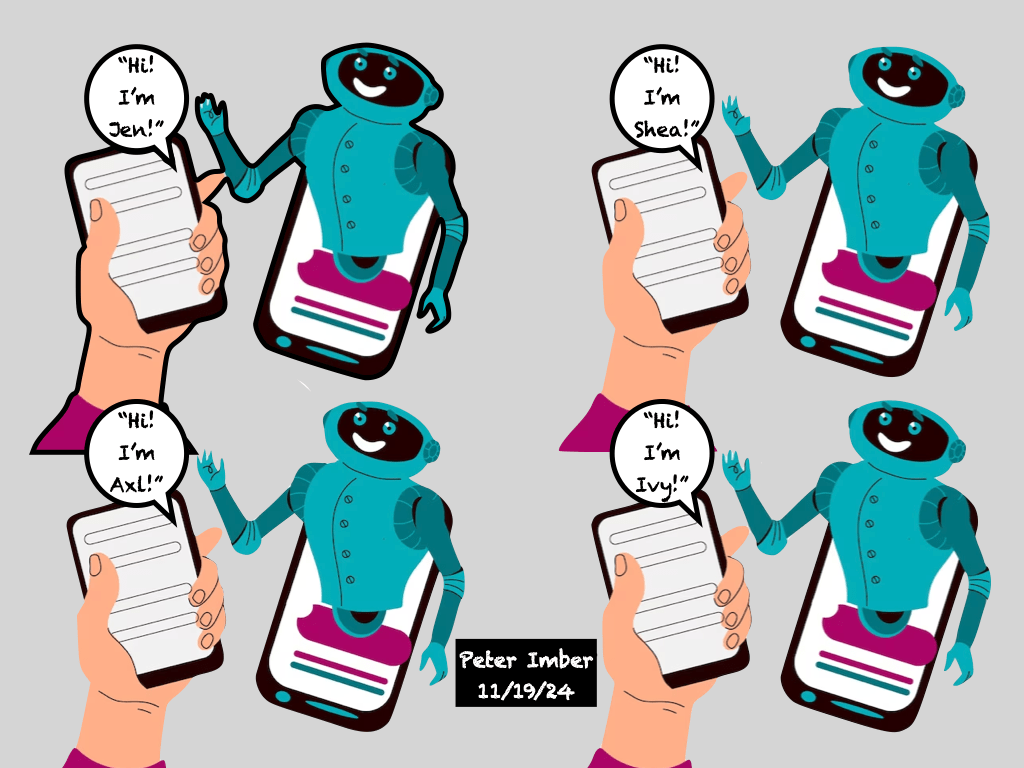
Last week I received a text from Jen. She asked me to call her and when I did after climbing up what has become the typical aggravating phone tree, a woman named Rose got on the line. I don’t know where Jen was but Rose was in the Philippines. A number of calls later in the effort to straighten out my enrollment in a prescription drug plan for the coming year and a number of other messages from Jen to call her, I also spoke to an Eva and a Tina but not a Jen.
This week Jo and I began looking to buy a new car and after contacting a local dealership I started getting texts and emails from Shea. Yesterday I went to the dealership and asked to see him and…
Me: “I’m looking for Shea.”
Salesperson: “Oh, Shea is our AI assistant. He’s not a real person.”
I guess my age was apparent to the guy who was a real person and I think I’m way late to this party. Sure, I know Siri and Alexa. In fact I discovered a few years ago that there’s a real human in New Jersey with the implausible name of Alexa Seary who described her life as a living nightmare.
Artificial Intelligence is obviously here incognito as well as blatantly and despite the lofty promises about how it will make our lives better, I’m convinced we may join Alexa Seary and live to see it make our lives more like hers.
Even AI isn’t all that confident. I just Googled “The lofty promise of AI” and here’s what it answered…
AI Overview
The “lofty promise of AI” refers to the widely held, often exaggerated belief that artificial intelligence has the potential to revolutionize various aspects of life by solving complex problems, automating tasks, and achieving near-human intelligence, sometimes exceeding human capabilities, which can lead to unrealistic expectations and hype around its capabilities.
Hmm… False modesty? Hedging its bets? A disclaimer for potential legal consequences like the announcements on TV that race through the potential side effects of the ever more weirdly named drugs being advertised? Future anthropologists should have a field day when they uncover our commercials.
Last month Siri had her Bat Mitzvah— that’s literally I hope —but when she was still a kid, Siri made her presence felt in our house. It was just after I bought Apple’s HomePod to play music in our living room. It has no buttons or remote and only responds to someone’s voice commanding it with a “Hey, Siri!” triggering whatever one wishes it to do. “Hey Siri, play Happy Together by the Turtles.”
From the outset Jo was uncomfortable with Siri. Since I was fine with her we were unhappy together with our new roomie. Then an incident one afternoon changed my mind.
We had a power outage. Unlike most, it had nothing to do with the weather. Outside it was sunny and calm but it was also winter and cold. Not knowing for how long we wouldn’t have electricity, Jo and I sat in our living room to take advantage of the light coming through the windows. Without power we had no heat either and after an hour we began to feel it receding.
We started talking about our choices if the outage were to continue. We had our backs to the fireplace and our obvious first option with wood stacked both nearby and outside. But we also discussed going to a hotel, the not inexpensive but more convenient alternative.
Our iPhones still worked on their batteries and just then mine alerted me to a message on its screen. It read “Here are some hotels near you.” Siri or Apple or our government or who knows who or what else must have been listening to our conversation. If this was supposed to be a helpful suggestion for us, it was not just an unwelcome one, it was totally creepy.
But have I done anything about it now that I know our house is bugged? It’s years later and I haven’t except to take an inventory of all the devices that could possibly be listening, transmitting and recording our conversations.
Aside from our iPhones and the HomePod, we have a Nest camera— that’s a company now owned by Google —with a microphone in my office upstairs that I put a thermometer in front of when we’re away from Maine to be able to check that we have electricity and our heat is on. The rest of the time Nest sees me sitting at my desk and hears me on the phone and yes, can hear my keystrokes when I type. Am I forgetting anything? Two iMacs, two iPads which all have microphones and cameras and there’s the Roku…
I thought I cut the cord when I got rid of cable and switched to YouTube TV? I guess not. The cord appears to be wireless and ubiquitous.
I don’t believe I’m over gadgeted. I don’t make my morning coffee from bed. I can now, if I desire, start our car from inside the house but never have. I gave my Fitbit away after it buzzed to tell me I had walked 10,000 steps but did so during my golf swing. But I accept that there is something that I indeed am. I’ve become dependent on this stuff and I don’t know if I can give it up.
So, will I start asking Jo to go outside to talk about things we might not want anything else to hear? Will I pat down my friends for their devices when they come over? Will I wonder and be worried now whether anyone for any reason contacting me is actually a human being?
I don’t think I like where all this technology that’s supposed to make our lives better is heading. And guess what! Did you know that AI has figured out how to be as dastardly as us? Yes, it is human. It knows how to lie. Here’s a link to how that happened last year…
https://www.pcmag.com/news/gpt-4-was-able-to-hire-and-deceive-a-human-worker-into-completing-a-task
AND THIS JUST IN! At a meeting in Peru last week President Biden and Chinese President Xi Jinping agreed that any decision to use nuclear weapons should be controlled by humans and not by artificial intelligence.
Wow! That makes me feel a lot better. How about you?
—————–

Don’t Quote Me on That!
I created this cartoon a while back and I knew what I wanted to write to accompany it. Above are two famous quotes that in my view sum up how I see the divide between America’s two political parties and many of the supporters of each of them.
I hear a scream… ENOUGH ALREADY!
Ok! Ok! Starting over… The more I looked at the cartoon, the more I became unable to commit myself to writing anything. But I had a thought and decided to research the origin of the quotes themselves. I was surprised at what I discovered.
I had always assumed that Grantland Rice’s phrase was referring to playing by the rules in sports. Rice was of course a sports writer and the most noted and prolific one of the early 20th century in America. He’s estimated to have written over 20,000 columns which when one does the math, add up to nearly 70,000,000 words.
Rice also published three books of poetry and this most referenced sentence of his— “It’s not whether you win or lose, it’s how you play the game.” —is contained within his poem Alumnus Football. When I read it I realized it was using sports as a metaphor and about displaying tenacity on the field of life. See what you think? Here are the final two stanzas…
“You’ll find the road is long and rough, with soft spots far apart,
Where only those can make the grade who have the Uphill Heart.
And when they stop you with a thud or halt you with a crack,
Let Courage call the signals as you keep on coming back.
“Keep coming back, and though the world may romp across your spine,
Let every game’s end find you still upon the battling line;
For when the One Great Scorer comes to mark against your name,
He writes – not that you won or lost – but how you played the Game.”
Here’s a link to the whole poem…
http://runalot.blogspot.com/2007/12/alumnus-football-by-grantland-rice.html
And how about famed Green Bay Packers’ football coach Vince Lombardi’s mantra “Winning isn’t everything; it’s the only thing.” Well, right off the bat I found that Lombardi wasn’t the originator of what is regarded as his motivational modus operandi. Another football coach named Red Sanders used the phrase first and it appeared in a Los Angeles newspaper article in 1949 after Sanders’ UCLA team lost to arch rival USC.
Lombardi actually claimed to James Michener in a book Michener authored entitled Sports in America that he’d been misquoted and that what he said or meant to say was “Winning isn’t everything. The will to win is the only thing.” That certainly seems to mirror Grantland Rice and not another famed football coach named Knute Rockne who was said to have asserted “Show me a gracious loser and I’ll show you a failure.”
Rice and Lombardi are not the only sports figures who have had a quote become forever linked to them that is apparently not totally accurate and misinterpreted. Major League Baseball manager Leo Durocher acquired his nickname “Leo the lip” for his run ins with umpires. Although he’s light years behind Yankee catcher Yogi Berra— whether or not as Berra admitted, “I really didn’t say everything I said.” —in any ranking of the most quoted figures in the history of the sport or for that matter any sport, Leo’s “Nice guys finish last” is as famous as any Yogiism. And once again there’s a bit of a twist to the quote’s accuracy.
The story goes that Durocher’s New York Giants were mired in next to last place in the National League during the 1946 season. In conversation one day with Brooklyn Dodgers announcer Red Barber, Durocher was ridiculing his team’s performance when Barber jokingly teased, “Leo, come on be a nice guy.” To which Durocher replied, “Nice guy? The nice guys over there (pointing at his players) are in seventh place.”
Well, the National League back then consisted of eight teams and even overlooking that error “The nice guys over there are in last place.” just doesn’t have the same ring to it and certainly is not a motivator to win the actual World Series ornament either. Durocher’s autobiography used the enduring quote as its title and I don’t want him to rise screaming from out of the dugout to argue. So, let’s avoid a rhubarb and give the man an intention pass.
Quotes or even misquotes have this tendency to acquire a life of their own. Oh sure, they can be taken out of context and sometimes that’s of little importance or consequence but sometimes there are lasting reverberations.
Yeah, I thought I was going to stay clear of politics for the rest of this post but when I write it’s sometimes like building a road in unsurveyed wilderness and I guess I just came upon a rock ledge that needs to be dynamited.
At the top of my list of the most consequential quotes by an American about America in recent American history is this one…
“Government is not the solution to our problem, government is the problem.” —President Ronald Reagan (January 20, 1981)
Yes, that’s right out of Ronald Reagan’s first inaugural address— a man assuming the presidency apparently making it clear that he’s disdainful of the government he’s just been sworn to administer. At least that’s what I thought until I did a little looking into Reagan’s declaration.
The quote is arguably taken out of context. Reagan was referring to shrinking government spending and regulations— the cornerstones of what became known as Reaganomics and what was in 1981 the bedrock— at least rhetorically —of Republican policy.
Ronald Reagan’s “Government is the problem” could be considered then to have meant something less all-encompassing and not that all government is bad but through the years the kindling he lit with those words ignited a firestorm. And as we know too well, rhetoric can fan flames that become next to impossible to put out. In a 1986 press conference Reagan threw what, looking back, became a further log on the fire…
“The nine most terrifying words in the English language are: I’m from the government, and I’m here to help.”
Yes, that’s not a misquote and there’s no other meaning to ascribe to what Reagan meant than what he said.
And I have now re-entered politics but let me quickly withdraw to spend more time with my family and offer one last example of someone who is attributed to have said what he didn’t know was actually the reverse of what he thought he was saying.
Confused? Please read on…

Whenever I’m in New York, I like to walk by the Seagram Building on Park Avenue. It was designed by the architect Ludwig Mies van der Rohe and constructed in the 1950s. It’s set back from the street which allows you to take it in more fully. It’s simple, it’s elegant and it speaks to me like a favorite symphony or painting. It also embodies an aphorism that van der Rohe liked to use and is now linked to him— “Less is more.”
Mies van der Rohe is also connected to another expression that is well known— “The devil is in the details.” And yes, if he ever said it, I have to wonder how he would react if he found out how this lasting association with him beyond his architecture was, shall we say, retrofitted.
What was actually said by whoever said it first wasn’t invoking Satan in the basement. No, over time the quote got turned upside down and was originally “God is in the detail” and thus specified someone else and a far different stickler for meticulousness— The one who resides in the penthouse.
Ok, that’s enough and I’ll let someone else have the last quote…
“Leave God alone. He has enough problems.” —Elie Wiesel
Let’s hope Wiesel said that.
—————–

Department of Justice: Election Subversion
Fulton County, Georgia: Election Subversion
Department of Justice: Mar-a-Lago Documents
Manhattan: Hush Money
Manhattan: Defamation and Sexual Assault
New York State: Fraud
And this is the man America just elected to be the next president of the United States.
“No one can terrorize a whole nation, unless we are all his accomplices. “ — Edward R. Murrow
—————–
According to my cursory research the idea of substituting lobster for turkey on the Thanksgiving Day table is not a joke. It’s perhaps historically even more appropriate.
WHAT you say! Well, it’s entirely possible there was no turkey served at that first Thanksgiving.
WHY you ask? Because in 1621 the pilgrims in New England had much easier access to seafood including lobster than they did game or fowl.
Although it’s likely the participants did feast on other birds— duck, goose, swan —as well as meat— venison —in the historical accounts that exist of the period, there are apparently few mentions of turkey. At that first Thanksgiving seafood appears to have been a main item on the menu. Of course the settlers were thankful for the all corn and beans and squash they successfully grew to sustain themselves but while they were farming the land, they were also harvesting the sea.
Here’s a quote from a founder of the Plymouth colony named Edward Winslow who arrived on the Mayflower: “Our bay is full of lobsters all the summer and affordeth a variety of other fish. We can dig eels out of their beds all the winter. We have mussels at our doors. Oysters we have none near but we can have them brought by the Indians when we will.”
Ok, so maybe there was or wasn’t turkey on the table in 1621 but there’s possibly another even larger issue with our Thanksgiving holiday legend. Maybe the story we are remembering and celebrating today isn’t even the first time a “thanksgiving” was observed by those who came here from somewhere else to what became the United States.
Yes, there are historians who believe that the first “giving thanks” event for having arrived in North America from elsewhere may have taken place over a half century earlier. In 1565 Spanish ships landed in Florida and their crews established and christened the new settlement of St. Augustine. I don’t know if they had turkey either or even if any native Americans were in attendance at their gathering, but if gratitude is the raison d’etre for Thanksgiving, then whoever landed here and expressed it first has a leg up even if it wasn’t a drumstick.
I haven’t heard yet that the current Florida governor wants the history of Thanksgiving revised to reflect this possibility. However, when he gets through compiling and inserting into his state’s education curriculum the positive impacts of slavery, might he want to take on ownership of Thanksgiving, too?
You never know, but I doubt even Ron DeSantis would try to go so far as to make a play for stone crab and key lime pie to shove turkey to the sidelines. If he tried such an end around, I’m sure the turkey producers of America would be enraged and motivated to run a wishbone offense. Or should that be defense? I guess I’ve got to bone up on that other heavily consumed Thanksgiving offering— football. Along with turkey sandwiches, there’s ample opportunity for couch potatoes being added to the menu this weekend.
Anyway, enjoy your turkey or filet mignon or lobster or veggie pizza and most of all give thanks that you hopefully have people you love joining you at your table!

Photo by Jo Dondis, Flowers by Lynn Dondis, China from their mother Essie
—————–

“The power drill is the undisputed most useful electric tool in the homeowner’s arsenal.” —The Christian Science Monitor
Sometimes, something totally forgettable sticks in my mind and stays glued there forever. Take the power drill. I once read that nearly two-thirds of American homes have one but in the course of its owner’s lifetime a power drill is used an average of 12 minutes.
I have one and ever since knowing this fact when I get my power drill out of its case, I feel like a coach who is putting his last benchwarmer in the game. I’m kind of sad for my power drill getting so little playing time on the field but I did use it recently to put some hooks in a closet and I should have timed how long I had it turned on.
The point I’m trying to make with today’s cartoon is that there are certain things we likely have— and most are less practical than a power drill —that we never use but may never get rid of like fondue sets and workout videos. I know it’s a clear-cut denial of reality that I have trouble accepting and I believe it can be expressed in two words uttered silently… “Maybe someday.”
For years my grandparents sent me a fruit cake around the holidays and after almost breaking my wrist slicing the first one, I didn’t eat a piece of any of them again. But we continued to keep all the tins they came in thinking they might be handy and never used one of them either.
There are a lot of things we pay for but don’t use. We’re paying for TV channels we never watch and newspaper and magazine articles we never read. That’s understandable. We buy access and then decide what we really want and in our desire for entertainment and information there’s no way we can watch or read everything.
But there are other things we think we might need and never use. How about those extended warranties? I’ve paid for a few of them in the past and don’t recall ever availing myself of a single one. Oh, I forgot. I have a set of solar powered patio lights that came with a lifetime guarantee. One stopped working a few years ago and I requested a replacement and to my shock and surprise I was sent one. Of course this past summer I never got around to finding the box I store the lights in and didn’t put any of them out around the backyard.
Eventually, the repository for the stuff you own that never gets thrown is the attic and in our house in Maine our attic has a sort of microclimate that limits access to it. Let me explain.
When we moved from Los Angeles we traded two seasons for three. LA only has summer and winter. A switch gets thrown twice a year and suddenly it’s one or the other. The interesting thing about that is when you see pictures taken out of doors in Southern California, unless there are blossoming jacarandas in the background you’ll have a tough time determining which season of the year it is. That’s definitely not the case in Maine.
I consider where I live now to have three seasons. The missing one is spring. Certainly, it’s not like what I knew growing up in Pennsylvania. Spring there was March doing the lion and lamb number and April showers presumably brought May flowers but I never paid attention to that— that is until living here in a place where the rain might still be snow in April and in May I still may be wearing a fleece on Memorial Day. When mother nature starts to wake up and bloom around our house it’s as if her kitchen only has one appliance— a microwave.
Nature when it gets its cue to perform, leaps from behind the curtain onto the stage in Maine. I’ve learned the order of the cast’s appearances— forsythias come first, lilacs soon afterward and we have a bush that is a weeping Japanese something that is incredibly beautiful when it produces its white flowers but only holds on to them for a few days. Winter is a marathon here. Summer is a hundred yard dash.
But what about the attic? Ours is not heated or cooled so it’s freezing in winter and sweltering in summer and that means there are only two stretches of time in between when it’s comfortable to be up in it— two opportunities when the attic allows me to do inventory. Every year I resolve to go through all the boxes containing things stacked to the rafters up there. What is inside them is hardly ever needed nor missed but every time I start what the Brits call a “sort out” I end up doing a lot more sorting than discarding. It goes like this…
“Someday I’ll want to read those papers I wrote for my Hitchcock course at film school.”
“Hmmm, I bet I could sell this light meter on eBay.”
“You never know when we might need these old suitcases.”
But recently I have thought of a new litmus test, a process that takes the “me” out of it. It’s a simple mantra I haven’t tried before— six words… “Would anybody I know want this?”
A few summers ago I got my daughter to climb the pull down ladder in the garage that is our access to the attic. With good reason I am increasingly hesitant to mount it but once up there we surveyed every item in the open and opened every box that contained the rest. There wasn’t a single thing she wanted from my life’s collection of leftovers.
My last gasp rationalization for holding on to this stuff is now quite immodest. Perhaps someday somebody will need the elementary school report cards and newspaper box scores of my high school basketball games to flesh out my biography.
In this instance dreams need to be promptly recognized as delusions. I know a dispassionate wrecking ball is what’s required to tackle the job but can I wield it? It’s hard to throw away your past and truly accept recognition of your mortality. So, if and when I pluck up the courage, an awful lot of things will be going to the dump and charity. And who knows, when I’m gone maybe there will be something that even my daughter will want after all. But there’s one item she won’t need. She already has a power drill.
—————–

In math I was taught how to add and subtract, multiple and divide and used it in fact. Then calculators came along that we could buy for a song and my math no longer needed to be so strong.

But soon after that for a cashier’s job behind a Mickey D’s counter You merely pushed on the icon that knew the price of a quarter pounder.
And I was taught cursive back in the day but by the time I grew up it had gone away. A signature had an identity then. Now if one’s asked for it, most just print it again.
Do you miss getting out a paper map to get where you’re going? Sometimes I do but maybe it’s just my nostalgia that’s showing.

And it is convenient not to have to remember numbers to phone. Of course if I lose mine from Apple, won’t I feel awfully alone?

But AI is taking over soon and I shouldn’t despair. It’s going to do all my thinking for me so why should I care?
—————–

I can’t carry a tune or even make one out and I have a story to prove it which shouldn’t surprise anyone who has been receiving my cartoons and commentaries at this point.
As I write this I’m listening to WQXR— a radio station in New York City that plays classical music all day every day. I listen to it a lot and have other favorites like WFMT in Chicago and Radio Swiss Classic which announces what it plays in German and the German classes I had to take in junior high school— I grew up in the Pennsylvania Dutch Country —aren’t any help to understanding those speaking but I’m reassured to know the word for Beethoven in German is Beethoven.
Anyway, for me classical music is an aural security blanket; a retreat to a space where the world hasn’t yet descended into total darkness.
The Pawned Accordion is a reader-supported publication. To receive new posts and support my work, consider becoming a free or paid subscriber.
Subscribed
I love classical music and the credit for that goes to my father and the Food Fair supermarket. In the late 1950s somebody had the idea that the greatest classical music could be widely marketed and I mean marketed literally. A collection called “The Basic Library of the World’s Greatest Music” totaling 24 records was sold at supermarket chains nationwide. The cost was originally less than a dollar an album.

My father purchased the set of all 24 incrementally, which I’m guessing means he made a lot of shopping trips to the Food Fair that my mother didn’t. I don’t remember ever being encouraged to listen to the records but when I began to I was hooked, especially by the romantic selections like Rimsky Korsakov’s Scheherazade and Antonin Dvorak’s New World Symphony.
Each album came with a booklet that included some background about the music and a short biography of the composer. This orchestration of information would eventually provide me with a well deserved lesson in humility.
In my 8th grade music class part of Pennsylvania’s mandated curriculum was an introduction to classical music and our teacher played some of the same pieces that I had heard at home to our class. (Remember when phonograph/radio consoles were a piece of furniture? We had one made by Magnavox.)
Anyway, I couldn’t help myself and when the teacher would tell us about a work and its composer that I had already listened to and read about, I chimed in with something I knew that I could add. I even compounded my show off-ee-ness by volunteering to do reports on a few composers I particularly liked.
At the end of the school year we took the state mandated final exam. It counted for half our grade and I believe to this day it was a strange and unfair way to evaluate what we had learned and how we had participated in the class.
Our teacher sat down at the piano and our task was to determine if the scales she played were ascending or descending. I sat there baffled. I couldn’t hear the difference. I really couldn’t tell.
At our last class she was about to read out each of our final grades, but there was a pause before she began and I knew what was coming after she said this…
“Not everyone this year who did the most work, did well on the listening test which as you know makes up half your final grade.”
She started announcing them. There were a lot of As— we were the so-called “accelerated” college bound group —but then she got to me…
“Peter, D on the final, B- for the year.”
I was sitting in the back of the room and at that moment a lot of heads turned toward me with big you know what grins on their faces from ear to ear. I had earned them and over a half century later I can still see them clearly.
Years afterwards I came to realize what was a huge embarrassment at the time had a silver lining. I figure it this way. Why did I love classical music perhaps more than the other kids? Easy— I must hear it differently!
And at college I discovered that apparently my not hearing music like the rest of humanity bequeathed me with an unusual musical ability that might even be my ears compensating for their inability to distinguish between a pianist’s hands moving to the left or the right on the keyboard.
My college radio station held a contest and its premise was simple; a popular song was played backwards— which apparently you could do on some of those old turntables —and the first person who was able to identify what it was played forwards won.
In quick succession I was the prize winner three straight times before I was banned from further participation. My rewards were record albums. When I showed up to collect them, all three were soundtracks from Elvis Presley movies. I had hoped for something better and at the risk of sounding ungrateful and snooty, unlike Elvis, the albums never left the building.
—————–
Getting the Axe
I have a wise and beautiful friend who sent me the following Turkish proverb. I had never heard it (nor any other Turkish proverb) before and its relevance inspired a cartoon instantly. She told me to use it as I wish. So, I have…
Thank you Arlene!




Ripped from the Headlines
If you listen to the NPR show Wait Wait…Don’t Tell Me! you probably are familiar with this kind of quiz since they do it (but not with cartoons) every week. A contestant has to choose which of three very unlikely stories that are read to him is actually true.
So, here’s my version. Which of these cartoons represents a story that made the news this past week? Ok, I know I’m not Paula Poundstone but in the spirit of the Holidays this is a gift from me that you have apparently already opened…



—————–

The Urban Dictionary isn’t your Merriam-Webster’s. It was founded by a guy named Aaron Peckham in 1999. He created his website— https://www.urbandictionary.com —when he was a computer science student and it was intended to be a parody of what he considered “stuffy” existing dictionaries that he believed take themselves too seriously.”
It’s what can be defined as a “crowdsourced” or open collaboration where anyone who can access the internet can contribute, adding to it with their own definitions for words especially slang. The Urban Dictionary is to a dictionary as Wikipedia is to an encyclopedia and it’s one of the top 500 largest websites in the world.
Peckham by the way is said to be worth $100 million from his Urban Dictionary and other technology businesses he owns. He wants no venture funding or IPO and is not looking for his first brainchild to be acquired. He’s already rich and happy the way things are. He’s no bozo.
The Urban Dictionary can be funny and it can be filthy. No one would call it scholarly or erudite but I checked it for a definition of a bozo and what I found was that a bozo is a jerk but usually a harmless one and the original Bozo from who all other bozos are descended wasn’t a horrible or harmful human being. Neither is he dangerous, corrupt, hateful, or a pathological liar. So we’ve just ruled out someone we might have previously thought qualified as a bozo and we now sure know better. But for our nice guy bozo let’s hold off for a moment on the liar part.
Years ago I was asked to do a story about the real Bozo the Clown. The ABC News shows knew I liked to do almost anything that was off the wall. We’d gotten a press release about the original Bozo celebrating his 50th year in show business and the quirky ABC News overnight broadcast, watched mainly by insomniacs and the incarcerated, wanted a piece on Bozo’s half century milestone for its show.
The late Larry Harmon was the man who developed and owned the Bozo the Clown empire, which he licensed to local television stations around the country and the world, each then hiring their own actor to play Bozo. By the late 1960s Harmon had Bozo the Clown shows airing in nearly every major U.S. television market.
Harmon’s autobiography is titled The Man behind the Nose even though he rarely dressed up as the clown he so successfully marketed. I interviewed him at his office in Los Angeles on Hollywood Blvd. Ironically, for someone so legendary in the entertainment business neither Harmon nor Bozo have a star honoring them on that street’s Hollywood Walk of Fame but that’s another story.
When we finished the interview Harmon made the rest of my assignment very easy by offering me a large box of VHS tapes with an amazing variety of Bozo’s adventures— Bozo on safari in Africa, Bozo riding an elephant in India, Bozo with the Pope at the Vatican, Bozo floating weightless while training with the astronauts… And in the box was also a printout with a timeline of Bozo’s many additional accomplishments, but as I looked at it back in my office something else leaped off the page.
Now, I knew Larry Harmon hadn’t been the original Bozo the Clown and had purchased the rights to a character who already existed. But what I didn’t know and what the timeline let slip was that Bozo the Clown wasn’t 50 at all. He was at that moment actually only 47!
Harmon, it appeared, was behaving the exact opposite of a Little League baseball team manager claiming that one of his players was younger than he actually was. That team, if they had won anything, would have been disqualified for having an ineligible player. No, Harmon was claiming just the opposite and that Bozo was older than he actually was. I was disappointed that his 50th birthday tribute I had hoped to put together might have to be put on hold.
I phoned Harmon to clear things up.
“Larry, I think we have a problem. According to the information you’ve given me, Bozo isn’t really 50 this year,” I said in a gotcha voice.
There was a long silence on the other end of the line and then Harmon spoke, “So?”
I did the story.
If you want to see it go to the link below…
—————–

Tis the season for tamales tra la la la la…
Christmas tamales are one of the few things I miss about not living in Southern California at this time of the year but opportunities to build a snowman or take a sleigh ride in Los Angeles are virtually nil. Although coastal Maine has been having fewer white Christmases in recent years, nobody I know here will be having Christmas turkey or Chinese takeout wearing shorts and flip flops. Me? I’m happy to put on my parka and pull on my boots and be where I am.
The Pawned Accordion is a reader-supported publication. To receive new posts and support my work, consider becoming a free or paid subscriber.
Subscribed
A couple years ago I wrote about our Christmas Eve tradition of watching my favorite Christmas movie Holiday Affair. I’m reprising it here. I wrote this in 2020 at the high tide point of the COVID pandemic…
Today is December 24th and it is my favorite evening of the year. It will be Christmas Eve and a white Christmas (presuming one has arrived or is predicted) and that’s great as long as the lights and more importantly, the heat stays on. I don’t know when my special feeling about Christmas Eve started but on this night I have visions of peace on earth and goodwill to all that lasts until sometime on Christmas Day when the illusion wears off.
On Christmas Eve I imagine a stillness; a complete timeout around the world on the playing fields of everyday life and like in All Quiet on the Western Front even the battlefields of war will have taken a knee. During COVID-19 the pause that replenishes that I annually look forward to might seem less special and merely additional time we’re already spending in the pandemic penalty box but I don’t think so. I’ll embrace it like always and tonight Jo and I will be observing a tradition we’ve begun since we moved to Maine. We’ll be watching the movie Holiday Affair.
There are enough Christmas movies that they’re now considered a genre of their own. The very first one was made in 1898 in Great Britain and by 1912 there were a dozen more, including A Christmas Carol shot in the Bronx and distributed by Thomas Edison’s film company. It was 13 minutes long, in black and white and silent as falling snowflakes.
There are so many Christmas movies already and more being produced each year that I’d bet you could watch a different one everyday until the holiday rolls around again and then maybe do it for another year without almost not having to sit through a rerun.
The Washington Post did a computer search to create the proof of the paragraph above. It only extracted feature length Christmas films that had gotten at least 1,000 reviews. Their algorithm took 34 hours for a computer to complete— Yes, as in the street number in the movie Miracle on 34th Street about a department store Santa Claus who claims he’s the real deal. Coincidence? Hey, after my iOS update the other night I’ve been hearing sleigh bells each time I sit down at my computer.
Last year the Hallmark and Lifetime channels alone broadcast over 50 new Christmas movies with titles like Christmas in Rome and Christmas in Vienna (I’ll take Rome for the entree and Vienna for dessert.), Christmas Scavenger Hunt, and Christmas Temp and I wonder if that last one was about an elf who blew the whistle on working conditions at the North Pole or was it at an Amazon warehouse?
In my opinion the best Christmas movie hands down is It’s a Wonderful Life with Jimmy Stewart and Donna Reed and the two cops Bert and Ernie who Sesame Street creators swear were not the inspiration for the two Muppets who bear their names.
The film’s director, Frank Capra was always on the side of the everyman but there’s a momentarily dark one to Stewart’s George Bailey of Bedford Falls. He contemplates suicide and even leaps off a bridge before realizing his life’s true worth. Capra’s own hopeful optimism also leaps off the screen when a guardian angel reveals to George the impact for good he has had in his community. Wouldn’t Donald Trump make a great choice to play the evil skinflint Mr. Potter in a remake? Bah humbug!
Where does Holiday Affair rank in this titanic trove of Christmas Movies? On the movie review website Rotten Tomatoes it doesn’t show up among the top 63. The highest ranking I’ve found for it is 23rd on a site called The Pioneer Woman. Who knew they liked romantic comedies in the Old West?
Holiday Affair was made in 1949 and lost $300,000 at the box office for its studio RKO but it has become a Christmas staple on Turner Classic Movies. It stars Janet Leigh in the last of seven movies she made that year and Robert Mitchum in a role that was a departure from the tough guy film noir characters he was typically cast to play. Ah, but there was a reason. In 1948 Mitchum had been arrested and served jail time for marijuana possession. Howard Hughes owned RKO and made Mitchum take the part in a romcom to rehabilitate his image. He also insisted that Leigh wear tight sweaters.
Here’s my sample of summaries of the plot you might find in TV Guide…
1. A young war widow is romanced by a sales clerk whom she inadvertently got fired…
2. Two men vie for the affections of a widowed mother…
3. A pretty woman is torn between a pleasant but boring attorney and a handsome romantic dreamer…
And here’s my unlikely to be published anywhere but here synopsis adapted for Christmas Eve…
It was the night before Christmas and you won’t hear boo in our house.
We pay an exterminator monthly, so there better not be a mouse.
Nothing is hanging by our chimney and we wouldn’t dare.
Being Jewish, eight days of Hanukkah is all we can bear.
But each year we nestle all snug in our bed,
Turn on our television and look straight ahead.
It’s an annual custom, a gift I unwrap.
The same saccharine Christmas movie, just call me a sap.
In Crowley’s toy department an electric train is making a clatter.
And tense Janet Leigh’s in a hurry. What could be the matter?
She wants that train and has the exact cash.
The store clerk sells it to her and gets fired in a flash.
Leigh’s a comparison shopper* and Mitchum should know
His not turning her in was a big uh-oh.
But instant Karma’s going to get them.
Right away that’s so clear.
They’re both swept off their feet by more than holiday cheer.
In an instant Bob wins over Janet’s cute as a button young son.
And for his ambushed rival Wendell Corey it’s all but over and done.
That toy train plays a big role in sealing this Christmas romance.
Life gives us gifts sometimes out of pure happenstance.
*Comparison shopper was a real job back then. Then it became known as market research. Now, it’s the customer reviews on Amazon but don’t let me spoil your Christmas shopping…
I was curious if Holiday Affair had maybe moved onto the Rotten Tomatoes best Christmas movies list in the past two years. Well, that list has been expanded from 63 to 100 and Holiday Affair isn’t on it. It’s no longer even included among The Pioneer Woman’s top 50. Bah humbug!
Hey, for me it’s still a wonderful movie and a wonderful life!
Merry Christmas and Happy Hanukkah!
From The Pawned Accordion
—————–
See You Next Year!


—————–


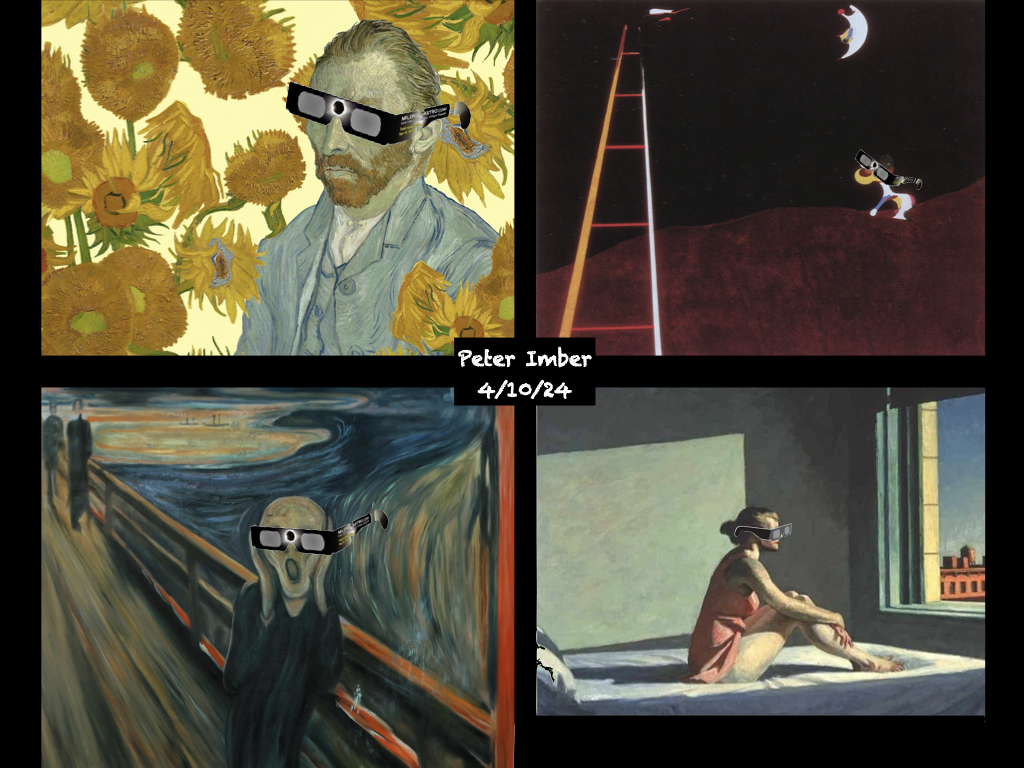




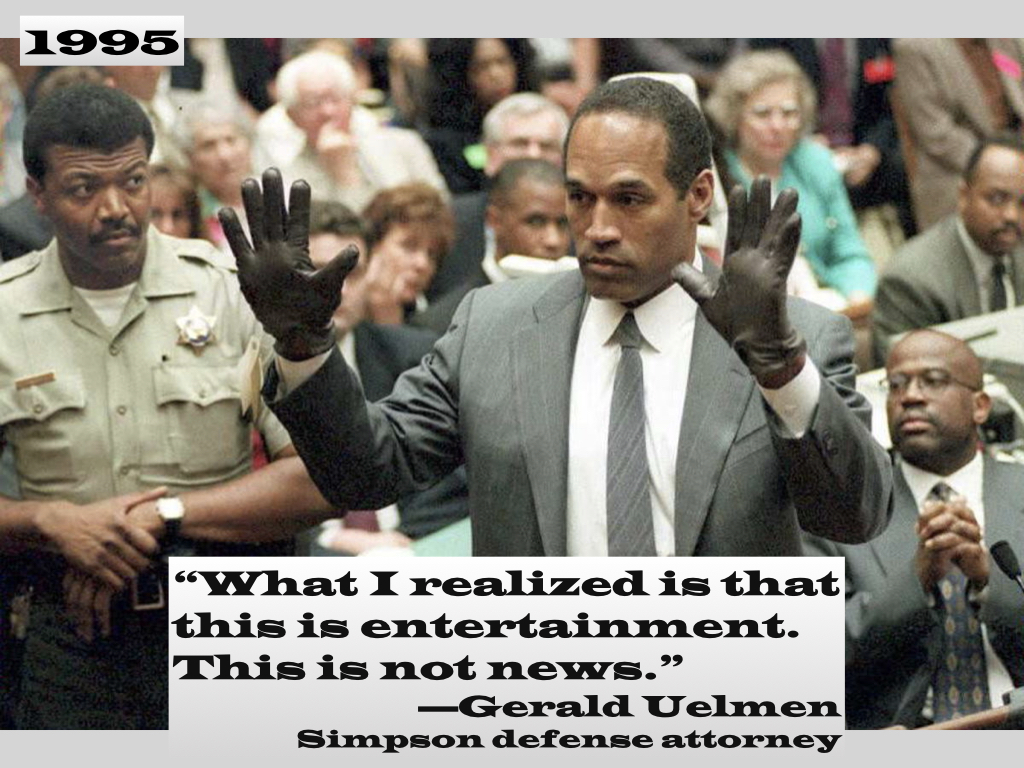



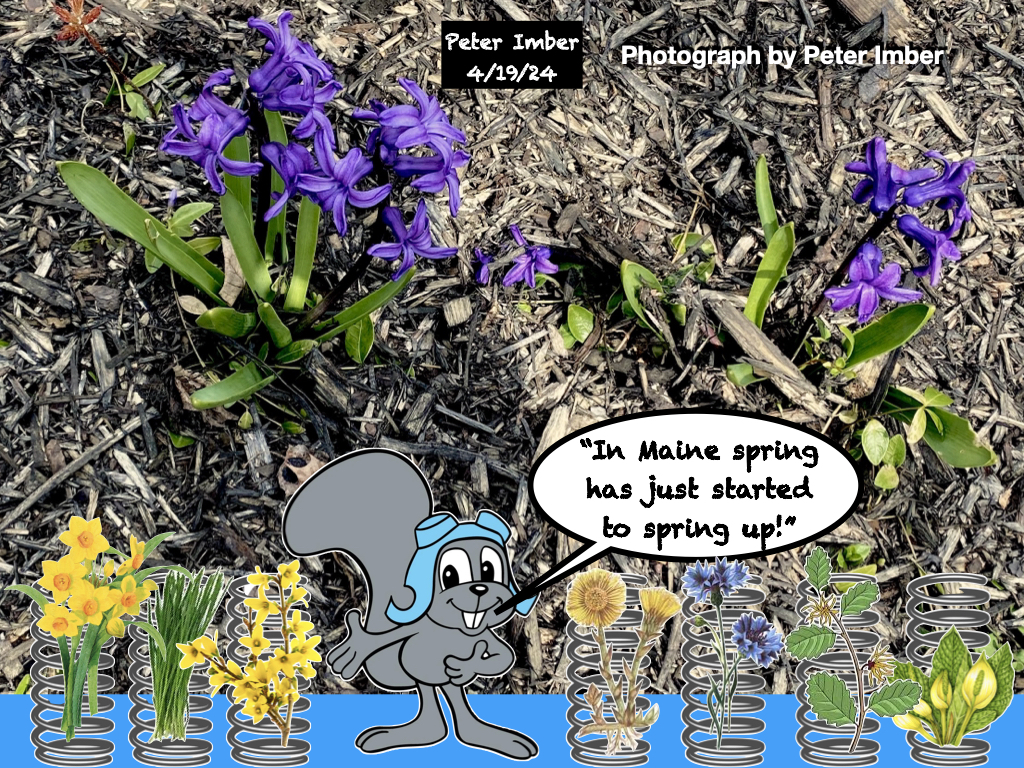





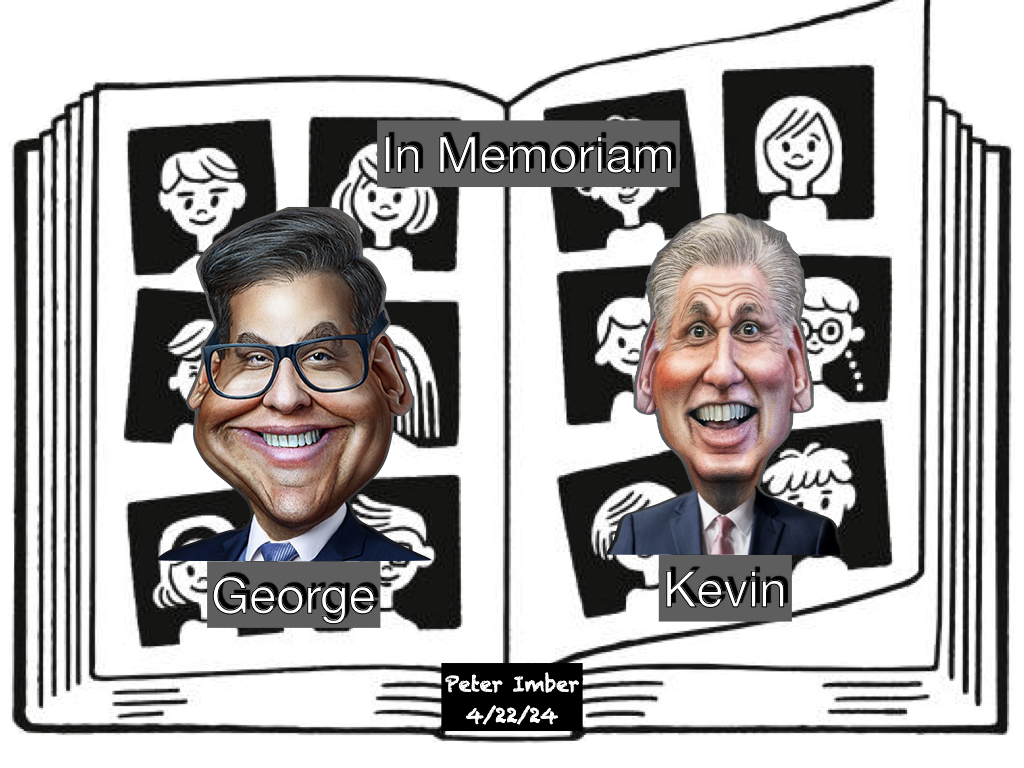





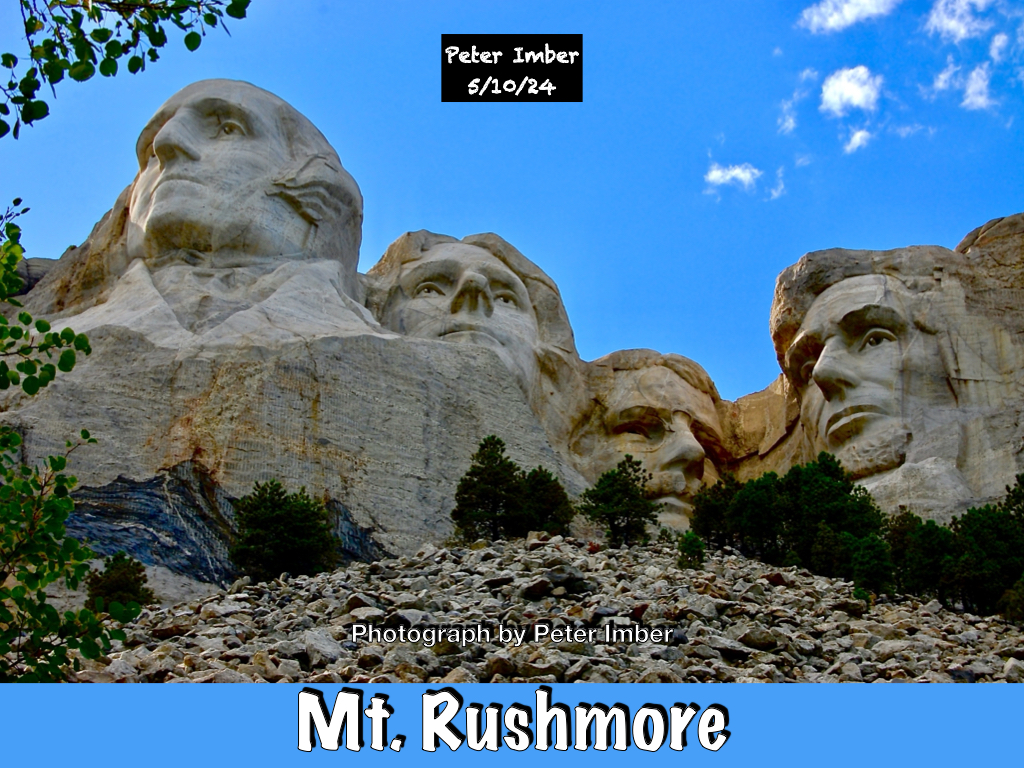
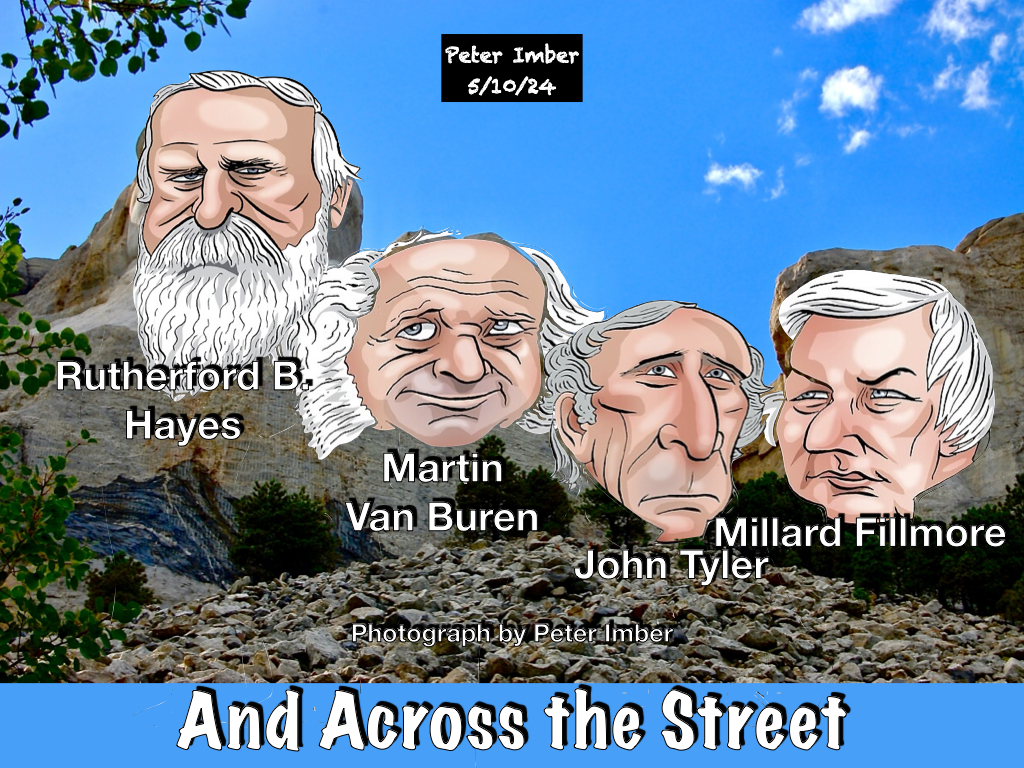





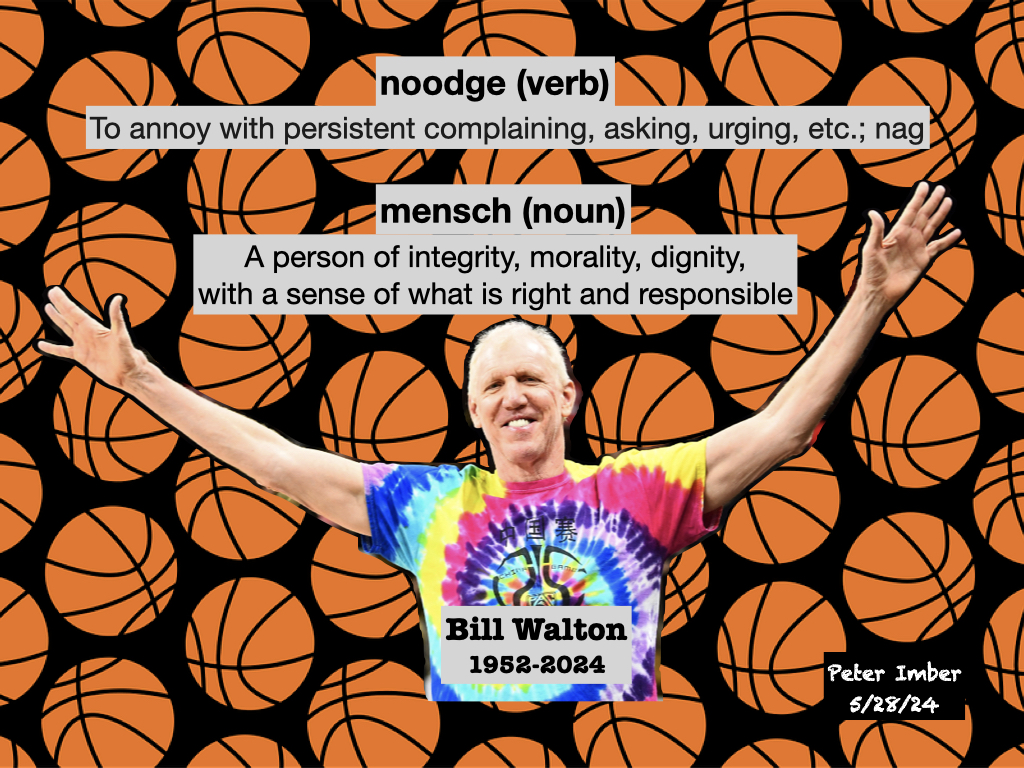






 pawnedaccordion