Swing and a Miss

home-run-hitters-001

Baseball been berry, berry good to me.” —Chico Esculea

I was seven years old in 1954 and I watched part of a World Series game on our television set one autumn afternoon after getting home from school. I believe that to be my oldest memory of baseball.

A year later my father took me to Ebbets Field in Brooklyn and I saw Jackie Robinson get hurt running into a wall chasing a foul ball and a short time later we went to the Polo Grounds in Upper Manhattan where Willie Mays seemed to cover all three outfield positions at once. A year after that I was in Yankee Stadium with my grandfather for a World Series game in which Mickey Mantle played. The next day Don Larsen pitched his perfect no hitter.

With every passing year I am certain there are fewer of us who can make such a claim to have seen three of the game’s most legendary stars perform in those hallowed but demolished stadiums.

I’m a baseball fan. I played the game into junior high school but lost my position on our team due to a tonsillectomy. I never earned it back after recovering either and have always imagined that the pitchers I was facing had learned to throw real curve balls during the two weeks I was gone.

My interest in the game has ebbed and flowed through the years. I was a big Dodger fan as a kid and then a fair weather Phillies follower for a while. When I moved to Los Angeles in the late seventies and eventually had my own son I could take to the ballpark, I was all in with the Dodgers again.

My work as a producer for ABC News rarely involved covering sports and so in 1998 I was given what I considered a plum assignment when I was told to go to San Diego to watch baseball.

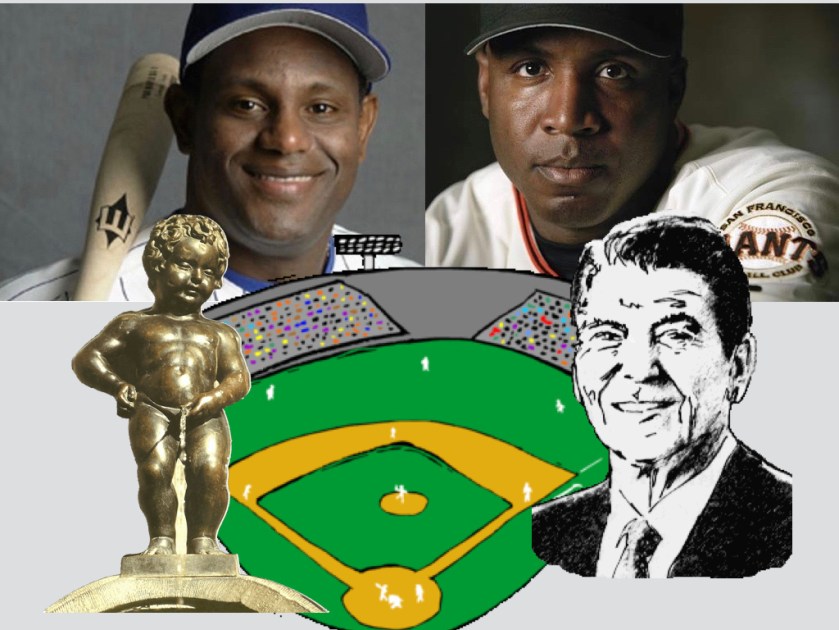
It was the last month of the season and Mark McGwire of the St. Louis Cardinals and Sammy Sosa of the Chicago Cubs were closing in on breaking the single season home run record of 61 set by Roger Maris.

I’d never experienced a Major League baseball player’s work day before and discovered it involved a good deal more than just the time spent playing on the field. A 162 game regular season had taken its toll physically by September and there was a parade of walking wounded among the Cubs who were on their way to be worked on by the team trainers.

There was also, I sensed, at least one player who appeared injured in another way. He was a relief pitcher, the Cubs’ closer named Rod Beck. When our eyes met as we passed each other in a hallway I think we both thought we’d seen a ghost.

On the other hand Sammy Sosa, the player ABC News sent me to watch, looked in great shape both physically and mentally and to be truly enjoying his heightened celebrity status. Sosa was built more like a football running back than a typical ballplayer.

In fact I noticed another Cub who beside Sosa looked like a tetherball pole. His name was Mark Grace, a team leader, and a few years later when the use of steroids in the big leagues was exposed I remembered him and Sosa and realized I had been seeing the difference between an abstainer and a steroid user in that locker room.

My camera crew and reporter and I arrived hours before game time just like the players and for the three games we watched I took on the role of caterer. At the ballpark in San Diego that was easy duty since we could avoid the usual hot dogs and burgers and get really good fish tacos.

The stadium was at the time one of the regrettable dual purpose facilities (now all but extinct) that were built primarily for baseball but could also accommodate football. This meant some of the seats around home plate and along the dugouts for baseball were moveable when the field was converted for playing football. We were positioned in the photographer’s well just beyond the Cubs’ dugout and to go get the fish tacos I walked on planks on the ground laid under the moveable stands that stretched back toward the Cubs’ locker room.

On one evening while I was walking the planks I spied Sosa off to the side a few yards away with his back to me. I had a policy of never asking anybody for an autograph when I was working but impressing my son got the better of me and I thought to myself, “Well, just this time,” and approached Sosa. In an instant I backed away when I saw Sammy apparently hadn’t wanted to make it all the way back to the locker room to urinate.

Almost a decade later I got another call from the ABC News bullpen to cover a home run quest for baseball immortality. It was 2007 and I was sent to San Diego again. By now, the Padres had a new stadium and the potential record breaker and the record being pursued had both become controversial in the era of suspected steroid use.

On August 4, 2007 I was in Petco Park when Barry Bonds of the San Francisco Giants tied Hank Aaron’s Major League career home run record by hitting his 755th over the fence in left center field.

Afterward Bonds, not known for his graciousness or congeniality held a news conference. Obviously, I was not a baseball writer who had covered him all season or for all his seasons but I had a question for him nonetheless.

Before the game I had picked up a Giants press kit that included a list of the 754 home runs Bonds had hit up to that night with thorough annotation– Dates, against what team and which pitcher and even the count and the score of the game at the time the home run happened. The first one had been in 1986 and I quickly calculated that when Barry Bonds had rounded the bases after his first homer in the big leagues Ronald Reagan had been president and since then the nation had elected three others.

So, don’t ask why I asked but I did…

“Barry, do you remember who was president when you hit your first home run in the Majors?”

I knew immediately I had blundered. Bonds gave me that, “Who the fuck are you?” look. And he wasn’t the only one.

“I’m not here to talk about the president. I’m here to talk about my home run,” was all he said… Next!

I got back to my hotel and called home. Bonds’ press conference had been carried live on ESPN. My son’s first words cut to the heart.

“Did you ask Bonds the stupid question about the president?”

Three days later I was in the press box again in San Francisco’s AT&T Park when Bonds hit number 756 to right center and I joined what I am sure is by now another dwindling group of people who witnessed both Bonds’ tying and record breaking homers.

I attended his press conference after the game and kept my mouth shut.

If It’s Tuesday, It Must Be Kibbutz Movie Night!

kibbutz-movie-night-001

You can fool all the people some of the time and some of the people all the time, but you cannot fool all the people all the time. — attributed to Abraham Lincoln

Whether Abraham Lincoln said this or not the truth of this observation is indisputable for me. I have personal experience. Only for this story I will substitute the word “please” in place of “fool.”

In the 1970s I was responsible for picking a weekly movie for a village of 500 people. It was at the kibbutz in Israel where I lived for seven years. Tuesday night was movie night and we screened a 16mm print in the communal dining hall in the winter and outside on the lawn in the summer.

A list of movies available for rental was updated every few months and to schedule your preferences required making a trip to Tel Aviv as quickly as you could. The small office of the distributor was besieged by representatives from small communities like mine desperate for entertainment.

For much of the time I lived on Kibbutz Gat the community had only a half dozen televisions so radio was mostly all there was for culture from the outside world unless you ventured from your apartment to one of the bomb shelters where the TVs were.

I had arrived in 1972 and hadn’t done my army service yet when the Yom Kippur War occurred the following year. Overnight I became one of the few men left on the kibbutz under the age of 50. For several months I milked 200 cows twice a day and became the designated projectionist for the weekly movie which expanded to a twice weekly movie. The films were a diversion from the stress and uncertainty and most of all shock and mourning. During this time five men from the kibbutz were killed in combat.

In the fall of 1974 I began my own military obligation in the regular army and after being posted to an artillery unit facing the Suez Canal I was able to use my movie projection skills one night to get out of guard duty when I was the only one in my unit able to mount an anamorphic lens to make Barbra Streisand appear zoftig (voluptuously plump) instead of ridiculously skinny for watching a cinemascope print of Hello Dolly.

I returned to the kibbutz an army corporal and was drafted again to be the movie night majordomo. Now I was choosing the movies for the kibbutz,  a privilege not without a price and best described by another Yiddish word that applies more to unhappy Jewish comedians than buxom performers… Tzuris! I found two definitions under tzuris in my Yiddish–English dictionary.

1. Daughter pregnant with child of an unemployed bartender.

2. Son loses job and moves back home.

It was seldom that somebody on the kibbutz didn’t complain to me about my movie selections. Full disclosure. I admit I scheduled movies I wanted to see after reading Pauline Kael’s New Yorker reviews– My parents bundled their issues and sent me monthly shipments. Sometimes I even went further and ordered a movie I just wanted to see again.

Such was the case with Citizen Kane. I knew I was taking a risk with something that old but since to this day I still consider Orson Welles’ masterpiece my favorite American film. I went for it and believed it had been a success after one kibbutz member began talking to me effusively about how much he had enjoyed it.

“Who was that guy who played Kane?”

“That was Orson Wells and he was the director. It was his first movie.”

“Amazing! What a genius!”

I was glad the film pleased this man. His name was Zvi Nahor and he worked as a bus driver for over 30 years with Israel’s largest bus company. Zvi was also an accomplished photographer who always took his camera with him and some of his best shots were taken from his driver’s seat.

Just as Zvi finished praising Kane another member of the kibbutz came up to me nearly as excited.

“Why did you bring us a black and white movie? Weren’t there any color ones available?”

Yes, you most certainly cannot please all of the people all of the time!

*Below is a picture of Zvi Nahor and several of his photographs. He kept snapping into his 90s.

zvi-nahor-001

Who Let the Dogs Out?

101-Dalmatians-glenn-close-32368201-1172-1771

You may remember a while back that an alligator killed a toddler at Disney World. I was curious to see if ABC News made any mention of it on their website at the time– I can’t bring myself to turn on Good Morning America and actually watch. The frenzied competition among network television news organizations for viewers has turned out to be much more damaging to our country than I could have imagined. The checks and balances that a vital independent media have on power were compromised long before this year by the pay checks and bank balances of those who put profits and their own well being ahead of serious and responsible journalism and the well being of the nation.

NBC was acquired by General Electric in 1986. That same year Larry Tisch who ran a hotel chain acquired a 25% stake in CBS and shortly afterward assumed control of the company. ABC was the last of the Big Three to succumb to a corporate overlord and I worked for ABC/Cap Cities/Disney for over a quarter of a century until 2010. The changes wrought by takeovers and technology during my career and especially in the last years of it were stunning and for me disheartening.

But it was in 1996 when we became Disney cast members, which is how all Disney employees are addressed, that I wondered how journalistic freedom and integrity at ABC News could be affected by our corporate owner.

I figured it might well mean if there were a news story that might be embarrassing to the company, my news bosses would have a decision to make– Do we treat it like any other story or do we go easy or maybe even go gutless and not cover it at all? Of course there would be denials all around that there was even a calculation to consider but really there hadn’t been an Edward R. Murrow willing to take on his network let alone a corporate giant controlling television news since well, Edward R. Murrow.

The missing boy at Disney World story was on the website the next morning and was reported on by GMA on their broadcast. That’s as it should be and I was glad. Side issue– It will be interesting to learn if the parents are eventually accused of negligent behavior like the woman whose child fell into the gorilla enclosure at the zoo in Cincinnati or agree to take a payout from Disney for their loss that prevents them any legal recourse.

But back to my attempt at a litmus test for Disney and ABC News after the takeover years ago… Back then I wanted to find a story that might challenge my old bosses to perhaps have to weigh whether to possibly incur the ire of their new bosses and choose to do a worthy story that could embarrass the Disney enterprise. It didn’t take very long for me to find what I felt was a candidate.

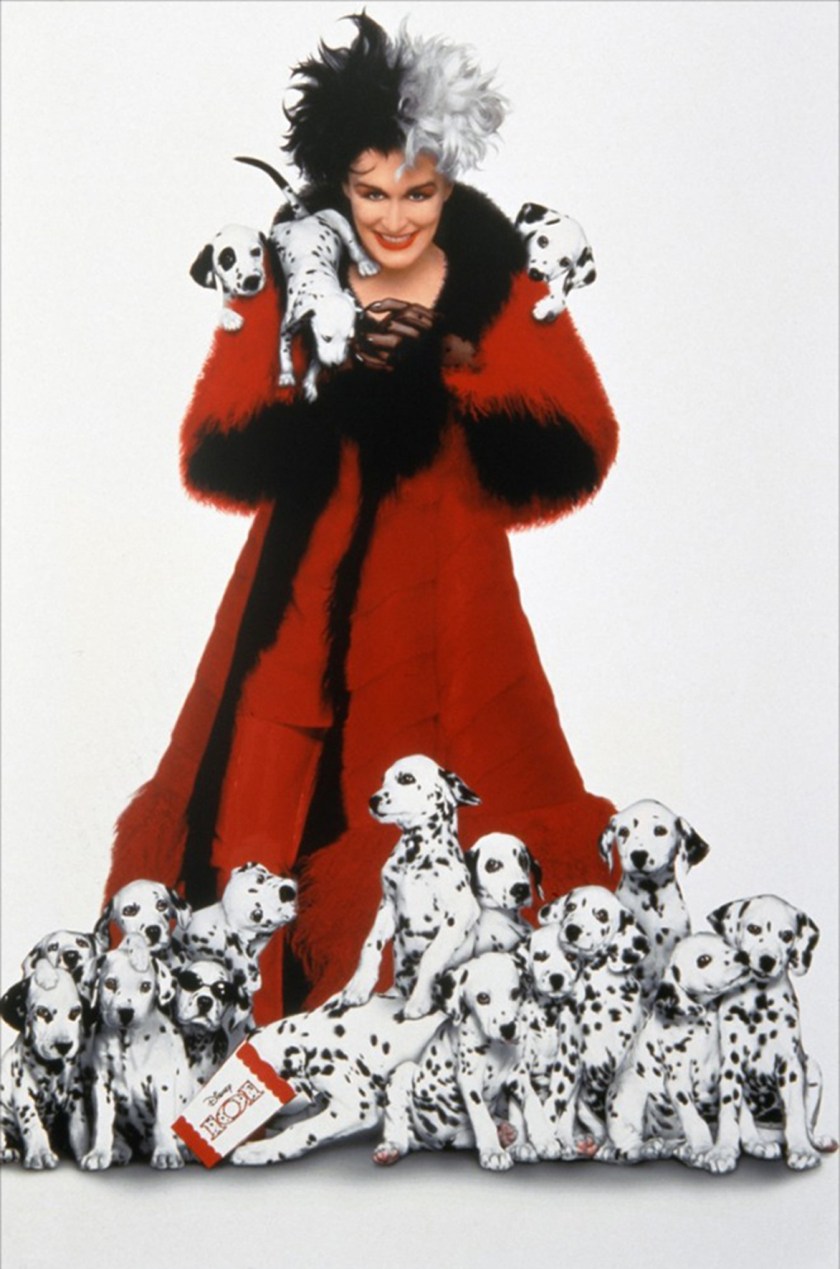
During that first year of the Disney/ABC marriage the movie studio released a remake of 101 Dalmatians with real actors and real animals and some interesting print stories about dogs in films got my attention. Sort of logically it turns out that when there’s a hit movie featuring a dog, kids want that breed as a pet for themselves. The Beethoven films a few years earlier had led to an increase in Saint Bernard sales.

On its own this phenomenon was probably not enough to warrant a story, but there was a another layer to it in the case of Dalmatians because there was a lot of apprehension in both the dog breeding and rescue dog communities about this particular breed becoming an overnight sensation. Dalmatians it turned out might be beloved and iconic at the firehouse but were an ill advised and even moronic choice as a dog in a home. Aside from general agreement that they were not great with children, I discovered that of all dogs Dalmatians had the highest incidence of a serious birth defect– deafness.

The Humane Society predicted animal shelters would be flooded with abandoned Dalmatians when the novelty of having one wore off and the reality of taking care of one set in.

This I considered a story and admittedly, a poke with a sharp stick to my bosses at World News Tonight to whom I pitched my desire to produce it. I waited for an answer and I waited and I waited some more. Then I pitched again and waited again and waited some more… After two weeks of silence from New York I figured I’d gotten my answer.

Maybe I was too early. The New York Times (see the article below and another one from the Daily Mail) was on it and published its article later. Maybe it wasn’t the ideal story proposal to make any conclusions about corporate influence and my news division’s independence but I’ll always wonder what the response might have been if we had been owned by GE or ourselves.

Link to the New York Times article…

After Movies, Unwanted Dalmatians

Link to the Daily Mail article…

http://www.dailymail.co.uk/sciencetech/article-2751766/Did-YOU-buy-dog-watching-101-Dalmations-Films-starring-canines-affect-popularity-breeds-10-years.html

boyinchicagofb

The Pawned Accordion


il_340x270-840736617_rzht

Zeswitz was and I believe still is a musical instruments store in Reading, PA where I grew up. I don’t remember exactly how old I was when I convinced my parents to let me take accordion lessons there. My mother agreed to it I think because she thought I might need this talent along with a monkey for a future career.

There were a lot of other kids taking lessons with me. The man who was our instructor I’d later realize had been a real life facsimile of Harold Hill, the charming huckster in Broadway’s The Music Man. Like the Davy Crockett coonskin hat and the hula hoop, learning accordion was a craze for a while in my town.

We all started with beginner accordions that Zeswitz rented for the first half dozen lessons. After that the store played hardball. To continue playing a signed contract to purchase a new full blown accordion was required.  My parents, I’m sure against their better judgement, aquiesced and I plodded along and quickly validated any doubts about their investment when I started to regret having to practice.

At one point we had a giant recital at the local college field house and I think all those of us under the spell of the squeezebox nearly filled the basketball court. If The Guinness Book of Records had known about the event, we might have qualified as an entry.

The most proficient among us played that accordion standard “Lady of Spain.” I was in the group that played the much easier “All Through the Night.” My memory has fooled me into believing that I had already packed up my instrument and was headed out the door while others were still performing.

A short time later I met my Waterloo (not Abba’s version) when we had to deal with both sharps and flats in grappling with “Oh, Them Golden Slippers.” I also gave up any hopes of my ever appearing in Philadelphia’s New Year’s Day Mummers Parade and in my frustration destroyed my grandfather’s beautiful metronome as well.

My parents had been paying for my accordion on the installment plan. I don’t know how they unloaded it but I do remember that for years afterward every pawn shop in Reading had accordions in the window.

Many more years later I heard a story about a guy who left his accordion in his car and went inside a restaurant to eat. When he came out one of his car window’s had been smashed and there were two accordions on the back seat.

Fisher’s Horrible Hundred

6268

Before I ever learned that politicians parse the truth most of the time and all of us parse the truth some of the time I had an eye opening life primer in the truth courtesy of a man named Lester Fisher.

My family belonged to a reform synagogue and I attended weekly religious school from the first through ninth grades. I think I was in the sixth grade when our text book for the year was “When the Jewish People Was Young.” A lot of us couldn’t accept the title as grammatically correct but it was– a “people” is singular although I don’t recall to this day hearing anybody ever say, “The American people is…”

Anyway, “When the Jewish People Was Young” was first published in the 1930s. When we were given our copies in the late 1950s its style was as parched as Moses must have been wandering about in the Sinai all those decades. The book was a snooze. It could have been printed on stone tablets.

Lester Fisher was our teacher challenged with trying to resuscitate this lifeless version of Jewish biblical history. I don’t recall that he succeeded. I only remember “The Test.”

Now, up to this point in my education a true or false exam was preferable to multiple choice or to being asked to provide an actual name or date and certainly it was a much better alternative to any questions that required a written sentence or God forbid, a paragraph.

But Mr. Fisher was about to change the entire calculus of what I had conceived as my testing pecking order. He was my father’s age and in retrospect maybe didn’t want to be teaching our weekly class about as much as we didn’t want to be attending it. But although he seemed serious, actually stern, he enjoyed being a bit theatrical at times and this day he was in total performance mode.

“Close your books and get out a pencil and paper. This will be a True-False test.”

I’d done the reading and felt prepared to achieve a passing grade which was all I wanted to accomplish. But then Mr. Fisher mischievously upped the ante.

“Get ready for ‘Fisher’s Horrible Hundred!'”

The questions began and they were tough– really tough. After the first half dozen I realized I had marked them all as true. I was fairly confident they were but then after a few more that I marked as true as well I began to wonder why I felt uneasy. How could there be this many true answers in a row?

I opened my mouth. “These questions are all true,” I said and it probably sounded more like a question than a declaration.

Mr. Fisher did not look at me and did not pause. His face did not change expression. The questions kept coming and they still continued to seem to me to be all true even when I wasn’t sure. My instincts were telling me they were. My logic was telling me that it wasn’t possible.

I had to make a choice, guess or go with my gut feeling that “Fisher’s Horrible Hundred” was turning out to be the easiest hardest exam I’d ever taken if I would simply mark all one hundred questions true. But who would ever give such a test?

In a split second I lost my nerve and began to write as many Fs as Ts the rest of the way. As I look back today I guess this was an indication that I wasn’t a gambler and I think it’s true that I rarely have been. But as I recall I still got the highest mark in our class on the test that day and it was a totally pyrrhic achievement. “Fisher’s Horrible Hundred” were indeed all true and our entire class failed!

Mother Knows Best

watchbands-001There was a time before the internet and Amazon when you really had to shop! I mean like having to physically leave your house and drive to a store or even a few stores to find what you were looking for.

It’s getting more and more difficult to remember that not so long ago it may have taken a few days or even a few weeks to move from desire to delivery and convert urge to splurge with just a few mouse clicks or taps on your smart phone.

This isn’t a story so much about how times have changed but it is one I cherish and today probably would not have happened. It’s about a watchband and the old central bus station in Tel Aviv and my mother.

I once interviewed a Costco executive and before we started he asked me a question.

“How many things are you wearing right now that were bought at Costco?”

“Well, my underwear, my socks, maybe this shirt and these pants… and this watch. I guess that counts.”

The guy from Costco nailed me as a devotee/junkie and even after someone was murdered in front of the store in Van Nuys I shopped at I didn’t stay away. Where else could you buy a great barbecued chicken for dinner and a Montblanc pen at the same time?

The Costco watch I was wearing was a Casio solar atomic powered model that cost maybe $50 but made me feel like I was out there on the cutting edge of technology with something spawned from a sun dial and a nuclear submarine.

One day the watchband broke and I went to a big department store looking for a replacement for it. The Broadway carried Casios and had watchbands but didn’t have the one my watch came with so I bought a different one. It didn’t have the usual sprocket holes. It was a couple of Velcro strips and rather quickly frayed and got fuzzy looking.

I looked in other places and no one had my watch’s exact watchband so I tried other types and none of them felt comfortable.

In the 1970s I had lived in Israel for seven years on a kibbutz. Part of the time I worked in Tel Aviv and commuted 40 miles each way every day on the bus. The Tel Aviv central bus station wasn’t in the best part of the city but all around it was a maze of tiny shops and places to eat, some no wider than a doorway.

You could find almost anything there and I had a trip back to Israel coming up and figured what the hell… It literally took me five minutes to find what I thought could be the possible epicenter of a watchband motherlode less than a hundred yards from where I had gotten off the bus. The shop was tiny and windowless and had so many watches and clocks that if they had all been keeping the same time and their alarms set to go off simultaneously, it would have been deafening.

I showed an old man behind the counter my watch. In seconds he was back with a shoebox full of the precise watchband I had been unable to find in Los Angeles. I bought one and left with a huge smile and a story I couldn’t wait to impress my mother with.

When I got back to the United States I called her first thing and I kvelled (Yiddish for to burst with pride) about my resourcefulness and perseverance.

I finished and there was a long silence on the other end of the line… Then these words.

“So, did you buy two?”

Spilling My Kishkas

my-grandmother-2-001

My mother’s mother was my favorite grandparent. It was close between her and my father’s father. He had a kind heart and would kiss his grandchildren on the forehead every time he saw one of us. She was a good cook and when I was in college sent me knishes in the mail. A knish on a plate that I could eat trumped a kiss on the keppalah that as I’d gotten older I couldn’t avoid.

Dormitory life 50 years ago at Dartmouth College would be unimaginable now except maybe at a military service academy. No girls in the rooms except at certain hours and never overnight and only a few things that required electricity like a radio or record player were allowed. No televisions, refrigerators or things you could cook with were permitted.

There was a guy in the room across the hall from me who had an immersion coil (strictly forbidden) and would boil water in his waste basket and make spaghetti. Yes, that was as gross as it sounds but I can top it. There was another guy on the hall who broke his foot playing rugby and was in a cast. He took showers with a plastic bag taped around it but when he wanted to clean the sole of his foot which was exposed, he stuck his foot in the toilet and flushed.

But enough about life at the all male college that inspired Animal House. My wonderful grandmother was worried I wasn’t getting enough to eat and certainly not the things a Jewish boy could have gotten at Columbia but didn’t stand a chance of finding in New Hampshire. So, one day a package arrived full of her homemade knishes. Fortunately, it was winter and I put them outside on my window ledge. They froze quickly and whenever I wanted a knish I’d break one off from the rest, put it on a plate and put the plate on top of the radiator.

This worked very well and the following year it surprisingly became unnecessary. No, Dartmouth didn’t change its policy about appliances in the dorms but a new sandwich shop opened in town and the Italian owners either got some questionable marketing advice or just took a gamble on the demand for knishes in Hanover.

Yes, in addition to subs at this Italian deli potato knishes were also available and so was kishka, which is also called stuffed derma— a Jewish dish traditionally made with matzo meal, schmaltz (animal fat), spices and vegetables encased in an animal (excluding pig) intestine casing. You may be disgusted but for me this was great!

I loved kishka and apparently might have been the only person on campus who did because after a couple months, although knishes were still being sold by the Italians, kishkas were not. My patronage hadn’t been enough to keep them on the menu so the stuffed derma was snuffed perma…nently. I was disheartened but undeterred and made a proposal to one of the owners.

Me: “Tony, how many kishkas would I have to buy for you to order them for me?”

Tony: “A box of 24.”

Me: “Deal!”

I was delighted and resumed using my window ledge and radiator as a kitchen.

Fifty years later I’m living in Maine and the only kishka to be found in the state is in my house if I decide to make it. I have attempted several times and admittedly, mine doesn’t measure up. I wrap it in aluminum foil and not an animals’s intestine casing but I don’t think that’s the problem. It’s just a work in progress as I try to resurrect a dish that’s lost its place in the Askenazi food chain.

We get to New York City every year and kishka can still be found there. The problem is that so can the best pastrami and trying to eat a kishka and a pastrami sandwich together is asking for trouble. But I have a solution. Come to Katz’s Delicatessen with me next time and we’ll split the order!

Stare Master

I don’t take a lot of pictures of people. Even with their permission I sometimes still feel uncomfortble. What do I really know about them? What followup connection will we ever have? Maybe it’s because I’m not sure that I have any other purpose than wanting to capture an interesting face in an interesting setting that I don’t ask people to pose for me very often.

Photography is too easy. It’s not like painting or sculpture or composing or writing. How much of you is actually in a picture you take? Yes, you frame a shot and tweek your settings but the creative process is not what’s dominant. The technology is.

I took this picture nearly six years ago in Manhattan. The woman was selling stuff out of a cart on a street corner. I asked if I could photgraph her and she agreed. Since then when I look at her I realize I may have taken her picture but she was more powerful than the camera and its lens. She saw right through me.

Stare Master

Beauty is in the Eye of the Executive Producer

The Badlands

Six years ago Jo and I drove from Los Angles to Maine. We took our time (three weeks) and avoided Interstates wherever possible. We went through The Badlands of South Dakota one afternoon and I got this shot. With the right light The Badlands are quite beautiful. In fact forget the light. The beauty of The Badlands is always there if you’re open to seeing it.

But this story isn’t about The Badlands. It’s about Death Valley and New York City and maybe about a disconnect that has existed for a long time that has only gotten worse. Not a political division but one between how some people relate to nature with rigid preconceptions, an example perhaps of what today we’d call the chasm of separation between those who see the world in a significant way from high rises and through the New York Times and those who have never read it and see the world mostly by what’s on Rush Limbaugh’s mind and from  Fox News or just simply what’s in front of their faces.

Years ago while working as a producer for ABC News I pitched a story about Death Valley. It had been a very rainy winter in California and I had read an article that things were blooming in Death Valley like they hadn’t in a hundred years. I hadn’t heard back from New York about my pitch and decided on my days off that Jo and I would go see the flowers for ourselves.

We were heading out the door (I’m not exagerrating.) when I got a call telling me that World News Toinight with Peter Jennings wanted the story and if I wanted to do it, it was all mine. Even better than getting a free trip we were going to do anyway  was that now I could make a few phone calls and line up a naturalist at the National Park to show us around and actually learn something about what we were seeing.

So a few hours later, correspondent and camera crew in tow, we got our tour and our pictures. Our guide was knowledgeable and the sightings magnificent. Oh, and an interesting thing happened when at one point we were prevented from entering a loction and told by heavily armed law enforcement that a drug bust was taking place there.

That night I discovered we had been lied to. That in fact there wasn’t any drug bust but that First Lady Laura Bush and some of her friends were also getting a private tour of the bloom that day.

And one other aside. I got to eat rattlesnake that night but would not have if my wife hadn’t goaded me into powering our way into the dining room at the Furnace Creek Inn. I had called and been told the restaurant was fully booked.

Jo: “Did you tell them you were here doing a story for ABC News and Peter Jennings?”

Me: “No.”

Jo: “Call them back and do it.”

I did and suddenly any time we desired was available. The rattlesnake was actually pretty good.

A few days later we put the story together back in the Los Angeles Bureau on the day it would be broadcast and I made a mistake. Many times when we were doing segments for what we called the “day of air” we’d send them into New York at the last minute and I mean the last minute. But on this day things had come together easily and we were done editing the video to the reporter’s narration an hour before our deadline.

My mistake wasn’t to have gotten done too early. No, my mistake was not waiting to send the story to New York until that deadline was actually staring me in the face. Here’s why. The more time the World News Tonight producers had in New York to look at the finished piece, the more likely I would be told to change things. And sure enough within a few minutes after it had come down off the satellite into the ABC News broadcast headquarters in New York my phone rang.

It was the executive producer of World New Tonight himself and what he said left me stunned.

“Your story is too pretty.  Everybody thinks Death Valley is ugly and you need to show that. Put some ugly shots in there and have your correspondent write a new ending that allows you to use an ugly shot there. I want to see how Death Valley really looks!”

At this point in my career I wasn’t as compliant as I had been years before and I asked him a question that I know pissed him off.

“Have you ever been there? Death Valley even at its driest is quite beautiful,” I said.

“That’s not what our viewers think. Change it!”

I discovered my reporter had already gone home and wouldn’t make it back in time to change his wording at the close of the story to the executive producer’s liking but I dutifully inserted the “ugliest” shots we had which I’m certain weren’t ugly enough.

But here’s the real kicker to all this and I hope you’ll watch and listen to the actual story that was broadcast by going to the link I’ve supplied below. To this day I think that the introduction that Peter Jennings read was an ironic rebuke to the executive producer and his comments to me. Maybe Jennings overheard the phone call I got? I’ll never know.

Dave Williams (1927-2016)

img_2267

I would hope that in every person’s life he or she has someone who they know helped them at a crucial time and to whom they are forever grateful.

I entered Governor Dummer as a junior in 1963 and had a corridor master who was cruel and eventually fired. It was a rough way to start at GDA but fortunately I made the basketball team and the coach was someone I quickly came to revere.

That fall President Kennedy was assassinated and the nation was shaken to its core. As we gathered in front of televisions to watch the news coverage that November afternoon, Dave Williams pulled those of us on the basketball team away and had us practice.

I think many of us did so while fighting back tears and feeling that we didn’t want to be in the gym, that somehow it was wrong to be carrying on as if it was just normal day. It didn’t take years for me to realize that it had been exactly the right thing to do.

Dave Williams always seemed to do the right thing and another incident that season I particularly cherish. A classmate’s father was the team dentist for the Boston Celtics.

I don’t know how much dental care professional basketball players required but the connection had a real benefit for those of us on the basketball team. Through Jeff Kane’s father we occasionally got free tickets to Sunday afternoon games at the Boston Garden.

But an even bigger thrill was when Celtics players actually came to our games and it was with “Hondo” Havlicek in the stands one afternoon that I missed an opportunity to change the outcome of the game. I missed a shot at the buzzer and we lost by a point.

I was sitting glumly in the locker room when our Celtic go between informed Mr. Williams that John Havlicek would be happy to come to one of our practices and give us some pointers.

We all perked up and I’ve never forgotten Dave Williams’ heated reply– “You tell John Havlicek that I don’t need another coach of this team!”

Again, that response seemed unreasonable to me at the time. Who wouldn’t want one of the best players in NBA history giving you some personal attention?

But it didn’t take long for my disappointment to turn into even greater respect for my coach and teacher. Havlicek was a great player but to me Dave Williams was a great man!

The following season when I had the honor to be co-captain with my classmate John MacKenzie our team won the Private School League championship.

We had talent and I won’t claim that Mr. Williams was the greatest basketball coach when it came to teaching or strategizing the game, but he molded us into that winning team by treating every player equally.

No one was ever allowed to be a prima donna nor to display even an inkling of bad sportsmanship.It was was an experience and a lesson I have valued my whole life.

And there’s one more story that I have told many times to make a point about how we should put things in perspective when it may seem our whole life is going to be determined by one moment.

Dave Williams was also my corridor master my senior year and my history teacher. We were preparing to take a test– a big test that would determine much of the last grade the colleges we were applying to would see.

Some of us felt that weight heavily and Mr. Williams realizing that said this to our class. “I know that you think this test is important but in the scheme of things, many years from now, it will not be important in your lives at all.”

The words have stuck in my head ever since and the real tests in life have been both ones I could prepare for and others for which I couldn’t. Some I know I’ve passed and others I feel I’ve failed. But I do know this. Mr. Williams was right about THAT history test 50 years ago.

Dave Williams had the admiration of every student he taught or coached and he had it because he cared about every student he ever met.